

1.6 Bionanocomposite Properties and Characterisation
23
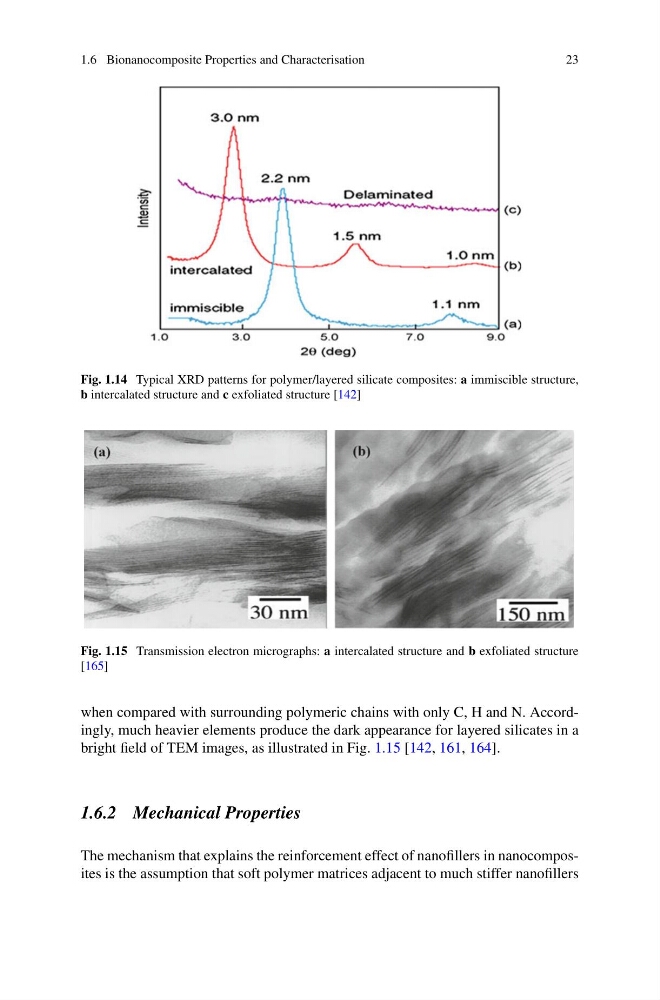
Fig. 1.14 Typical XRD patterns for polymer/layered silicate composites: a immiscible structure,
b intercalated structure and c exfoliated structure [142]
Fig. 1.15 Transmission electron micrographs: a intercalated structure and b exfoliated structure
[165]
when compared with surrounding polymeric chains with only C, H and N. Accordingly, much heavier elements produce the dark appearance for layered silicates in a
bright field of TEM images, as illustrated in Fig. 1.15 [142, 161, 164].
1.6.2 Mechanical Properties
The mechanism that explains the reinforcement effect of nanofillers in nanocomposites is the assumption that soft polymer matrices adjacent to much stiffer nanofillers
23
Fig. 1.14 Typical XRD patterns for polymer/layered silicate composites: a immiscible structure,
b intercalated structure and c exfoliated structure [142]
Fig. 1.15 Transmission electron micrographs: a intercalated structure and b exfoliated structure
[165]
when compared with surrounding polymeric chains with only C, H and N. Accordingly, much heavier elements produce the dark appearance for layered silicates in a
bright field of TEM images, as illustrated in Fig. 1.15 [142, 161, 164].
1.6.2 Mechanical Properties
The mechanism that explains the reinforcement effect of nanofillers in nanocomposites is the assumption that soft polymer matrices adjacent to much stiffer nanofillers