

6.3 Prediction of Elastic Moduli of PVA-Based Bionanocomposites
155
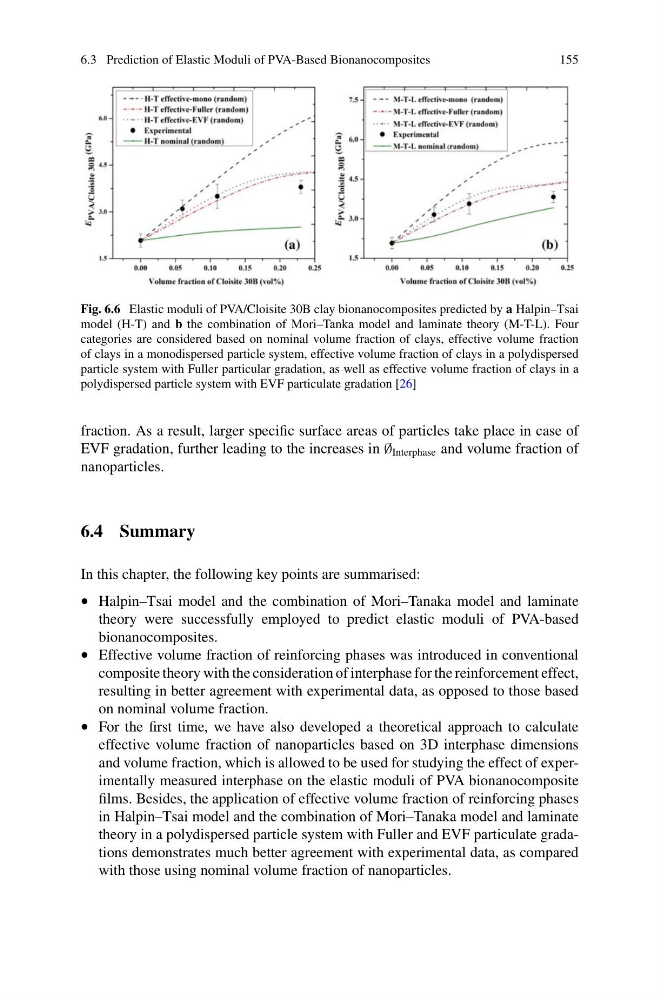
Fig. 6.6 Elastic moduli of PVA/Cloisite 30B clay bionanocomposites predicted by a Halpin–Tsai
model (H-T) and b the combination of Mori–Tanka model and laminate theory (M-T-L). Four
categories are considered based on nominal volume fraction of clays, effective volume fraction
of clays in a monodispersed particle system, effective volume fraction of clays in a polydispersed
particle system with Fuller particular gradation, as well as effective volume fraction of clays in a
polydispersed particle system with EVF particulate gradation [26]
fraction. As a result, larger specific surface areas of particles take place in case of
EVF gradation, further leading to the increases in ∅ Interphase and volume fraction of
nanoparticles.
6.4 Summary
In this chapter, the following key points are summarised:
• Halpin–Tsai model and the combination of Mori–Tanaka model and laminate
theory were successfully employed to predict elastic moduli of PVA-based
bionanocomposites.
• Effective volume fraction of reinforcing phases was introduced in conventional
composite theory with the consideration of interphase for the reinforcement effect,
resulting in better agreement with experimental data, as opposed to those based
on nominal volume fraction.
• For the first time, we have also developed a theoretical approach to calculate
effective volume fraction of nanoparticles based on 3D interphase dimensions
and volume fraction, which is allowed to be used for studying the effect of experimentally measured interphase on the elastic moduli of PVA bionanocomposite
films. Besides, the application of effective volume fraction of reinforcing phases
in Halpin–Tsai model and the combination of Mori–Tanaka model and laminate
theory in a polydispersed particle system with Fuller and EVF particulate gradations demonstrates much better agreement with experimental data, as compared
with those using nominal volume fraction of nanoparticles.
155
Fig. 6.6 Elastic moduli of PVA/Cloisite 30B clay bionanocomposites predicted by a Halpin–Tsai
model (H-T) and b the combination of Mori–Tanka model and laminate theory (M-T-L). Four
categories are considered based on nominal volume fraction of clays, effective volume fraction
of clays in a monodispersed particle system, effective volume fraction of clays in a polydispersed
particle system with Fuller particular gradation, as well as effective volume fraction of clays in a
polydispersed particle system with EVF particulate gradation [26]
fraction. As a result, larger specific surface areas of particles take place in case of
EVF gradation, further leading to the increases in ∅ Interphase and volume fraction of
nanoparticles.
6.4 Summary
In this chapter, the following key points are summarised:
• Halpin–Tsai model and the combination of Mori–Tanaka model and laminate
theory were successfully employed to predict elastic moduli of PVA-based
bionanocomposites.
• Effective volume fraction of reinforcing phases was introduced in conventional
composite theory with the consideration of interphase for the reinforcement effect,
resulting in better agreement with experimental data, as opposed to those based
on nominal volume fraction.
• For the first time, we have also developed a theoretical approach to calculate
effective volume fraction of nanoparticles based on 3D interphase dimensions
and volume fraction, which is allowed to be used for studying the effect of experimentally measured interphase on the elastic moduli of PVA bionanocomposite
films. Besides, the application of effective volume fraction of reinforcing phases
in Halpin–Tsai model and the combination of Mori–Tanaka model and laminate
theory in a polydispersed particle system with Fuller and EVF particulate gradations demonstrates much better agreement with experimental data, as compared
with those using nominal volume fraction of nanoparticles.