

7. Incubate at 37
C, 5% CO 2 .
8. Change the medium and adjust the cell density every 3–4 days.
3.1.3 Cryopreservation
1. Prepare K562 and Raji cell cryopreservation medium and chill
at 4
C.
2. Gently resuspend the cells and transfer the suspension into a
15-mL conical tube.
HA-L
T2A Puromycin
R
CAG
EGFP
p(A) HA-R
AAV-CAGGS-EGFP
9809 bp
U6
gRNA
gRNA scaffold
gRNA-AAVS1_T2
3973 bp
CMV
Cas 9
hCas9
9553 bp
HA-L
T2A Puromycin
R
CAG
EGFP
p(A)
HA-R
AAV-CAGGS-EGFP
9809 bp
AAVS1 locus
PAM
PAM
Donor plasmid
Cas9 plasmid
sgRNA plasmid
Nucleofected K562
or Raji cells
FACS and/or
Limiting dilution
GFP
+ cells
GFP
- cells
(C) Enrichment of GFP+ cells and clonal isolaƟon
(B) TransfecƟon of CRISPR/Cas9 and GFP constructs into cells
(A) PreparaƟon of sgRNA, Cas9 and GFP donor plasmids
Verification of GFP
+ cell
using flow cytometer
Expansion
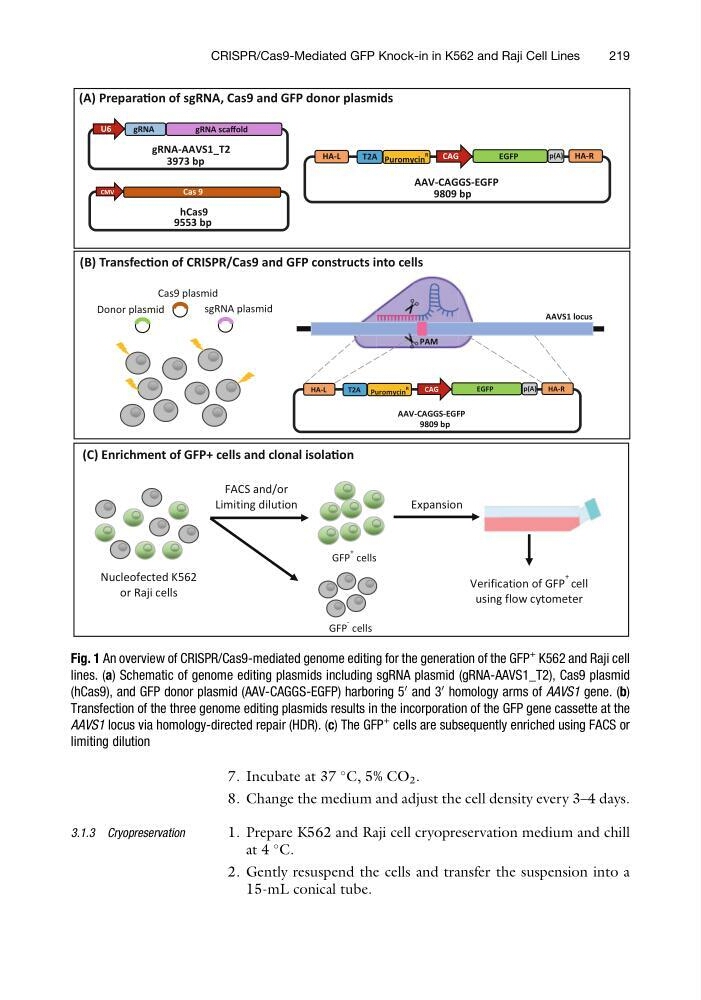
Fig. 1 An overview of CRISPR/Cas9-mediated genome editing for the generation of the GFP
+
K562 and Raji cell
lines. (a) Schematic of genome editing plasmids including sgRNA plasmid (gRNA-AAVS1_T2), Cas9 plasmid
(hCas9), and GFP donor plasmid (AAV-CAGGS-EGFP) harboring 5
0
and 3
0
homology arms of AAVS1 gene. (b)
Transfection of the three genome editing plasmids results in the incorporation of the GFP gene cassette at the
AAVS1 locus via homology-directed repair (HDR). (c) The GFP
+ cells are subsequently enriched using FACS or
limiting dilution
CRISPR/Cas9-Mediated GFP Knock-in in K562 and Raji Cell Lines
219
C, 5% CO 2 .
8. Change the medium and adjust the cell density every 3–4 days.
3.1.3 Cryopreservation
1. Prepare K562 and Raji cell cryopreservation medium and chill
at 4
C.
2. Gently resuspend the cells and transfer the suspension into a
15-mL conical tube.
HA-L
T2A Puromycin
R
CAG
EGFP
p(A) HA-R
AAV-CAGGS-EGFP
9809 bp
U6
gRNA
gRNA scaffold
gRNA-AAVS1_T2
3973 bp
CMV
Cas 9
hCas9
9553 bp
HA-L
T2A Puromycin
R
CAG
EGFP
p(A)
HA-R
AAV-CAGGS-EGFP
9809 bp
AAVS1 locus
PAM
PAM
Donor plasmid
Cas9 plasmid
sgRNA plasmid
Nucleofected K562
or Raji cells
FACS and/or
Limiting dilution
GFP
+ cells
GFP
- cells
(C) Enrichment of GFP+ cells and clonal isolaƟon
(B) TransfecƟon of CRISPR/Cas9 and GFP constructs into cells
(A) PreparaƟon of sgRNA, Cas9 and GFP donor plasmids
Verification of GFP
+ cell
using flow cytometer
Expansion
Fig. 1 An overview of CRISPR/Cas9-mediated genome editing for the generation of the GFP
+
K562 and Raji cell
lines. (a) Schematic of genome editing plasmids including sgRNA plasmid (gRNA-AAVS1_T2), Cas9 plasmid
(hCas9), and GFP donor plasmid (AAV-CAGGS-EGFP) harboring 5
0
and 3
0
homology arms of AAVS1 gene. (b)
Transfection of the three genome editing plasmids results in the incorporation of the GFP gene cassette at the
AAVS1 locus via homology-directed repair (HDR). (c) The GFP
+ cells are subsequently enriched using FACS or
limiting dilution
CRISPR/Cas9-Mediated GFP Knock-in in K562 and Raji Cell Lines
219