

Ligand of interest
Control ligand
TriCEPS
Ligand-TriCEPS
Control-TriCEPS
Target cells or Ɵssue
SelecƟve oxidaƟon
of surface
glycoproteins
Binding of ligand-conjugates to the cell surface target proteins
Capture of surface protein oxidized glycomoieƟes by TriCEPS
Cell lysis
Affinity purificaƟon of crosslinked surface proteins
Trypsin digesƟon of purified proteins and LC-MS/MS analysis
Ligand dataset
Control dataset
RelaƟve quanƟficaƟon
&
StaƟsƟcal comparison
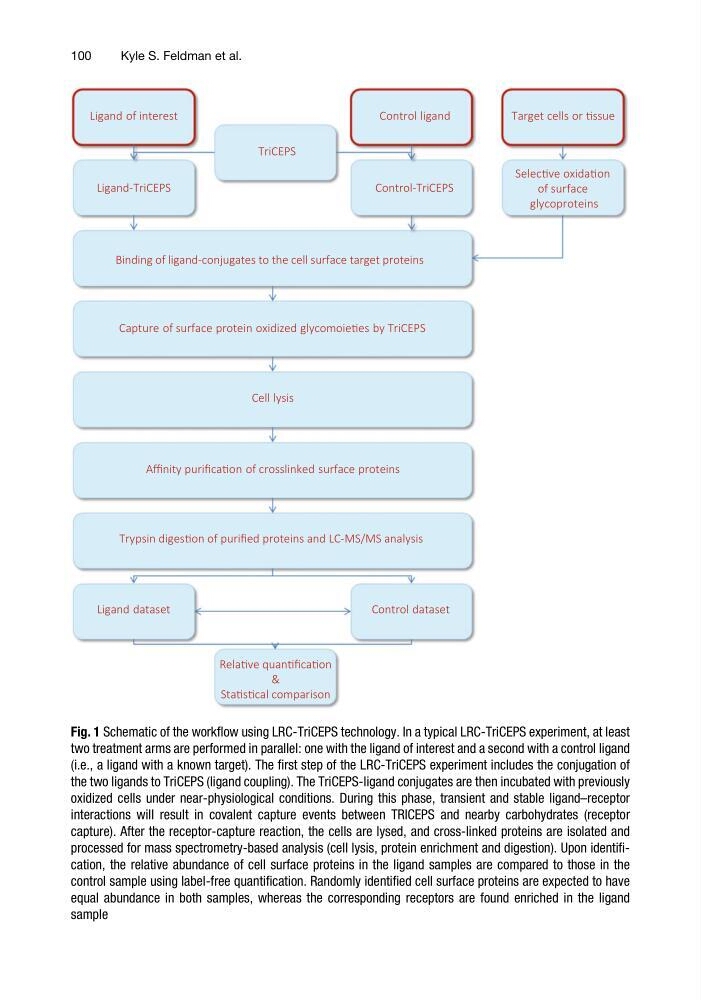
Fig. 1 Schematic of the workflow using LRC-TriCEPS technology. In a typical LRC-TriCEPS experiment, at least
two treatment arms are performed in parallel: one with the ligand of interest and a second with a control ligand
(i.e., a ligand with a known target). The first step of the LRC-TriCEPS experiment includes the conjugation of
the two ligands to TriCEPS (ligand coupling). The TriCEPS-ligand conjugates are then incubated with previously
oxidized cells under near-physiological conditions. During this phase, transient and stable ligand–receptor
interactions will result in covalent capture events between TRICEPS and nearby carbohydrates (receptor
capture). After the receptor-capture reaction, the cells are lysed, and cross-linked proteins are isolated and
processed for mass spectrometry-based analysis (cell lysis, protein enrichment and digestion). Upon identification, the relative abundance of cell surface proteins in the ligand samples are compared to those in the
control sample using label-free quantification. Randomly identified cell surface proteins are expected to have
equal abundance in both samples, whereas the corresponding receptors are found enriched in the ligand
sample
100
Kyle S. Feldman et al.
Control ligand
TriCEPS
Ligand-TriCEPS
Control-TriCEPS
Target cells or Ɵssue
SelecƟve oxidaƟon
of surface
glycoproteins
Binding of ligand-conjugates to the cell surface target proteins
Capture of surface protein oxidized glycomoieƟes by TriCEPS
Cell lysis
Affinity purificaƟon of crosslinked surface proteins
Trypsin digesƟon of purified proteins and LC-MS/MS analysis
Ligand dataset
Control dataset
RelaƟve quanƟficaƟon
&
StaƟsƟcal comparison
Fig. 1 Schematic of the workflow using LRC-TriCEPS technology. In a typical LRC-TriCEPS experiment, at least
two treatment arms are performed in parallel: one with the ligand of interest and a second with a control ligand
(i.e., a ligand with a known target). The first step of the LRC-TriCEPS experiment includes the conjugation of
the two ligands to TriCEPS (ligand coupling). The TriCEPS-ligand conjugates are then incubated with previously
oxidized cells under near-physiological conditions. During this phase, transient and stable ligand–receptor
interactions will result in covalent capture events between TRICEPS and nearby carbohydrates (receptor
capture). After the receptor-capture reaction, the cells are lysed, and cross-linked proteins are isolated and
processed for mass spectrometry-based analysis (cell lysis, protein enrichment and digestion). Upon identification, the relative abundance of cell surface proteins in the ligand samples are compared to those in the
control sample using label-free quantification. Randomly identified cell surface proteins are expected to have
equal abundance in both samples, whereas the corresponding receptors are found enriched in the ligand
sample
100
Kyle S. Feldman et al.