

5 Thermonuclear X-ray Bursts
223
Table 5.2 Typical properties of Type I bursts with different durations
Normal
Intermediate
Superburst
Duration
10–100 s
Few minutes–hour
hours
Fluence (erg)
10 39
10 40 –10 41
10 42
Recurrence time
hours–days
weeks–months
1 year
Ignition column depth (g cm −2 )
10 8
10 9 –10 10
10 11 –10 12
Number observed
>7000 a
≈70 b
26 c
Number of sources
115
≈34
15
Fuel
H/He
He
C
a MINBAR, http://burst.sci.monash.edu/minbar
b The long burst catalog assembled by the International Space Science Institute team on
thermonuclear bursts (PI: A. Cumming), http://www.issibern.ch/teams/ns_burster
c in’t Zand [75]
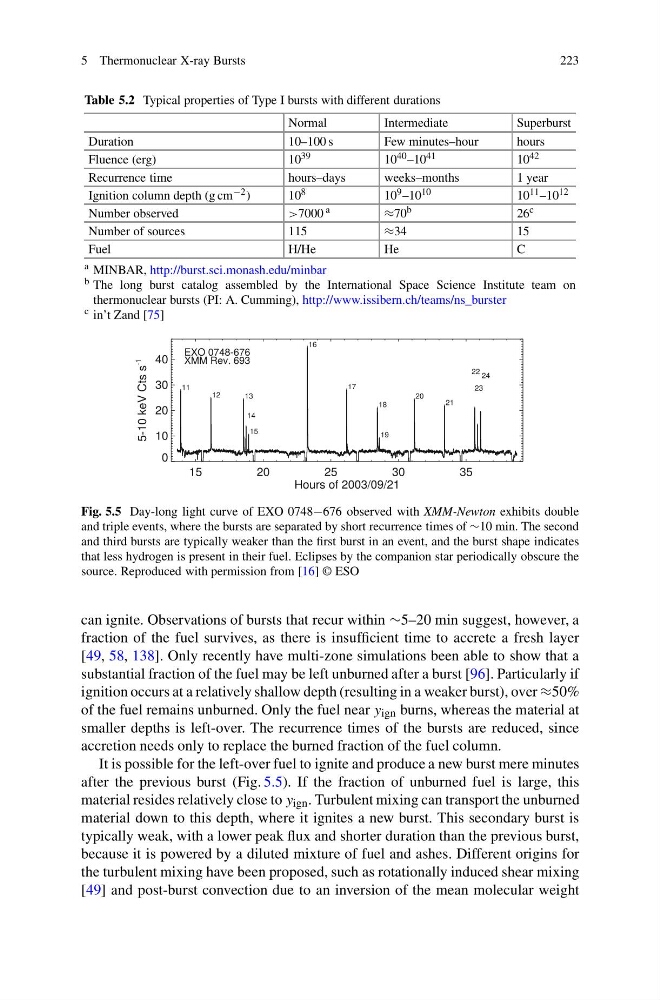
Fig. 5.5 Day-long light curve of EXO 0748−676 observed with XMM-Newton exhibits double
and triple events, where the bursts are separated by short recurrence times of ∼10 min. The second
and third bursts are typically weaker than the first burst in an event, and the burst shape indicates
that less hydrogen is present in their fuel. Eclipses by the companion star periodically obscure the
source. Reproduced with permission from [16] © ESO
can ignite. Observations of bursts that recur within ∼5–20 min suggest, however, a
fraction of the fuel survives, as there is insufficient time to accrete a fresh layer
[49, 58, 138]. Only recently have multi-zone simulations been able to show that a
substantial fraction of the fuel may be left unburned after a burst [96]. Particularly if
ignition occurs at a relatively shallow depth (resulting in a weaker burst), over ≈50%
of the fuel remains unburned. Only the fuel near y ign burns, whereas the material at
smaller depths is left-over. The recurrence times of the bursts are reduced, since
accretion needs only to replace the burned fraction of the fuel column.
It is possible for the left-over fuel to ignite and produce a new burst mere minutes
after the previous burst (Fig. 5.5). If the fraction of unburned fuel is large, this
material resides relatively close to y ign . Turbulent mixing can transport the unburned
material down to this depth, where it ignites a new burst. This secondary burst is
typically weak, with a lower peak flux and shorter duration than the previous burst,
because it is powered by a diluted mixture of fuel and ashes. Different origins for
the turbulent mixing have been proposed, such as rotationally induced shear mixing
[49] and post-burst convection due to an inversion of the mean molecular weight
223
Table 5.2 Typical properties of Type I bursts with different durations
Normal
Intermediate
Superburst
Duration
10–100 s
Few minutes–hour
hours
Fluence (erg)
10 39
10 40 –10 41
10 42
Recurrence time
hours–days
weeks–months
1 year
Ignition column depth (g cm −2 )
10 8
10 9 –10 10
10 11 –10 12
Number observed
>7000 a
≈70 b
26 c
Number of sources
115
≈34
15
Fuel
H/He
He
C
a MINBAR, http://burst.sci.monash.edu/minbar
b The long burst catalog assembled by the International Space Science Institute team on
thermonuclear bursts (PI: A. Cumming), http://www.issibern.ch/teams/ns_burster
c in’t Zand [75]
Fig. 5.5 Day-long light curve of EXO 0748−676 observed with XMM-Newton exhibits double
and triple events, where the bursts are separated by short recurrence times of ∼10 min. The second
and third bursts are typically weaker than the first burst in an event, and the burst shape indicates
that less hydrogen is present in their fuel. Eclipses by the companion star periodically obscure the
source. Reproduced with permission from [16] © ESO
can ignite. Observations of bursts that recur within ∼5–20 min suggest, however, a
fraction of the fuel survives, as there is insufficient time to accrete a fresh layer
[49, 58, 138]. Only recently have multi-zone simulations been able to show that a
substantial fraction of the fuel may be left unburned after a burst [96]. Particularly if
ignition occurs at a relatively shallow depth (resulting in a weaker burst), over ≈50%
of the fuel remains unburned. Only the fuel near y ign burns, whereas the material at
smaller depths is left-over. The recurrence times of the bursts are reduced, since
accretion needs only to replace the burned fraction of the fuel column.
It is possible for the left-over fuel to ignite and produce a new burst mere minutes
after the previous burst (Fig. 5.5). If the fraction of unburned fuel is large, this
material resides relatively close to y ign . Turbulent mixing can transport the unburned
material down to this depth, where it ignites a new burst. This secondary burst is
typically weak, with a lower peak flux and shorter duration than the previous burst,
because it is powered by a diluted mixture of fuel and ashes. Different origins for
the turbulent mixing have been proposed, such as rotationally induced shear mixing
[49] and post-burst convection due to an inversion of the mean molecular weight