

4 Accreting Millisecond X-ray Pulsars
155
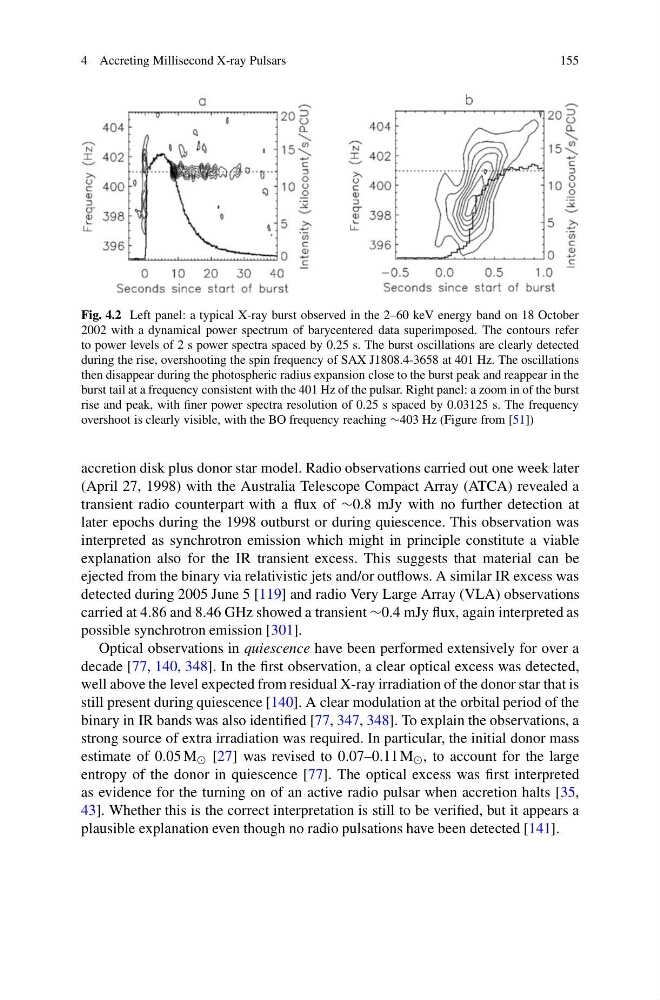
Fig. 4.2 Left panel: a typical X-ray burst observed in the 2–60 keV energy band on 18 October
2002 with a dynamical power spectrum of barycentered data superimposed. The contours refer
to power levels of 2 s power spectra spaced by 0.25 s. The burst oscillations are clearly detected
during the rise, overshooting the spin frequency of SAX J1808.4-3658 at 401 Hz. The oscillations
then disappear during the photospheric radius expansion close to the burst peak and reappear in the
burst tail at a frequency consistent with the 401 Hz of the pulsar. Right panel: a zoom in of the burst
rise and peak, with finer power spectra resolution of 0.25 s spaced by 0.03125 s. The frequency
overshoot is clearly visible, with the BO frequency reaching ∼403 Hz (Figure from [51])
accretion disk plus donor star model. Radio observations carried out one week later
(April 27, 1998) with the Australia Telescope Compact Array (ATCA) revealed a
transient radio counterpart with a flux of ∼0.8 mJy with no further detection at
later epochs during the 1998 outburst or during quiescence. This observation was
interpreted as synchrotron emission which might in principle constitute a viable
explanation also for the IR transient excess. This suggests that material can be
ejected from the binary via relativistic jets and/or outflows. A similar IR excess was
detected during 2005 June 5 [119] and radio Very Large Array (VLA) observations
carried at 4.86 and 8.46 GHz showed a transient ∼0.4 mJy flux, again interpreted as
possible synchrotron emission [301].
Optical observations in quiescence have been performed extensively for over a
decade [77, 140, 348]. In the first observation, a clear optical excess was detected,
well above the level expected from residual X-ray irradiation of the donor star that is
still present during quiescence [140]. A clear modulation at the orbital period of the
binary in IR bands was also identified [77, 347, 348]. To explain the observations, a
strong source of extra irradiation was required. In particular, the initial donor mass
estimate of 0.05 M [27] was revised to 0.07–0.11 M , to account for the large
entropy of the donor in quiescence [77]. The optical excess was first interpreted
as evidence for the turning on of an active radio pulsar when accretion halts [35,
43]. Whether this is the correct interpretation is still to be verified, but it appears a
plausible explanation even though no radio pulsations have been detected [141].
155
Fig. 4.2 Left panel: a typical X-ray burst observed in the 2–60 keV energy band on 18 October
2002 with a dynamical power spectrum of barycentered data superimposed. The contours refer
to power levels of 2 s power spectra spaced by 0.25 s. The burst oscillations are clearly detected
during the rise, overshooting the spin frequency of SAX J1808.4-3658 at 401 Hz. The oscillations
then disappear during the photospheric radius expansion close to the burst peak and reappear in the
burst tail at a frequency consistent with the 401 Hz of the pulsar. Right panel: a zoom in of the burst
rise and peak, with finer power spectra resolution of 0.25 s spaced by 0.03125 s. The frequency
overshoot is clearly visible, with the BO frequency reaching ∼403 Hz (Figure from [51])
accretion disk plus donor star model. Radio observations carried out one week later
(April 27, 1998) with the Australia Telescope Compact Array (ATCA) revealed a
transient radio counterpart with a flux of ∼0.8 mJy with no further detection at
later epochs during the 1998 outburst or during quiescence. This observation was
interpreted as synchrotron emission which might in principle constitute a viable
explanation also for the IR transient excess. This suggests that material can be
ejected from the binary via relativistic jets and/or outflows. A similar IR excess was
detected during 2005 June 5 [119] and radio Very Large Array (VLA) observations
carried at 4.86 and 8.46 GHz showed a transient ∼0.4 mJy flux, again interpreted as
possible synchrotron emission [301].
Optical observations in quiescence have been performed extensively for over a
decade [77, 140, 348]. In the first observation, a clear optical excess was detected,
well above the level expected from residual X-ray irradiation of the donor star that is
still present during quiescence [140]. A clear modulation at the orbital period of the
binary in IR bands was also identified [77, 347, 348]. To explain the observations, a
strong source of extra irradiation was required. In particular, the initial donor mass
estimate of 0.05 M [27] was revised to 0.07–0.11 M , to account for the large
entropy of the donor in quiescence [77]. The optical excess was first interpreted
as evidence for the turning on of an active radio pulsar when accretion halts [35,
43]. Whether this is the correct interpretation is still to be verified, but it appears a
plausible explanation even though no radio pulsations have been detected [141].