

114
P. Esposito et al.
of ≈ 10 −9 M could slow the neutron star period from milliseconds down
to hours in ∼1–3 kyr, if the dipole magnetic field is of 5 × 10 15 G. Since
the formation and survival of a supernova fallback disk are unclear [170],
theoretical work is ongoing also on the possibility that the source was slowed
down in a relatively short-lived phase of propeller during fallback accretion.
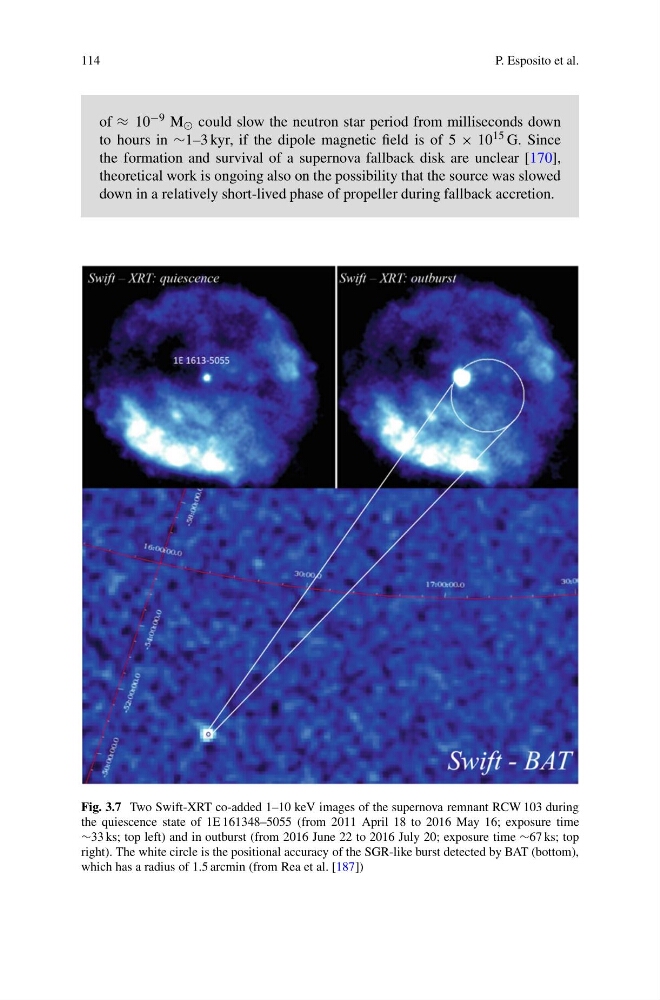
Fig. 3.7 Two Swift-XRT co-added 1–10 keV images of the supernova remnant RCW 103 during
the quiescence state of 1E 161348–5055 (from 2011 April 18 to 2016 May 16; exposure time
∼33 ks; top left) and in outburst (from 2016 June 22 to 2016 July 20; exposure time ∼67 ks; top
right). The white circle is the positional accuracy of the SGR-like burst detected by BAT (bottom),
which has a radius of 1.5 arcmin (from Rea et al. [187])
P. Esposito et al.
of ≈ 10 −9 M could slow the neutron star period from milliseconds down
to hours in ∼1–3 kyr, if the dipole magnetic field is of 5 × 10 15 G. Since
the formation and survival of a supernova fallback disk are unclear [170],
theoretical work is ongoing also on the possibility that the source was slowed
down in a relatively short-lived phase of propeller during fallback accretion.
Fig. 3.7 Two Swift-XRT co-added 1–10 keV images of the supernova remnant RCW 103 during
the quiescence state of 1E 161348–5055 (from 2011 April 18 to 2016 May 16; exposure time
∼33 ks; top left) and in outburst (from 2016 June 22 to 2016 July 20; exposure time ∼67 ks; top
right). The white circle is the positional accuracy of the SGR-like burst detected by BAT (bottom),
which has a radius of 1.5 arcmin (from Rea et al. [187])