

2 Frustrated Lewis Pair Catalyzed Asymmetric Reactions
57
Ar
Ar
B(C 6 F 5 ) 2
B(C 6 F 5 ) 2
Ar
Ar
HB(C 6 F 5 ) 2
in situ
more rigid structure
easier adjustment of Lewis acidity
52
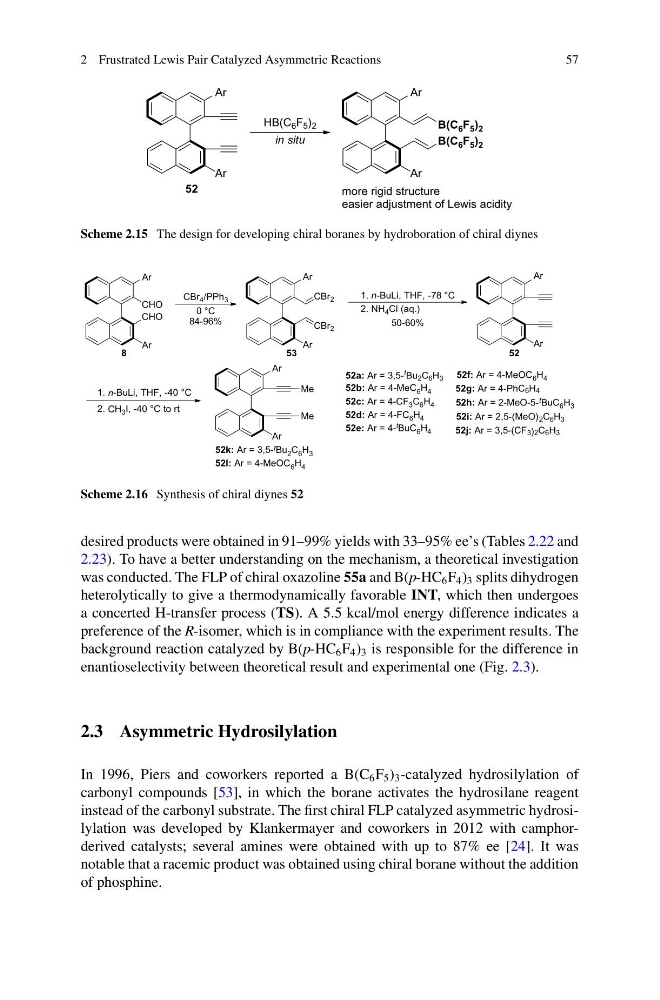
Scheme 2.15 The design for developing chiral boranes by hydroboration of chiral diynes
CHO
Ar
CHO
Ar
52a: Ar = 3,5t Bu 2 C 6 H 3 52f: Ar = 4-MeOC 6 H 4
52b: Ar = 4-MeC 6 H 4
52g: Ar = 4-PhC6H4
52c: Ar = 4-CF 3 C 6 H 4
52h: Ar = 2-MeO-5- t BuC 6 H 3
52d: Ar = 4-FC 6 H 4
52i: Ar = 2,5-(MeO) 2 C 6 H 3
52e: Ar = 4- t BuC 6 H 4
52j: Ar = 3,5-(CF 3)2 C 6 H 3
CBr 4 /PPh 3
0 °C
84-96%
Ar
Ar
CBr 2
CBr 2
1. n-BuLi, THF, -78 °C
2. NH 4 Cl (aq.)
50-60%
Ar
Ar
Ar
Ar
Me
Me
52k: Ar = 3,5- t Bu 2 C 6 H 3
52l: Ar = 4-MeOC 6 H 4
1. n-BuLi, THF, -40 °C
2. CH 3 I, -40 °C to rt
8
52
53
Scheme 2.16 Synthesis of chiral diynes 52
desired products were obtained in 91–99% yields with 33–95% ee’s (Tables 2.22 and
2.23). To have a better understanding on the mechanism, a theoretical investigation
was conducted. The FLP of chiral oxazoline 55a and B(p-HC 6 F 4 ) 3 splits dihydrogen
heterolytically to give a thermodynamically favorable INT, which then undergoes
a concerted H-transfer process (TS). A 5.5 kcal/mol energy difference indicates a
preference of the R-isomer, which is in compliance with the experiment results. The
background reaction catalyzed by B(p-HC 6 F 4 ) 3 is responsible for the difference in
enantioselectivity between theoretical result and experimental one (Fig. 2.3).
2.3 Asymmetric Hydrosilylation
In 1996, Piers and coworkers reported a B(C 6 F 5 ) 3 -catalyzed hydrosilylation of
carbonyl compounds [53], in which the borane activates the hydrosilane reagent
instead of the carbonyl substrate. The first chiral FLP catalyzed asymmetric hydrosilylation was developed by Klankermayer and coworkers in 2012 with camphorderived catalysts; several amines were obtained with up to 87% ee [24]. It was
notable that a racemic product was obtained using chiral borane without the addition
of phosphine.
57
Ar
Ar
B(C 6 F 5 ) 2
B(C 6 F 5 ) 2
Ar
Ar
HB(C 6 F 5 ) 2
in situ
more rigid structure
easier adjustment of Lewis acidity
52
Scheme 2.15 The design for developing chiral boranes by hydroboration of chiral diynes
CHO
Ar
CHO
Ar
52a: Ar = 3,5t Bu 2 C 6 H 3 52f: Ar = 4-MeOC 6 H 4
52b: Ar = 4-MeC 6 H 4
52g: Ar = 4-PhC6H4
52c: Ar = 4-CF 3 C 6 H 4
52h: Ar = 2-MeO-5- t BuC 6 H 3
52d: Ar = 4-FC 6 H 4
52i: Ar = 2,5-(MeO) 2 C 6 H 3
52e: Ar = 4- t BuC 6 H 4
52j: Ar = 3,5-(CF 3)2 C 6 H 3
CBr 4 /PPh 3
0 °C
84-96%
Ar
Ar
CBr 2
CBr 2
1. n-BuLi, THF, -78 °C
2. NH 4 Cl (aq.)
50-60%
Ar
Ar
Ar
Ar
Me
Me
52k: Ar = 3,5- t Bu 2 C 6 H 3
52l: Ar = 4-MeOC 6 H 4
1. n-BuLi, THF, -40 °C
2. CH 3 I, -40 °C to rt
8
52
53
Scheme 2.16 Synthesis of chiral diynes 52
desired products were obtained in 91–99% yields with 33–95% ee’s (Tables 2.22 and
2.23). To have a better understanding on the mechanism, a theoretical investigation
was conducted. The FLP of chiral oxazoline 55a and B(p-HC 6 F 4 ) 3 splits dihydrogen
heterolytically to give a thermodynamically favorable INT, which then undergoes
a concerted H-transfer process (TS). A 5.5 kcal/mol energy difference indicates a
preference of the R-isomer, which is in compliance with the experiment results. The
background reaction catalyzed by B(p-HC 6 F 4 ) 3 is responsible for the difference in
enantioselectivity between theoretical result and experimental one (Fig. 2.3).
2.3 Asymmetric Hydrosilylation
In 1996, Piers and coworkers reported a B(C 6 F 5 ) 3 -catalyzed hydrosilylation of
carbonyl compounds [53], in which the borane activates the hydrosilane reagent
instead of the carbonyl substrate. The first chiral FLP catalyzed asymmetric hydrosilylation was developed by Klankermayer and coworkers in 2012 with camphorderived catalysts; several amines were obtained with up to 87% ee [24]. It was
notable that a racemic product was obtained using chiral borane without the addition
of phosphine.