

50
X. Feng et al.
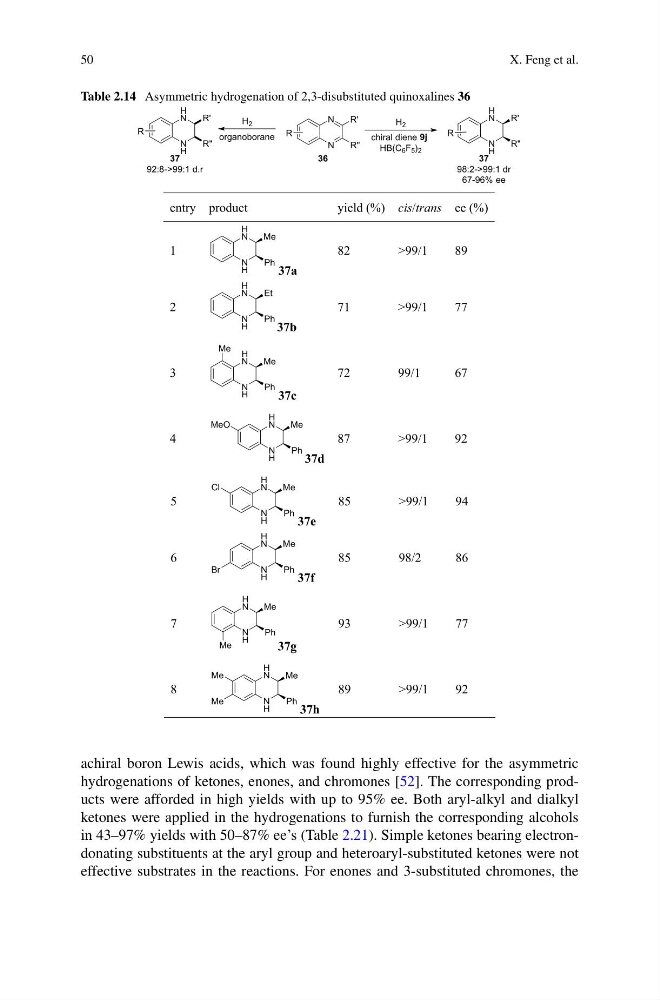
Table 2.14 Asymmetric hydrogenation of 2,3-disubstituted quinoxalines 36
N
N
R'
R"
N
H
H
N
R'
R"
R
R
organoborane
N
H
H
N
R'
R"
R
H 2
H 2
37
92:8->99:1 d.r
37
98:2->99:1 dr
67-96% ee
36
chiral diene 9j
HB(C 6 F 5 ) 2
entry product
yield (%) cis/trans ee (%)
1
37a
N
H
H
N
Me
Ph
82
>99/1
89
2
37b
N
H
H
N
Et
Ph
71
>99/1
77
3
37c
N
H
H
N
Me
Ph
Me
72
99/1
67
4
37d
N
H
H
N
Me
Ph
MeO
87
>99/1
92
5
37e
N
H
H
N
Me
Ph
Cl
85
>99/1
94
6
37f
N
H
H
N
Me
Ph
Br
85
98/2
86
7
37g
N
H
H
N
Me
Ph
Me
93
>99/1
77
8
37h
N
H
H
N
Me
Ph
Me
Me
89
>99/1
92
achiral boron Lewis acids, which was found highly effective for the asymmetric
hydrogenations of ketones, enones, and chromones [52]. The corresponding products were afforded in high yields with up to 95% ee. Both aryl-alkyl and dialkyl
ketones were applied in the hydrogenations to furnish the corresponding alcohols
in 43–97% yields with 50–87% ee’s (Table 2.21). Simple ketones bearing electrondonating substituents at the aryl group and heteroaryl-substituted ketones were not
effective substrates in the reactions. For enones and 3-substituted chromones, the
X. Feng et al.
Table 2.14 Asymmetric hydrogenation of 2,3-disubstituted quinoxalines 36
N
N
R'
R"
N
H
H
N
R'
R"
R
R
organoborane
N
H
H
N
R'
R"
R
H 2
H 2
37
92:8->99:1 d.r
37
98:2->99:1 dr
67-96% ee
36
chiral diene 9j
HB(C 6 F 5 ) 2
entry product
yield (%) cis/trans ee (%)
1
37a
N
H
H
N
Me
Ph
82
>99/1
89
2
37b
N
H
H
N
Et
Ph
71
>99/1
77
3
37c
N
H
H
N
Me
Ph
Me
72
99/1
67
4
37d
N
H
H
N
Me
Ph
MeO
87
>99/1
92
5
37e
N
H
H
N
Me
Ph
Cl
85
>99/1
94
6
37f
N
H
H
N
Me
Ph
Br
85
98/2
86
7
37g
N
H
H
N
Me
Ph
Me
93
>99/1
77
8
37h
N
H
H
N
Me
Ph
Me
Me
89
>99/1
92
achiral boron Lewis acids, which was found highly effective for the asymmetric
hydrogenations of ketones, enones, and chromones [52]. The corresponding products were afforded in high yields with up to 95% ee. Both aryl-alkyl and dialkyl
ketones were applied in the hydrogenations to furnish the corresponding alcohols
in 43–97% yields with 50–87% ee’s (Table 2.21). Simple ketones bearing electrondonating substituents at the aryl group and heteroaryl-substituted ketones were not
effective substrates in the reactions. For enones and 3-substituted chromones, the