

11 Frustrated Lewis Pair Pedagogy: Expanding Core Undergraduate Curriculum …
395
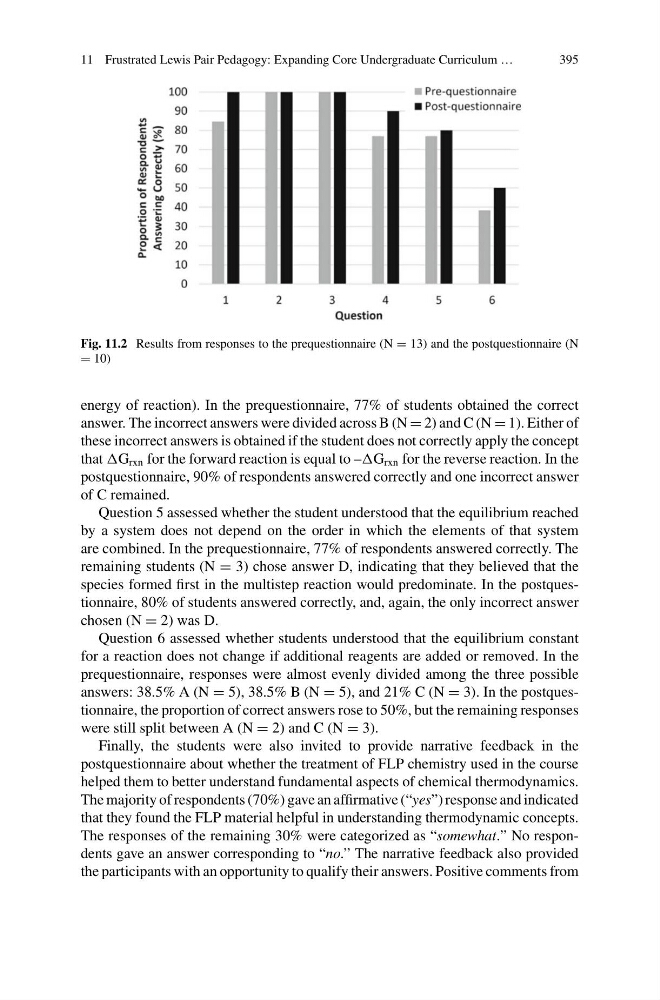
Fig. 11.2 Results from responses to the prequestionnaire (N = 13) and the postquestionnaire (N
= 10)
energy of reaction). In the prequestionnaire, 77% of students obtained the correct
answer. The incorrect answers were divided across B (N = 2) and C (N = 1). Either of
these incorrect answers is obtained if the student does not correctly apply the concept
that G rxn for the forward reaction is equal to –G rxn for the reverse reaction. In the
postquestionnaire, 90% of respondents answered correctly and one incorrect answer
of C remained.
Question 5 assessed whether the student understood that the equilibrium reached
by a system does not depend on the order in which the elements of that system
are combined. In the prequestionnaire, 77% of respondents answered correctly. The
remaining students (N = 3) chose answer D, indicating that they believed that the
species formed first in the multistep reaction would predominate. In the postquestionnaire, 80% of students answered correctly, and, again, the only incorrect answer
chosen (N = 2) was D.
Question 6 assessed whether students understood that the equilibrium constant
for a reaction does not change if additional reagents are added or removed. In the
prequestionnaire, responses were almost evenly divided among the three possible
answers: 38.5% A (N = 5), 38.5% B (N = 5), and 21% C (N = 3). In the postquestionnaire, the proportion of correct answers rose to 50%, but the remaining responses
were still split between A (N = 2) and C (N = 3).
Finally, the students were also invited to provide narrative feedback in the
postquestionnaire about whether the treatment of FLP chemistry used in the course
helped them to better understand fundamental aspects of chemical thermodynamics.
The majority of respondents (70%) gave an affirmative (“yes”) response and indicated
that they found the FLP material helpful in understanding thermodynamic concepts.
The responses of the remaining 30% were categorized as “somewhat.” No respondents gave an answer corresponding to “no.” The narrative feedback also provided
the participants with an opportunity to qualify their answers. Positive comments from
395
Fig. 11.2 Results from responses to the prequestionnaire (N = 13) and the postquestionnaire (N
= 10)
energy of reaction). In the prequestionnaire, 77% of students obtained the correct
answer. The incorrect answers were divided across B (N = 2) and C (N = 1). Either of
these incorrect answers is obtained if the student does not correctly apply the concept
that G rxn for the forward reaction is equal to –G rxn for the reverse reaction. In the
postquestionnaire, 90% of respondents answered correctly and one incorrect answer
of C remained.
Question 5 assessed whether the student understood that the equilibrium reached
by a system does not depend on the order in which the elements of that system
are combined. In the prequestionnaire, 77% of respondents answered correctly. The
remaining students (N = 3) chose answer D, indicating that they believed that the
species formed first in the multistep reaction would predominate. In the postquestionnaire, 80% of students answered correctly, and, again, the only incorrect answer
chosen (N = 2) was D.
Question 6 assessed whether students understood that the equilibrium constant
for a reaction does not change if additional reagents are added or removed. In the
prequestionnaire, responses were almost evenly divided among the three possible
answers: 38.5% A (N = 5), 38.5% B (N = 5), and 21% C (N = 3). In the postquestionnaire, the proportion of correct answers rose to 50%, but the remaining responses
were still split between A (N = 2) and C (N = 3).
Finally, the students were also invited to provide narrative feedback in the
postquestionnaire about whether the treatment of FLP chemistry used in the course
helped them to better understand fundamental aspects of chemical thermodynamics.
The majority of respondents (70%) gave an affirmative (“yes”) response and indicated
that they found the FLP material helpful in understanding thermodynamic concepts.
The responses of the remaining 30% were categorized as “somewhat.” No respondents gave an answer corresponding to “no.” The narrative feedback also provided
the participants with an opportunity to qualify their answers. Positive comments from