

160
Y. Soltani and F.-G. Fontaine
Mes 3 P / B(C 6 F 5 ) 3
+
R
1
O
O
R
2
R
2
Ph
Ph
R
2
R
2
B(C 6 F 5 ) 3
O B(C 6 F 5 ) 3
PMes 3
PMes 3
+
B(C 6 F 5 ) 3
R
1
O
O
B(C 6 F 5 ) 3
R
2
R
2
Ph
Ph
R
2
R
2
H
PHMes 3
Oxidation &
elimination
Radical
initiation
Radical
addition
R
1
O
O
B(C 6 F 5 ) 3
+
THF
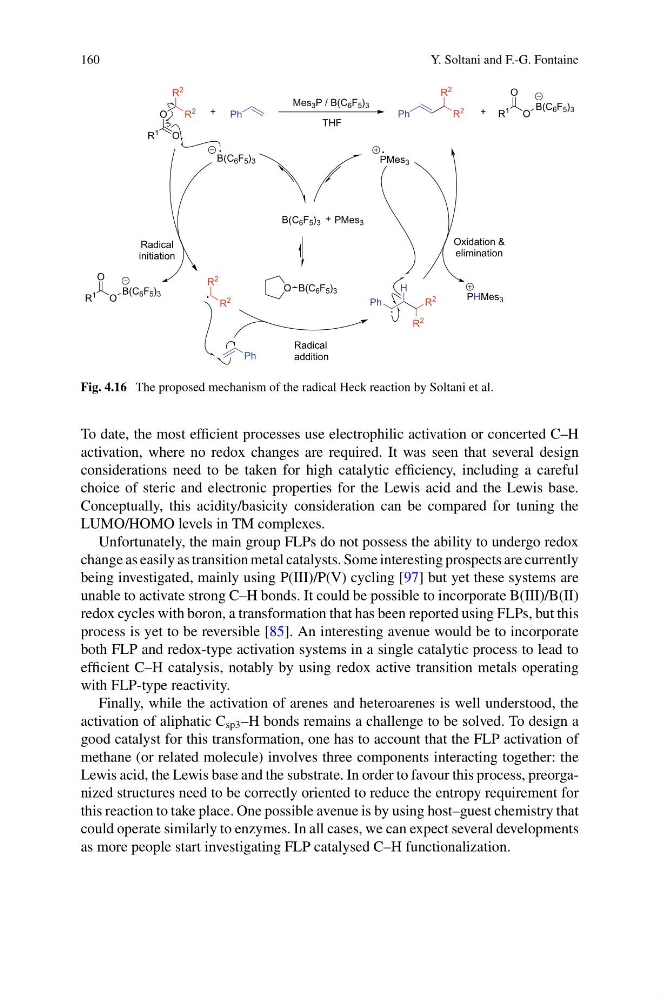
Fig. 4.16 The proposed mechanism of the radical Heck reaction by Soltani et al.
To date, the most efficient processes use electrophilic activation or concerted C–H
activation, where no redox changes are required. It was seen that several design
considerations need to be taken for high catalytic efficiency, including a careful
choice of steric and electronic properties for the Lewis acid and the Lewis base.
Conceptually, this acidity/basicity consideration can be compared for tuning the
LUMO/HOMO levels in TM complexes.
Unfortunately, the main group FLPs do not possess the ability to undergo redox
change as easily as transition metal catalysts. Some interesting prospects are currently
being investigated, mainly using P(III)/P(V) cycling [97] but yet these systems are
unable to activate strong C–H bonds. It could be possible to incorporate B(III)/B(II)
redox cycles with boron, a transformation that has been reported using FLPs, but this
process is yet to be reversible [85]. An interesting avenue would be to incorporate
both FLP and redox-type activation systems in a single catalytic process to lead to
efficient C–H catalysis, notably by using redox active transition metals operating
with FLP-type reactivity.
Finally, while the activation of arenes and heteroarenes is well understood, the
activation of aliphatic C sp3 –H bonds remains a challenge to be solved. To design a
good catalyst for this transformation, one has to account that the FLP activation of
methane (or related molecule) involves three components interacting together: the
Lewis acid, the Lewis base and the substrate. In order to favour this process, preorganized structures need to be correctly oriented to reduce the entropy requirement for
this reaction to take place. One possible avenue is by using host–guest chemistry that
could operate similarly to enzymes. In all cases, we can expect several developments
as more people start investigating FLP catalysed C–H functionalization.
Y. Soltani and F.-G. Fontaine
Mes 3 P / B(C 6 F 5 ) 3
+
R
1
O
O
R
2
R
2
Ph
Ph
R
2
R
2
B(C 6 F 5 ) 3
O B(C 6 F 5 ) 3
PMes 3
PMes 3
+
B(C 6 F 5 ) 3
R
1
O
O
B(C 6 F 5 ) 3
R
2
R
2
Ph
Ph
R
2
R
2
H
PHMes 3
Oxidation &
elimination
Radical
initiation
Radical
addition
R
1
O
O
B(C 6 F 5 ) 3
+
THF
Fig. 4.16 The proposed mechanism of the radical Heck reaction by Soltani et al.
To date, the most efficient processes use electrophilic activation or concerted C–H
activation, where no redox changes are required. It was seen that several design
considerations need to be taken for high catalytic efficiency, including a careful
choice of steric and electronic properties for the Lewis acid and the Lewis base.
Conceptually, this acidity/basicity consideration can be compared for tuning the
LUMO/HOMO levels in TM complexes.
Unfortunately, the main group FLPs do not possess the ability to undergo redox
change as easily as transition metal catalysts. Some interesting prospects are currently
being investigated, mainly using P(III)/P(V) cycling [97] but yet these systems are
unable to activate strong C–H bonds. It could be possible to incorporate B(III)/B(II)
redox cycles with boron, a transformation that has been reported using FLPs, but this
process is yet to be reversible [85]. An interesting avenue would be to incorporate
both FLP and redox-type activation systems in a single catalytic process to lead to
efficient C–H catalysis, notably by using redox active transition metals operating
with FLP-type reactivity.
Finally, while the activation of arenes and heteroarenes is well understood, the
activation of aliphatic C sp3 –H bonds remains a challenge to be solved. To design a
good catalyst for this transformation, one has to account that the FLP activation of
methane (or related molecule) involves three components interacting together: the
Lewis acid, the Lewis base and the substrate. In order to favour this process, preorganized structures need to be correctly oriented to reduce the entropy requirement for
this reaction to take place. One possible avenue is by using host–guest chemistry that
could operate similarly to enzymes. In all cases, we can expect several developments
as more people start investigating FLP catalysed C–H functionalization.