

184
Frequencies (GOLF) instrument, a resonant-scattering spectrophotometer
capable of detecting oscillations with frequencies between 10
−7
and 10
−2
Hz.
It was led by the Institut d’Astrophysique Spatiale of France, A. Gabriel being
its Principal Investigator. Besides the IAC, French teams from the Service
d’Astrophysique/Centre d’Énergie Atomique, and the Universities of Nice
and Bordeaux took part in the project.
Spain’s contribution lay in the polarization subsystem, the polarization
mechanisms and their electronic control (CASA), the mechanical structure
(IAC), the entrance subsystem, with the door mechanism and its electronic
control system (CASA), and mechanical structure (IAC).
The other instrument in which we participated was VIRGO (Variability of
the IRradiance and Global Oscillations), which comprised a series of photometers and radiometers for measuring solar oscillation modes, the so-called
p and g modes. The instrument was headed by the World Radiation Centre of
Switzerland, which appointed C. Fröhlich as Principal Investigator. Along
with the IAC, the Institut Royal Météorologique of Belgium and ESTEC’s
Solar System Division also participated.
Spain’s contribution was limited to the AC/DC converters (CRISA), the
ground-based electrical support, hardware, and software (IAC).
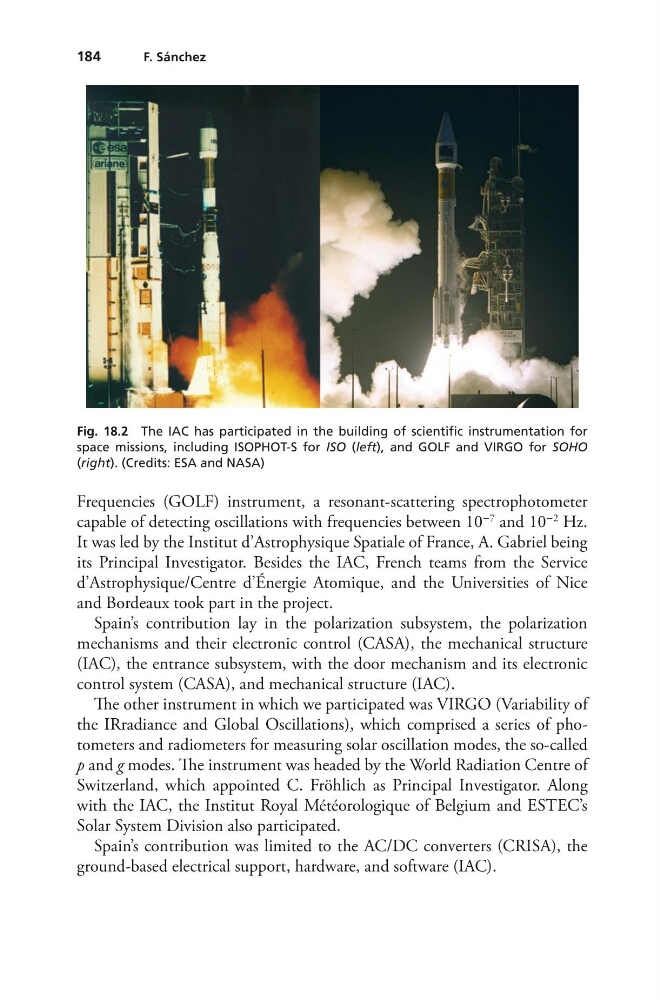
Fig. 18.2 The IAC has participated in the building of scientific instrumentation for
space missions, including ISOPHOT-S for ISO (left), and GOLF and VIRGO for SOHO
(right). (Credits: ESA and NASA)
F. Sánchez
Frequencies (GOLF) instrument, a resonant-scattering spectrophotometer
capable of detecting oscillations with frequencies between 10
−7
and 10
−2
Hz.
It was led by the Institut d’Astrophysique Spatiale of France, A. Gabriel being
its Principal Investigator. Besides the IAC, French teams from the Service
d’Astrophysique/Centre d’Énergie Atomique, and the Universities of Nice
and Bordeaux took part in the project.
Spain’s contribution lay in the polarization subsystem, the polarization
mechanisms and their electronic control (CASA), the mechanical structure
(IAC), the entrance subsystem, with the door mechanism and its electronic
control system (CASA), and mechanical structure (IAC).
The other instrument in which we participated was VIRGO (Variability of
the IRradiance and Global Oscillations), which comprised a series of photometers and radiometers for measuring solar oscillation modes, the so-called
p and g modes. The instrument was headed by the World Radiation Centre of
Switzerland, which appointed C. Fröhlich as Principal Investigator. Along
with the IAC, the Institut Royal Météorologique of Belgium and ESTEC’s
Solar System Division also participated.
Spain’s contribution was limited to the AC/DC converters (CRISA), the
ground-based electrical support, hardware, and software (IAC).
Fig. 18.2 The IAC has participated in the building of scientific instrumentation for
space missions, including ISOPHOT-S for ISO (left), and GOLF and VIRGO for SOHO
(right). (Credits: ESA and NASA)
F. Sánchez