

167
‘configurable slit unit’, which allows the user to configure and observe in real
time with up to 55 slits in the spectroscopic 6.67 arc minute by 4 arc minute
field of view. Long slits of different widths can also be configured. The dispersing elements are formed by combining high quality diffraction gratings, fabricated using photo-resistive procedures, with large prisms of high refractive
index. Observations can be made with eleven narrow- and wide-band filters.
Working in this wavelength range of the spectrum requires the detectors to be
cooled in a cryostat to 77 K (−196 °C).
As a result of all this effort, the IAC has gained a high reputation in infrared
instrumentation, which is why it is now participating in the design of infrared
instrumentation for forthcoming artificial satellites and the extremely large
telescopes now being designed.
As more new telescopes and instruments arrived at its Observatories, the
IAC followed its strategy of continuing to expand its scientific and technical
capacity. The same procedure was always followed: IAC staff would accompany our foreign colleagues in order to learn and adapt these techniques and
the associated science to the IAC. The same tactic was employed in the case of
radio astronomy.
The Cosmic Microwave Background (CMB) is radiation that reaches us
from the first moments of the Universe and has become one of the main topics in the study of the early Universe. Its importance was first realized by
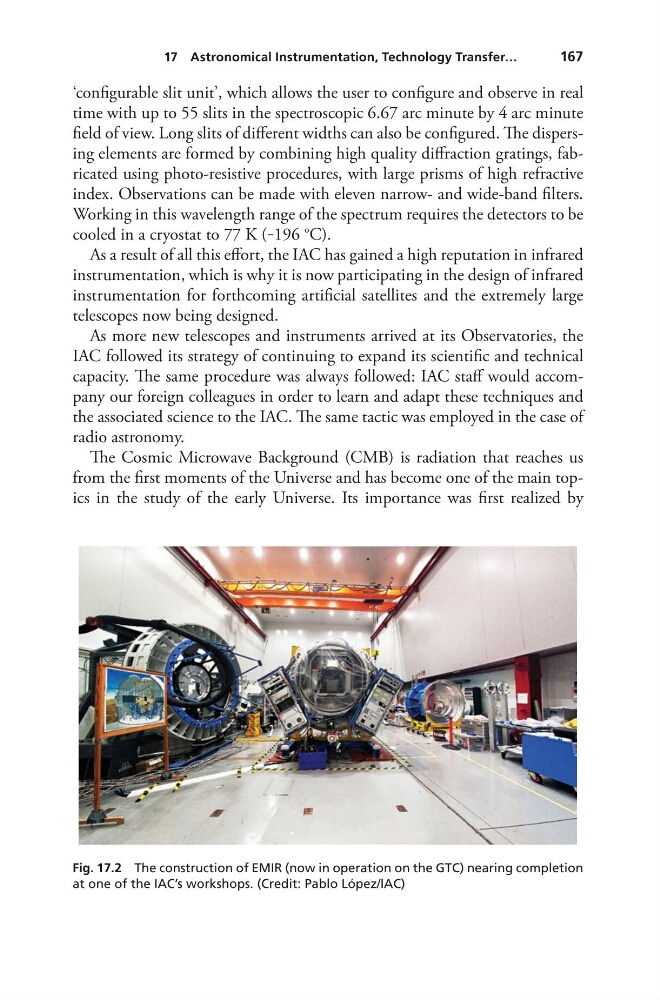
Fig. 17.2 The construction of EMIR (now in operation on the GTC) nearing completion
at one of the IAC’s workshops. (Credit: Pablo López/IAC)
17 Astronomical Instrumentation, Technology Transfer…
‘configurable slit unit’, which allows the user to configure and observe in real
time with up to 55 slits in the spectroscopic 6.67 arc minute by 4 arc minute
field of view. Long slits of different widths can also be configured. The dispersing elements are formed by combining high quality diffraction gratings, fabricated using photo-resistive procedures, with large prisms of high refractive
index. Observations can be made with eleven narrow- and wide-band filters.
Working in this wavelength range of the spectrum requires the detectors to be
cooled in a cryostat to 77 K (−196 °C).
As a result of all this effort, the IAC has gained a high reputation in infrared
instrumentation, which is why it is now participating in the design of infrared
instrumentation for forthcoming artificial satellites and the extremely large
telescopes now being designed.
As more new telescopes and instruments arrived at its Observatories, the
IAC followed its strategy of continuing to expand its scientific and technical
capacity. The same procedure was always followed: IAC staff would accompany our foreign colleagues in order to learn and adapt these techniques and
the associated science to the IAC. The same tactic was employed in the case of
radio astronomy.
The Cosmic Microwave Background (CMB) is radiation that reaches us
from the first moments of the Universe and has become one of the main topics in the study of the early Universe. Its importance was first realized by
Fig. 17.2 The construction of EMIR (now in operation on the GTC) nearing completion
at one of the IAC’s workshops. (Credit: Pablo López/IAC)
17 Astronomical Instrumentation, Technology Transfer…