

165
At the end of the eighties, we began the development of systems to obtain
images of high spatial resolution through the use of parallel data processors
known as transputers. Much was learnt about the development of algorithms
for obtaining not only astronomical images of high spatial resolution but also
in the development of intensive calculation systems in real time at the telescope. The systems developed were tested on the William Herschel Telescope
at Roque de los Muchachos Observatory. The experience acquired using these
techniques was applied to an extended source (the sun’s surface) by developing a system to correct for first-order atmospheric perturbations (movement
of the solar image) on the Vacuum Tower Telescope at Teide Observatory.
This system is still operational and has been in daily use on that telescope
since then.
The most delicate and complex astronomical instrument yet made by the
IAC is the Optical System for Imaging low Resolution Integrated Spectroscopy
(OSIRIS) on the GTC. The instrument consists of an imaging camera and an
intermediate resolution spectrograph. It possesses various observing modes:
direct imaging, long slit, and multi-slit, which may be combined using the
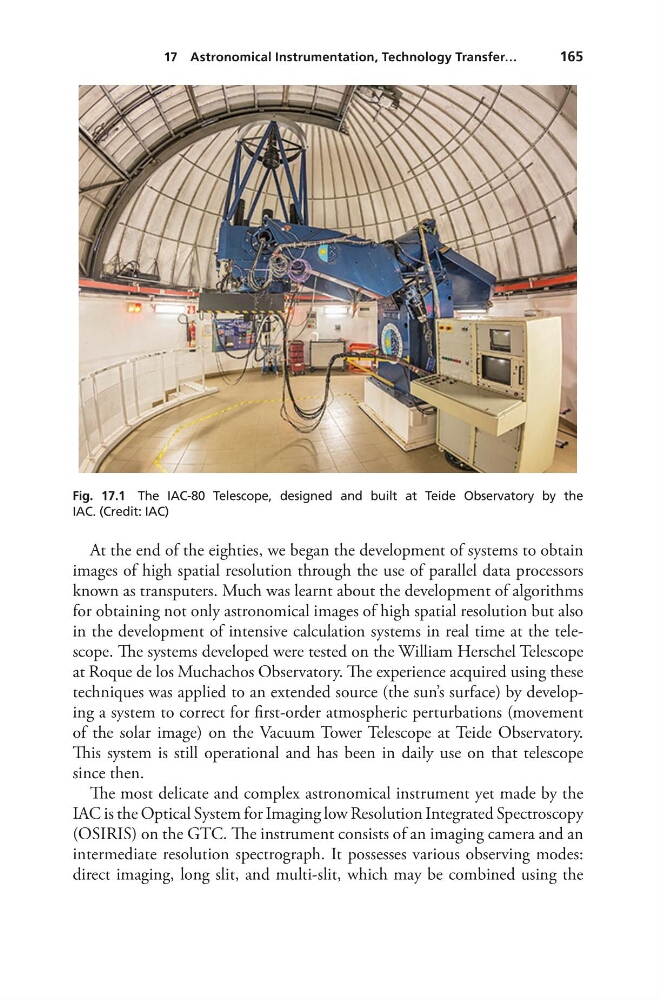
Fig. 17.1 The IAC-80 Telescope, designed and built at Teide Observatory by the
IAC. (Credit: IAC)
17 Astronomical Instrumentation, Technology Transfer…
At the end of the eighties, we began the development of systems to obtain
images of high spatial resolution through the use of parallel data processors
known as transputers. Much was learnt about the development of algorithms
for obtaining not only astronomical images of high spatial resolution but also
in the development of intensive calculation systems in real time at the telescope. The systems developed were tested on the William Herschel Telescope
at Roque de los Muchachos Observatory. The experience acquired using these
techniques was applied to an extended source (the sun’s surface) by developing a system to correct for first-order atmospheric perturbations (movement
of the solar image) on the Vacuum Tower Telescope at Teide Observatory.
This system is still operational and has been in daily use on that telescope
since then.
The most delicate and complex astronomical instrument yet made by the
IAC is the Optical System for Imaging low Resolution Integrated Spectroscopy
(OSIRIS) on the GTC. The instrument consists of an imaging camera and an
intermediate resolution spectrograph. It possesses various observing modes:
direct imaging, long slit, and multi-slit, which may be combined using the
Fig. 17.1 The IAC-80 Telescope, designed and built at Teide Observatory by the
IAC. (Credit: IAC)
17 Astronomical Instrumentation, Technology Transfer…