

157
administration. We have provided the Research Division with a support secretariat for the researchers, and there is even a scientific editor to help them
with the preparation of their articles. Nevertheless, our quest for optimization
has always been obstructed. Of course, if we compare ourselves with the
sprouting bureaucracies of our universities and many other research institutions, we turn out to be fortunate, but that is little consolation.
We have tried many things, more or less successfully, to improve our
research. Among these I recall the monthly ‘Director’s Seminars’, in which the
scientists would, one by one, talk about what they had been doing. There is
also ‘Our Science Day’, which is celebrated annually, and during which we
meet at a local venue, removed from our daily environment to hear what our
researchers have been doing during the year. There are, of course, many other
activities that it would be prolix to mention here.
One thing that has proved beneficial is the periodic change of the head of
research. The incumbent is directly responsible for organizing and managing
research at the Institute. Remember that the course of the IAC’s research
efforts is determined by the Research Assessorial Commission and is sanctioned by the Governing Council. This regular changing of the head of
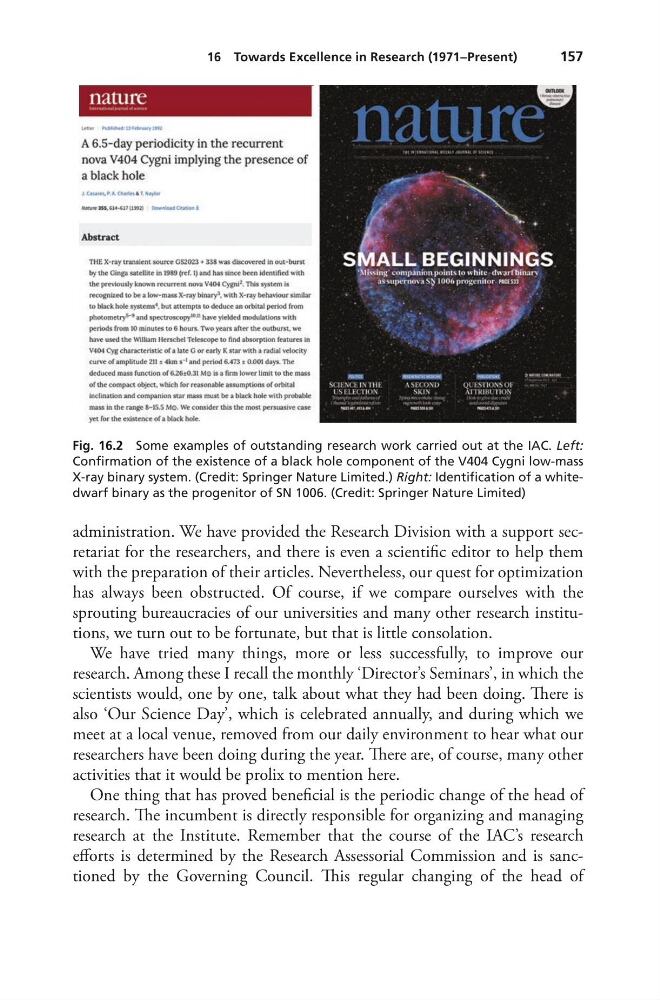
Fig. 16.2 Some examples of outstanding research work carried out at the IAC. Left:
Confirmation of the existence of a black hole component of the V404 Cygni low-mass
X-ray binary system. (Credit: Springer Nature Limited.) Right: Identification of a whitedwarf binary as the progenitor of SN 1006. (Credit: Springer Nature Limited)
16 Towards Excellence in Research (1971–Present)
administration. We have provided the Research Division with a support secretariat for the researchers, and there is even a scientific editor to help them
with the preparation of their articles. Nevertheless, our quest for optimization
has always been obstructed. Of course, if we compare ourselves with the
sprouting bureaucracies of our universities and many other research institutions, we turn out to be fortunate, but that is little consolation.
We have tried many things, more or less successfully, to improve our
research. Among these I recall the monthly ‘Director’s Seminars’, in which the
scientists would, one by one, talk about what they had been doing. There is
also ‘Our Science Day’, which is celebrated annually, and during which we
meet at a local venue, removed from our daily environment to hear what our
researchers have been doing during the year. There are, of course, many other
activities that it would be prolix to mention here.
One thing that has proved beneficial is the periodic change of the head of
research. The incumbent is directly responsible for organizing and managing
research at the Institute. Remember that the course of the IAC’s research
efforts is determined by the Research Assessorial Commission and is sanctioned by the Governing Council. This regular changing of the head of
Fig. 16.2 Some examples of outstanding research work carried out at the IAC. Left:
Confirmation of the existence of a black hole component of the V404 Cygni low-mass
X-ray binary system. (Credit: Springer Nature Limited.) Right: Identification of a whitedwarf binary as the progenitor of SN 1006. (Credit: Springer Nature Limited)
16 Towards Excellence in Research (1971–Present)