

226
J. Zhu et al.
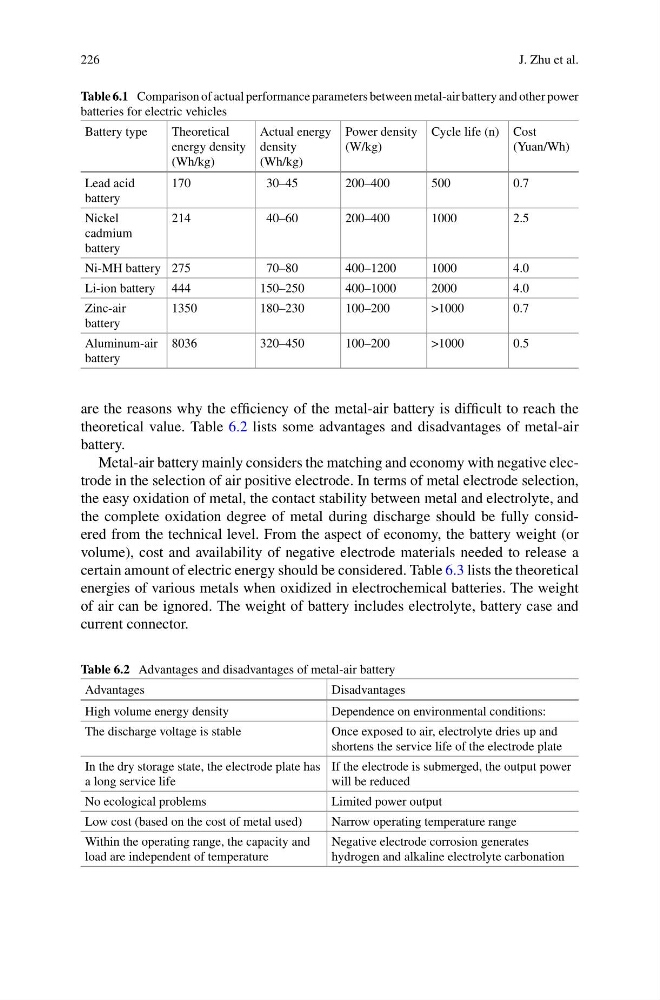
Table 6.1 Comparison of actual performance parameters between metal-air battery and other power
batteries for electric vehicles
Battery type
Theoretical
energy density
(Wh/kg)
Actual energy
density
(Wh/kg)
Power density
(W/kg)
Cycle life (n) Cost
(Yuan/Wh)
Lead acid
battery
170
30–45
200–400
500
0.7
Nickel
cadmium
battery
214
40–60
200–400
1000
2.5
Ni-MH battery 275
70–80
400–1200
1000
4.0
Li-ion battery 444
150–250
400–1000
2000
4.0
Zinc-air
battery
1350
180–230
100–200
>1000
0.7
Aluminum-air
battery
8036
320–450
100–200
>1000
0.5
are the reasons why the efficiency of the metal-air battery is difficult to reach the
theoretical value. Table 6.2 lists some advantages and disadvantages of metal-air
battery.
Metal-air battery mainly considers the matching and economy with negative electrode in the selection of air positive electrode. In terms of metal electrode selection,
the easy oxidation of metal, the contact stability between metal and electrolyte, and
the complete oxidation degree of metal during discharge should be fully considered from the technical level. From the aspect of economy, the battery weight (or
volume), cost and availability of negative electrode materials needed to release a
certain amount of electric energy should be considered. Table 6.3 lists the theoretical
energies of various metals when oxidized in electrochemical batteries. The weight
of air can be ignored. The weight of battery includes electrolyte, battery case and
current connector.
Table 6.2 Advantages and disadvantages of metal-air battery
Advantages
Disadvantages
High volume energy density
Dependence on environmental conditions:
The discharge voltage is stable
Once exposed to air, electrolyte dries up and
shortens the service life of the electrode plate
In the dry storage state, the electrode plate has
a long service life
If the electrode is submerged, the output power
will be reduced
No ecological problems
Limited power output
Low cost (based on the cost of metal used)
Narrow operating temperature range
Within the operating range, the capacity and
load are independent of temperature
Negative electrode corrosion generates
hydrogen and alkaline electrolyte carbonation
J. Zhu et al.
Table 6.1 Comparison of actual performance parameters between metal-air battery and other power
batteries for electric vehicles
Battery type
Theoretical
energy density
(Wh/kg)
Actual energy
density
(Wh/kg)
Power density
(W/kg)
Cycle life (n) Cost
(Yuan/Wh)
Lead acid
battery
170
30–45
200–400
500
0.7
Nickel
cadmium
battery
214
40–60
200–400
1000
2.5
Ni-MH battery 275
70–80
400–1200
1000
4.0
Li-ion battery 444
150–250
400–1000
2000
4.0
Zinc-air
battery
1350
180–230
100–200
>1000
0.7
Aluminum-air
battery
8036
320–450
100–200
>1000
0.5
are the reasons why the efficiency of the metal-air battery is difficult to reach the
theoretical value. Table 6.2 lists some advantages and disadvantages of metal-air
battery.
Metal-air battery mainly considers the matching and economy with negative electrode in the selection of air positive electrode. In terms of metal electrode selection,
the easy oxidation of metal, the contact stability between metal and electrolyte, and
the complete oxidation degree of metal during discharge should be fully considered from the technical level. From the aspect of economy, the battery weight (or
volume), cost and availability of negative electrode materials needed to release a
certain amount of electric energy should be considered. Table 6.3 lists the theoretical
energies of various metals when oxidized in electrochemical batteries. The weight
of air can be ignored. The weight of battery includes electrolyte, battery case and
current connector.
Table 6.2 Advantages and disadvantages of metal-air battery
Advantages
Disadvantages
High volume energy density
Dependence on environmental conditions:
The discharge voltage is stable
Once exposed to air, electrolyte dries up and
shortens the service life of the electrode plate
In the dry storage state, the electrode plate has
a long service life
If the electrode is submerged, the output power
will be reduced
No ecological problems
Limited power output
Low cost (based on the cost of metal used)
Narrow operating temperature range
Within the operating range, the capacity and
load are independent of temperature
Negative electrode corrosion generates
hydrogen and alkaline electrolyte carbonation