

5 Preparation of the Catalysts
191
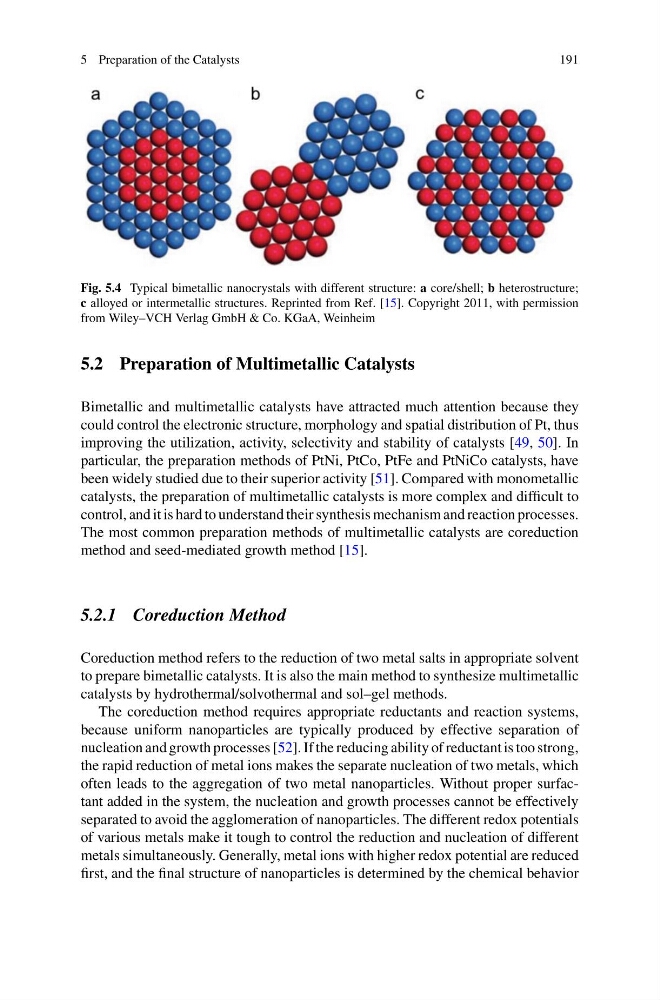
Fig. 5.4 Typical bimetallic nanocrystals with different structure: a core/shell; b heterostructure;
c alloyed or intermetallic structures. Reprinted from Ref. [15]. Copyright 2011, with permission
from Wiley–VCH Verlag GmbH & Co. KGaA, Weinheim
5.2 Preparation of Multimetallic Catalysts
Bimetallic and multimetallic catalysts have attracted much attention because they
could control the electronic structure, morphology and spatial distribution of Pt, thus
improving the utilization, activity, selectivity and stability of catalysts [49, 50]. In
particular, the preparation methods of PtNi, PtCo, PtFe and PtNiCo catalysts, have
been widely studied due to their superior activity [51]. Compared with monometallic
catalysts, the preparation of multimetallic catalysts is more complex and difficult to
control, and it is hard to understand their synthesis mechanism and reaction processes.
The most common preparation methods of multimetallic catalysts are coreduction
method and seed-mediated growth method [15].
5.2.1 Coreduction Method
Coreduction method refers to the reduction of two metal salts in appropriate solvent
to prepare bimetallic catalysts. It is also the main method to synthesize multimetallic
catalysts by hydrothermal/solvothermal and sol–gel methods.
The coreduction method requires appropriate reductants and reaction systems,
because uniform nanoparticles are typically produced by effective separation of
nucleation and growth processes [52]. If the reducing ability of reductant is too strong,
the rapid reduction of metal ions makes the separate nucleation of two metals, which
often leads to the aggregation of two metal nanoparticles. Without proper surfactant added in the system, the nucleation and growth processes cannot be effectively
separated to avoid the agglomeration of nanoparticles. The different redox potentials
of various metals make it tough to control the reduction and nucleation of different
metals simultaneously. Generally, metal ions with higher redox potential are reduced
first, and the final structure of nanoparticles is determined by the chemical behavior
191
Fig. 5.4 Typical bimetallic nanocrystals with different structure: a core/shell; b heterostructure;
c alloyed or intermetallic structures. Reprinted from Ref. [15]. Copyright 2011, with permission
from Wiley–VCH Verlag GmbH & Co. KGaA, Weinheim
5.2 Preparation of Multimetallic Catalysts
Bimetallic and multimetallic catalysts have attracted much attention because they
could control the electronic structure, morphology and spatial distribution of Pt, thus
improving the utilization, activity, selectivity and stability of catalysts [49, 50]. In
particular, the preparation methods of PtNi, PtCo, PtFe and PtNiCo catalysts, have
been widely studied due to their superior activity [51]. Compared with monometallic
catalysts, the preparation of multimetallic catalysts is more complex and difficult to
control, and it is hard to understand their synthesis mechanism and reaction processes.
The most common preparation methods of multimetallic catalysts are coreduction
method and seed-mediated growth method [15].
5.2.1 Coreduction Method
Coreduction method refers to the reduction of two metal salts in appropriate solvent
to prepare bimetallic catalysts. It is also the main method to synthesize multimetallic
catalysts by hydrothermal/solvothermal and sol–gel methods.
The coreduction method requires appropriate reductants and reaction systems,
because uniform nanoparticles are typically produced by effective separation of
nucleation and growth processes [52]. If the reducing ability of reductant is too strong,
the rapid reduction of metal ions makes the separate nucleation of two metals, which
often leads to the aggregation of two metal nanoparticles. Without proper surfactant added in the system, the nucleation and growth processes cannot be effectively
separated to avoid the agglomeration of nanoparticles. The different redox potentials
of various metals make it tough to control the reduction and nucleation of different
metals simultaneously. Generally, metal ions with higher redox potential are reduced
first, and the final structure of nanoparticles is determined by the chemical behavior