

48
R. Rüffer and A. I. Chumakov
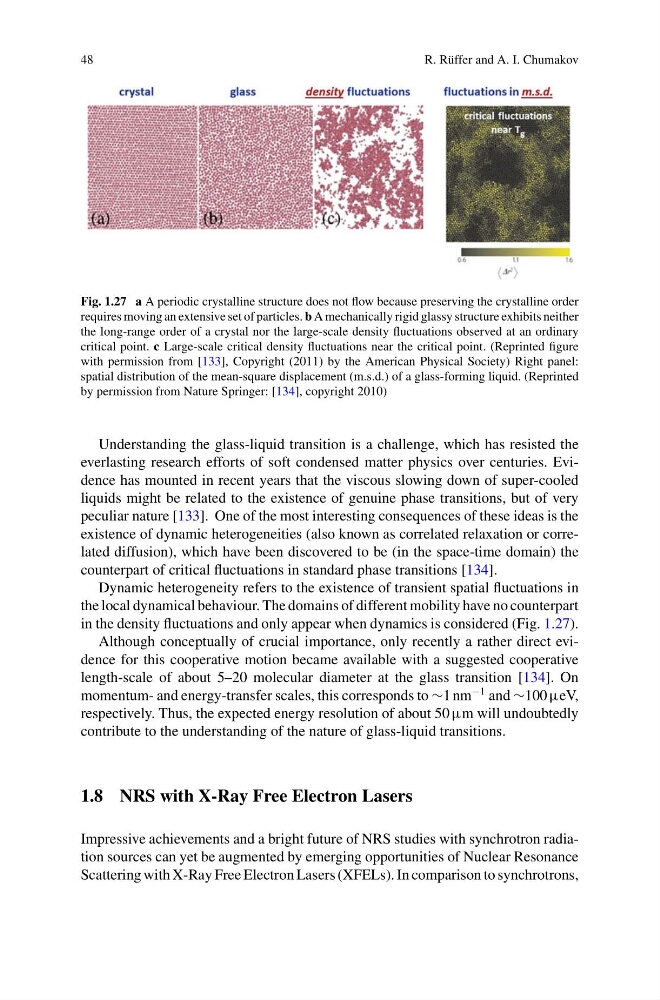
Fig. 1.27 a A periodic crystalline structure does not flow because preserving the crystalline order
requires moving an extensive set of particles. b A mechanically rigid glassy structure exhibits neither
the long-range order of a crystal nor the large-scale density fluctuations observed at an ordinary
critical point. c Large-scale critical density fluctuations near the critical point. (Reprinted figure
with permission from [133], Copyright (2011) by the American Physical Society) Right panel:
spatial distribution of the mean-square displacement (m.s.d.) of a glass-forming liquid. (Reprinted
by permission from Nature Springer: [134], copyright 2010)
Understanding the glass-liquid transition is a challenge, which has resisted the
everlasting research efforts of soft condensed matter physics over centuries. Evidence has mounted in recent years that the viscous slowing down of super-cooled
liquids might be related to the existence of genuine phase transitions, but of very
peculiar nature [133]. One of the most interesting consequences of these ideas is the
existence of dynamic heterogeneities (also known as correlated relaxation or correlated diffusion), which have been discovered to be (in the space-time domain) the
counterpart of critical fluctuations in standard phase transitions [134].
Dynamic heterogeneity refers to the existence of transient spatial fluctuations in
the local dynamical behaviour. The domains of different mobility have no counterpart
in the density fluctuations and only appear when dynamics is considered (Fig. 1.27).
Although conceptually of crucial importance, only recently a rather direct evidence for this cooperative motion became available with a suggested cooperative
length-scale of about 5–20 molecular diameter at the glass transition [134]. On
momentum- and energy-transfer scales, this corresponds to ∼1 nm
−1 and ∼100 μeV,
respectively. Thus, the expected energy resolution of about 50 μm will undoubtedly
contribute to the understanding of the nature of glass-liquid transitions.
1.8 NRS with X-Ray Free Electron Lasers
Impressive achievements and a bright future of NRS studies with synchrotron radiation sources can yet be augmented by emerging opportunities of Nuclear Resonance
Scattering with X-Ray Free Electron Lasers (XFELs). In comparison to synchrotrons,
R. Rüffer and A. I. Chumakov
Fig. 1.27 a A periodic crystalline structure does not flow because preserving the crystalline order
requires moving an extensive set of particles. b A mechanically rigid glassy structure exhibits neither
the long-range order of a crystal nor the large-scale density fluctuations observed at an ordinary
critical point. c Large-scale critical density fluctuations near the critical point. (Reprinted figure
with permission from [133], Copyright (2011) by the American Physical Society) Right panel:
spatial distribution of the mean-square displacement (m.s.d.) of a glass-forming liquid. (Reprinted
by permission from Nature Springer: [134], copyright 2010)
Understanding the glass-liquid transition is a challenge, which has resisted the
everlasting research efforts of soft condensed matter physics over centuries. Evidence has mounted in recent years that the viscous slowing down of super-cooled
liquids might be related to the existence of genuine phase transitions, but of very
peculiar nature [133]. One of the most interesting consequences of these ideas is the
existence of dynamic heterogeneities (also known as correlated relaxation or correlated diffusion), which have been discovered to be (in the space-time domain) the
counterpart of critical fluctuations in standard phase transitions [134].
Dynamic heterogeneity refers to the existence of transient spatial fluctuations in
the local dynamical behaviour. The domains of different mobility have no counterpart
in the density fluctuations and only appear when dynamics is considered (Fig. 1.27).
Although conceptually of crucial importance, only recently a rather direct evidence for this cooperative motion became available with a suggested cooperative
length-scale of about 5–20 molecular diameter at the glass transition [134]. On
momentum- and energy-transfer scales, this corresponds to ∼1 nm
−1 and ∼100 μeV,
respectively. Thus, the expected energy resolution of about 50 μm will undoubtedly
contribute to the understanding of the nature of glass-liquid transitions.
1.8 NRS with X-Ray Free Electron Lasers
Impressive achievements and a bright future of NRS studies with synchrotron radiation sources can yet be augmented by emerging opportunities of Nuclear Resonance
Scattering with X-Ray Free Electron Lasers (XFELs). In comparison to synchrotrons,