

324
Campani provided Giovanni Domenico Cassini (1625–1712) with his telescopes for
the Paris Observatory and probably influenced Christiaan Huygens (1629–1695)
with his innovative optical solutions (e.g., an eyepiece with three lenses).
Between 1600 and 1800, several astronomical observatories were established in
Rome, most of them as part of religious institutes devoted to educational activities
but also including private observatories built by rich and cultured members of the
Roman nobility. Among these were the Observatory of St. Maria in Vallicella (connected to the Vallicelliana Library); the Loggia on top of Palazzo Chigi where
Cassini made astronomical observations; the tower of Palazzo del Quirinale also
used by Anders Celsius (1701–1744) for his observations; the Observatory of
Minimi’s Convent in Trinità dei Monti by Francesco Jacquier (1711–1788) and
Tommaso Leseur (1703–1770); and the Observatory of the Domenicani Convent at
St. Maria Sopra Minerva created by Giovanni Battista Audiffredi (1714–1794)
(Secchi 1877; Monaco 2000).
Special mention should be made of the Specola Caetani. This observatory was
set up in 1777 by the nobleman Francesco Caetani on the roof of Palazzo Caetani
and equipped with many modern instruments for astronomy, meteorology, and
physics. The direction of the observatory was entrusted to professional astronomers:
first to Audiffredi from 1777 to 1780; then to Luigi De Cesaris (1750–1784); and
after his death to Eusebio Vega (1718–1798); and after Vega’s death to Feliciano
Scarpellini (1762–1840) until 1804, when the observatory was closed (Monaco
2000). The scientific activity of the observatory was very intense, with systematic
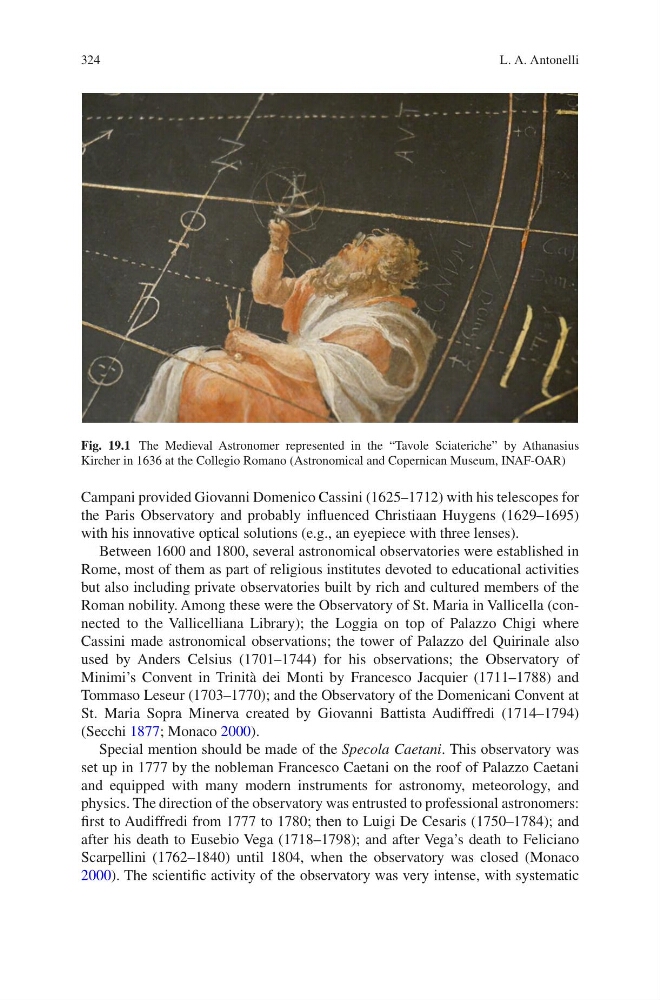
Fig. 19.1 The Medieval Astronomer represented in the “Tavole Sciateriche” by Athanasius
Kircher in 1636 at the Collegio Romano (Astronomical and Copernican Museum, INAF-OAR)
L. A. Antonelli
Campani provided Giovanni Domenico Cassini (1625–1712) with his telescopes for
the Paris Observatory and probably influenced Christiaan Huygens (1629–1695)
with his innovative optical solutions (e.g., an eyepiece with three lenses).
Between 1600 and 1800, several astronomical observatories were established in
Rome, most of them as part of religious institutes devoted to educational activities
but also including private observatories built by rich and cultured members of the
Roman nobility. Among these were the Observatory of St. Maria in Vallicella (connected to the Vallicelliana Library); the Loggia on top of Palazzo Chigi where
Cassini made astronomical observations; the tower of Palazzo del Quirinale also
used by Anders Celsius (1701–1744) for his observations; the Observatory of
Minimi’s Convent in Trinità dei Monti by Francesco Jacquier (1711–1788) and
Tommaso Leseur (1703–1770); and the Observatory of the Domenicani Convent at
St. Maria Sopra Minerva created by Giovanni Battista Audiffredi (1714–1794)
(Secchi 1877; Monaco 2000).
Special mention should be made of the Specola Caetani. This observatory was
set up in 1777 by the nobleman Francesco Caetani on the roof of Palazzo Caetani
and equipped with many modern instruments for astronomy, meteorology, and
physics. The direction of the observatory was entrusted to professional astronomers:
first to Audiffredi from 1777 to 1780; then to Luigi De Cesaris (1750–1784); and
after his death to Eusebio Vega (1718–1798); and after Vega’s death to Feliciano
Scarpellini (1762–1840) until 1804, when the observatory was closed (Monaco
2000). The scientific activity of the observatory was very intense, with systematic
Fig. 19.1 The Medieval Astronomer represented in the “Tavole Sciateriche” by Athanasius
Kircher in 1636 at the Collegio Romano (Astronomical and Copernican Museum, INAF-OAR)
L. A. Antonelli