

257
15.4.7 Gallicano Sundial (Undated)
In the Villa San Pastore of the German-Hungarian College in Gallicano, Lazio, there
is a sundial designed in a roundel attributed to Angelo Secchi. The current design is
probably the result of restoration work, which makes study of the elements of the
hour lines uncertain.
34
The dial is exposed to the southwest, and the tilt of the equinox line suggests an
azimuth of about 210 degrees. It is therefore believed that the original winter solstice line has been replaced over time. The vertical time line is not that of noon,
which suggests that the clock does not show solar hours. If the numbering is not
merely due to alterations, it leads one to suggest (with reservation) the hypothesis
that the dial might have been used at night, in the weeks before and after the
full Moon.
34 The late Prof. Edmund Marianeschi, known for gnomonic studies, reported this to the gnomonist
Renzo Righi, who included a photo of the sundial in his Calendar for the Year 2003.
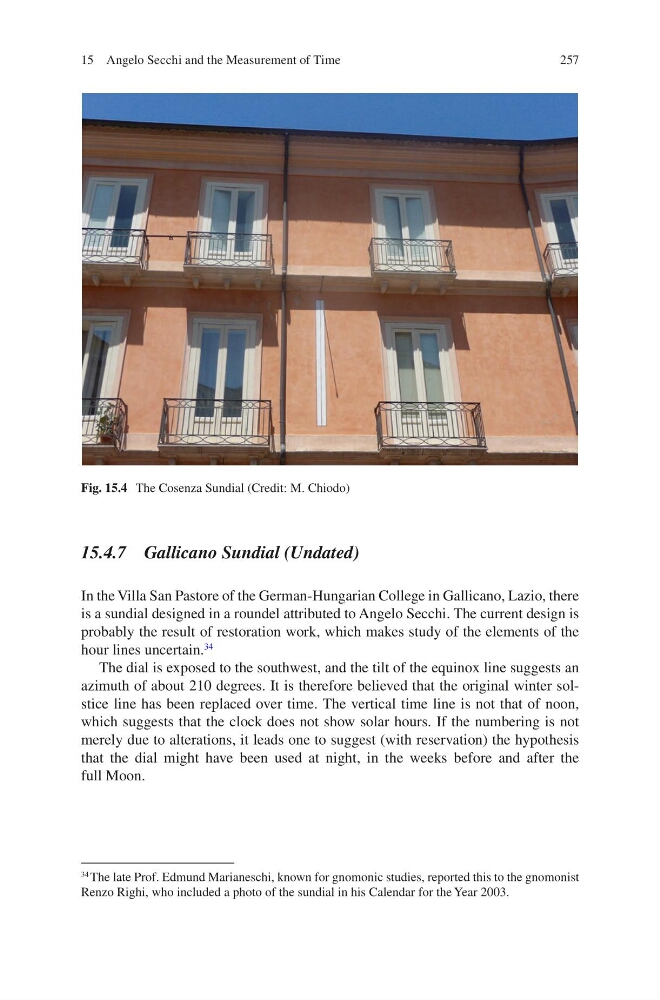
Fig. 15.4 The Cosenza Sundial (Credit: M. Chiodo)
15 Angelo Secchi and the Measurement of Time
15.4.7 Gallicano Sundial (Undated)
In the Villa San Pastore of the German-Hungarian College in Gallicano, Lazio, there
is a sundial designed in a roundel attributed to Angelo Secchi. The current design is
probably the result of restoration work, which makes study of the elements of the
hour lines uncertain.
34
The dial is exposed to the southwest, and the tilt of the equinox line suggests an
azimuth of about 210 degrees. It is therefore believed that the original winter solstice line has been replaced over time. The vertical time line is not that of noon,
which suggests that the clock does not show solar hours. If the numbering is not
merely due to alterations, it leads one to suggest (with reservation) the hypothesis
that the dial might have been used at night, in the weeks before and after the
full Moon.
34 The late Prof. Edmund Marianeschi, known for gnomonic studies, reported this to the gnomonist
Renzo Righi, who included a photo of the sundial in his Calendar for the Year 2003.
Fig. 15.4 The Cosenza Sundial (Credit: M. Chiodo)
15 Angelo Secchi and the Measurement of Time