

165
In recent years meteorology has entered a new phase; it is not only concerned with climatology, but with the general atmospheric physics and air currents and storm path. I was in
America at the time of Maury’s great discoveries. I saw his methods [of study], and from
his own mouth I learned his [modern] ideas [on dynamic meteorology], and it was my care
to inform my compatriots when I returned [to Italy], through the Memories by Tortolini
[Secchi 1853]. About at the same time, Maury came to Europe, and in Brussels he held a
conference where a draft of general studies on atmospheric movements was discussed. The
States [that attended] then planned a telegraphic coalition for studying storms. The Collegio
Romano Observatory took an active part in this study, and in 1855, as already mentioned,
the authorization to set up a [daily] telegraphic communication was granted by the Pontifical
Government […]. (Secchi 1877: 44)
10
10 Ma la meteorologia in questi ultimi anni è entrata in una fase novella; essa non si occupa solo
della climatologia, ma della fisica generale dell’atmosfera e delle correnti aeree e del giro delle
burrasche. Lo scrivente si trovava in America all’epoca delle grandi scoperte di Maury. Egli vide i
suoi metodi, e dalla sua bocca stessa raccolse le sue idee, e fu sua cura informarne al ritorno i suoi
compratioti in una memoria inserita negli annali di Tortolini, Tom. 4. 1853. Circa il medesimo
tempo il Maury si recava in Europa, e a Brusselles faceva una conferenza ove discutevasi un progetto di studii generali sui movimenti dell’atmosfera. Gli Stati non concorrevano ancora ufficialmente, ma progettavasi fin d’allora la coalizione telegrafica per lo studio delle burrasche.
All’osservatorio del Collegio Romano si prese parte attiva a questo studio e, nel 1855si otteneva
dal Governo Pontificio l’istituzione di una comunicazione telegrafica quotidiana tra le principali
città dello Stato, Roma, Ancona, Bologna, Ferrara, che continuò parecchi anni.
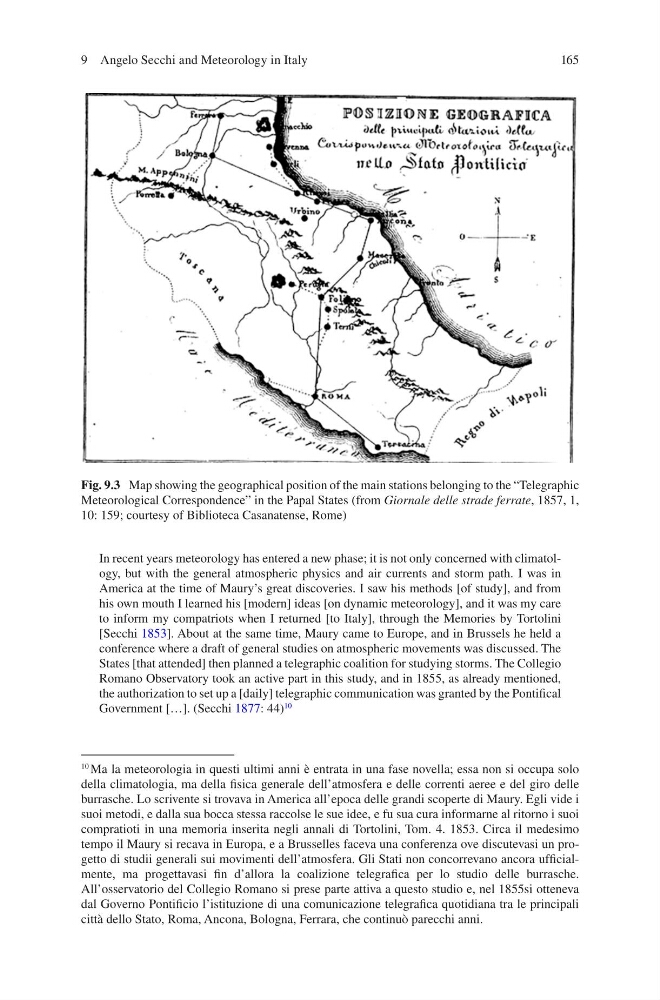
Fig. 9.3 Map showing the geographical position of the main stations belonging to the “Telegraphic
Meteorological Correspondence” in the Papal States (from Giornale delle strade ferrate, 1857, 1,
10: 159; courtesy of Biblioteca Casanatense, Rome)
9 Angelo Secchi and Meteorology in Italy
In recent years meteorology has entered a new phase; it is not only concerned with climatology, but with the general atmospheric physics and air currents and storm path. I was in
America at the time of Maury’s great discoveries. I saw his methods [of study], and from
his own mouth I learned his [modern] ideas [on dynamic meteorology], and it was my care
to inform my compatriots when I returned [to Italy], through the Memories by Tortolini
[Secchi 1853]. About at the same time, Maury came to Europe, and in Brussels he held a
conference where a draft of general studies on atmospheric movements was discussed. The
States [that attended] then planned a telegraphic coalition for studying storms. The Collegio
Romano Observatory took an active part in this study, and in 1855, as already mentioned,
the authorization to set up a [daily] telegraphic communication was granted by the Pontifical
Government […]. (Secchi 1877: 44)
10
10 Ma la meteorologia in questi ultimi anni è entrata in una fase novella; essa non si occupa solo
della climatologia, ma della fisica generale dell’atmosfera e delle correnti aeree e del giro delle
burrasche. Lo scrivente si trovava in America all’epoca delle grandi scoperte di Maury. Egli vide i
suoi metodi, e dalla sua bocca stessa raccolse le sue idee, e fu sua cura informarne al ritorno i suoi
compratioti in una memoria inserita negli annali di Tortolini, Tom. 4. 1853. Circa il medesimo
tempo il Maury si recava in Europa, e a Brusselles faceva una conferenza ove discutevasi un progetto di studii generali sui movimenti dell’atmosfera. Gli Stati non concorrevano ancora ufficialmente, ma progettavasi fin d’allora la coalizione telegrafica per lo studio delle burrasche.
All’osservatorio del Collegio Romano si prese parte attiva a questo studio e, nel 1855si otteneva
dal Governo Pontificio l’istituzione di una comunicazione telegrafica quotidiana tra le principali
città dello Stato, Roma, Ancona, Bologna, Ferrara, che continuò parecchi anni.
Fig. 9.3 Map showing the geographical position of the main stations belonging to the “Telegraphic
Meteorological Correspondence” in the Papal States (from Giornale delle strade ferrate, 1857, 1,
10: 159; courtesy of Biblioteca Casanatense, Rome)
9 Angelo Secchi and Meteorology in Italy