

144
To make an observation, the star was first located using this aperture, then offset
using the smaller prism, it having the same refractive power as the main prism
(Schellen 1872, 464–5). However, this scheme was not satisfactory and was soon
replaced with a second finder, offset by 13° from the main telescope. The star being
first located in the original finder then moved in right ascension until it appeared in
the second “spectral finder” (cercatore spettrale), to bring the spectrum into the field
of the main telescope (Secchi 1877a, 42).
With respect to the objective prism, Secchi notes that:
… although this instrument is excellent, it is very expensive, and it is unlikely that its use
will become widespread. Not being very easy to use for ordinary searches, we have looked
for a much simpler and cheaper spectroscope; we have managed to get one that collects
enough starlight to allow us to examine a few ninth magnitude stars. (Secchi 1877a; 43)
6
This is a reference to a new form of direct-vision spectroscope that he had developed which was both cheaper and ameliorated the difficulties encountered when
6 Però, benchè sì eccellente, questo strumento è molto costoso, e non era sperabile che venisse
molto diffuso, ed essendo non molto comodo per le ricerche ordinarie, abbiamo cercato un mezzo
molto più semplice ed economico, e siamo riusciti ad ottenere uno spettroscopio che raccogliendo
interamente la luce delle stelle permette di esaminarne fino talune di nona grandezza.
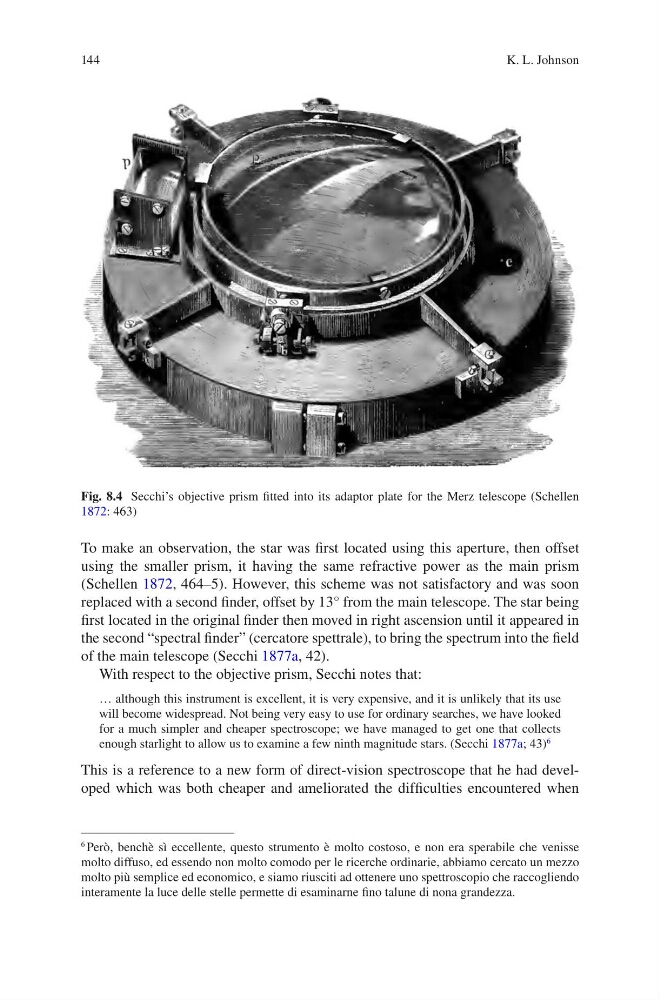
Fig. 8.4 Secchi’s objective prism fitted into its adaptor plate for the Merz telescope (Schellen
1872: 463)
K. L. Johnson
To make an observation, the star was first located using this aperture, then offset
using the smaller prism, it having the same refractive power as the main prism
(Schellen 1872, 464–5). However, this scheme was not satisfactory and was soon
replaced with a second finder, offset by 13° from the main telescope. The star being
first located in the original finder then moved in right ascension until it appeared in
the second “spectral finder” (cercatore spettrale), to bring the spectrum into the field
of the main telescope (Secchi 1877a, 42).
With respect to the objective prism, Secchi notes that:
… although this instrument is excellent, it is very expensive, and it is unlikely that its use
will become widespread. Not being very easy to use for ordinary searches, we have looked
for a much simpler and cheaper spectroscope; we have managed to get one that collects
enough starlight to allow us to examine a few ninth magnitude stars. (Secchi 1877a; 43)
6
This is a reference to a new form of direct-vision spectroscope that he had developed which was both cheaper and ameliorated the difficulties encountered when
6 Però, benchè sì eccellente, questo strumento è molto costoso, e non era sperabile che venisse
molto diffuso, ed essendo non molto comodo per le ricerche ordinarie, abbiamo cercato un mezzo
molto più semplice ed economico, e siamo riusciti ad ottenere uno spettroscopio che raccogliendo
interamente la luce delle stelle permette di esaminarne fino talune di nona grandezza.
Fig. 8.4 Secchi’s objective prism fitted into its adaptor plate for the Merz telescope (Schellen
1872: 463)
K. L. Johnson