

119
these absorptions are strong enough to render them visually greenish and bluish,
respectively. This spectroscopic work was Secchi’s most important contribution to
studies of the outer Solar System. Huggins and others would refine his measurements from 1871 onwards. Only in the 1930s by recording the spectra of gases
under high pressure would Rupert Wildt be able to identify the absorbing agent as
methane, or marsh gas (Alexander 1965). Appropriately enough, it was a component of our primitive terrestrial atmosphere (Fig. 6.7).
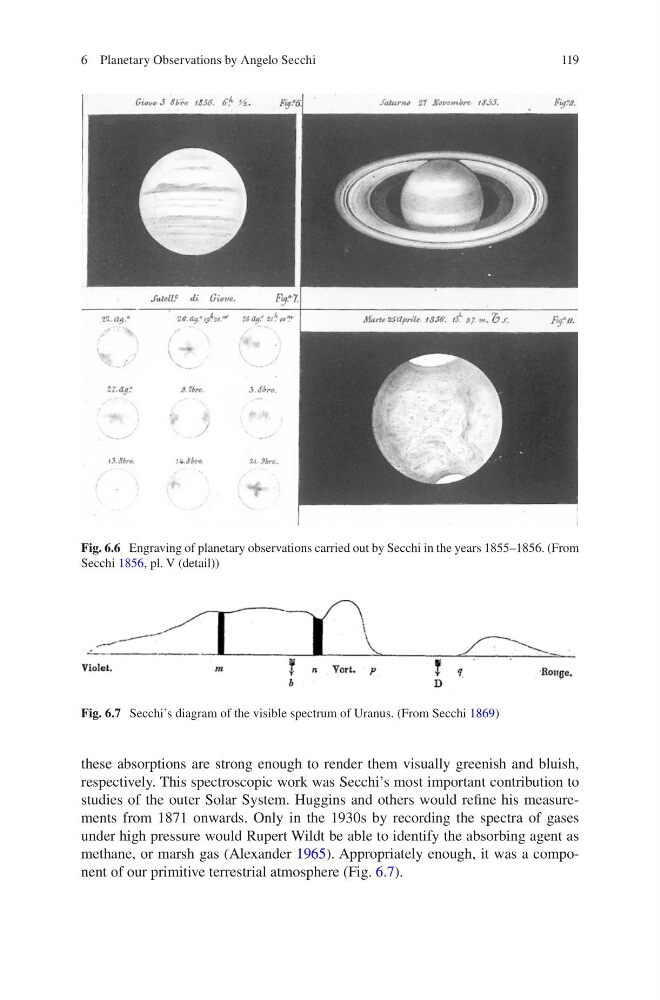
Fig. 6.6 Engraving of planetary observations carried out by Secchi in the years 1855–1856. (From
Secchi 1856, pl. V (detail))
Fig. 6.7 Secchi’s diagram of the visible spectrum of Uranus. (From Secchi 1869)
6 Planetary Observations by Angelo Secchi
these absorptions are strong enough to render them visually greenish and bluish,
respectively. This spectroscopic work was Secchi’s most important contribution to
studies of the outer Solar System. Huggins and others would refine his measurements from 1871 onwards. Only in the 1930s by recording the spectra of gases
under high pressure would Rupert Wildt be able to identify the absorbing agent as
methane, or marsh gas (Alexander 1965). Appropriately enough, it was a component of our primitive terrestrial atmosphere (Fig. 6.7).
Fig. 6.6 Engraving of planetary observations carried out by Secchi in the years 1855–1856. (From
Secchi 1856, pl. V (detail))
Fig. 6.7 Secchi’s diagram of the visible spectrum of Uranus. (From Secchi 1869)
6 Planetary Observations by Angelo Secchi