

112
of an atmosphere. There are also some remarks about the fine structure of the markings. Again on June 18, Secchi wrote:
‘…il pianeta ivi é giallo, e su tutto resto rosso screziato [our italics] di punti più accesi.
(l’aria è ottima)’.
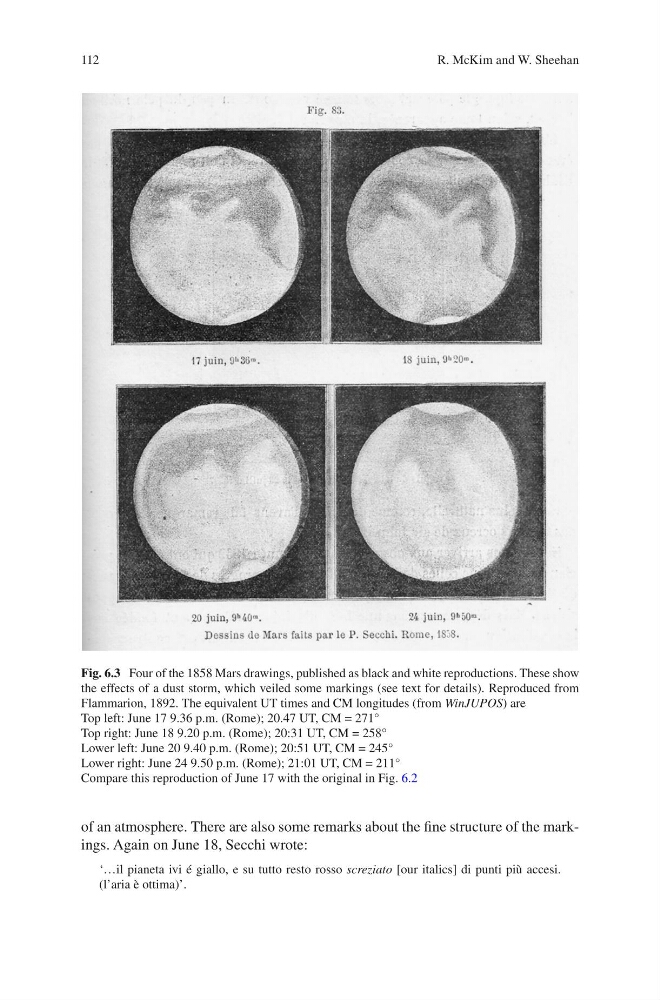
Fig. 6.3 Four of the 1858 Mars drawings, published as black and white reproductions. These show
the effects of a dust storm, which veiled some markings (see text for details). Reproduced from
Flammarion, 1892. The equivalent UT times and CM longitudes (from WinJUPOS) are
Top left: June 17 9.36 p.m. (Rome); 20.47 UT, CM = 271°
Top right: June 18 9.20 p.m. (Rome); 20:31 UT, CM = 258°
Lower left: June 20 9.40 p.m. (Rome); 20:51 UT, CM = 245°
Lower right: June 24 9.50 p.m. (Rome); 21:01 UT, CM = 211°
Compare this reproduction of June 17 with the original in Fig. 6.2
R. McKim and W. Sheehan
of an atmosphere. There are also some remarks about the fine structure of the markings. Again on June 18, Secchi wrote:
‘…il pianeta ivi é giallo, e su tutto resto rosso screziato [our italics] di punti più accesi.
(l’aria è ottima)’.
Fig. 6.3 Four of the 1858 Mars drawings, published as black and white reproductions. These show
the effects of a dust storm, which veiled some markings (see text for details). Reproduced from
Flammarion, 1892. The equivalent UT times and CM longitudes (from WinJUPOS) are
Top left: June 17 9.36 p.m. (Rome); 20.47 UT, CM = 271°
Top right: June 18 9.20 p.m. (Rome); 20:31 UT, CM = 258°
Lower left: June 20 9.40 p.m. (Rome); 20:51 UT, CM = 245°
Lower right: June 24 9.50 p.m. (Rome); 21:01 UT, CM = 211°
Compare this reproduction of June 17 with the original in Fig. 6.2
R. McKim and W. Sheehan