

Study on Commissioning Techniques for Oil Transportation Pipeline
183
2 Impact Analysis of Gas Accumulation During Commissioning
During the production commissioning, the terrain factors have great influence on the
gas accumulation of the pipeline. Under relatively flat terrain, the drop of the pipeline is
small, so the gas accumulation of the pipeline will be less when put into production, and
the gas-bearing section is basically absent. And in the continuous undulating pipeline,
due to the larger drop, the head after the high point (exhaust point) to form a dissatisfied
flow continues to flow downstream, to the lowest point to form a liquid seal, this will
cause the pipeline to accumulate gas, the formation of many gas-bearing section [1].
As the commissioning, in addition to the phenomenon of liquid sealing in the downhill section, gas fragmentation, migration and re-accumulation will also occur in the
pipeline [2]. In the case of small volume of transportation and slow velocity, the gas
trapped in the downhill section gathers at the high point to form a gas mass. Under the
action of buoyancy and inter-phase friction, the gas can remain stationary [3]. When the
flow velocity reaches a certain value, the surface tension of the air mass cannot remain
intact under the interphase friction force and the turbulent impact force of the liquid
phase. When flowrate is high, the gas may not stay at a relatively high point, but is carried downstream by the liquid. In this way, the gas forms a bubble flow or tiny slug flow
in the downstream tube [4]. These gases may not be very obvious in the flat section of
the terrain, but when they pass through the downstream uphill section with a steep slope,
the gas moves faster in the uphill section due to the influence of buoyancy, gradually
coalescing into large bubbles or slugs and reforming air mass. At the same time, since
the buoyancy action direction of the air mass in the uphill section is the same as that of
the liquid flow direction, the air mass will migrate to the downstream. When it comes
to the downhill section with large slope, the buoyancy action direction of the air mass is
opposite to that of the liquid flow direction, and then stays in the downhill section [5].
BS
MD
LF
AN
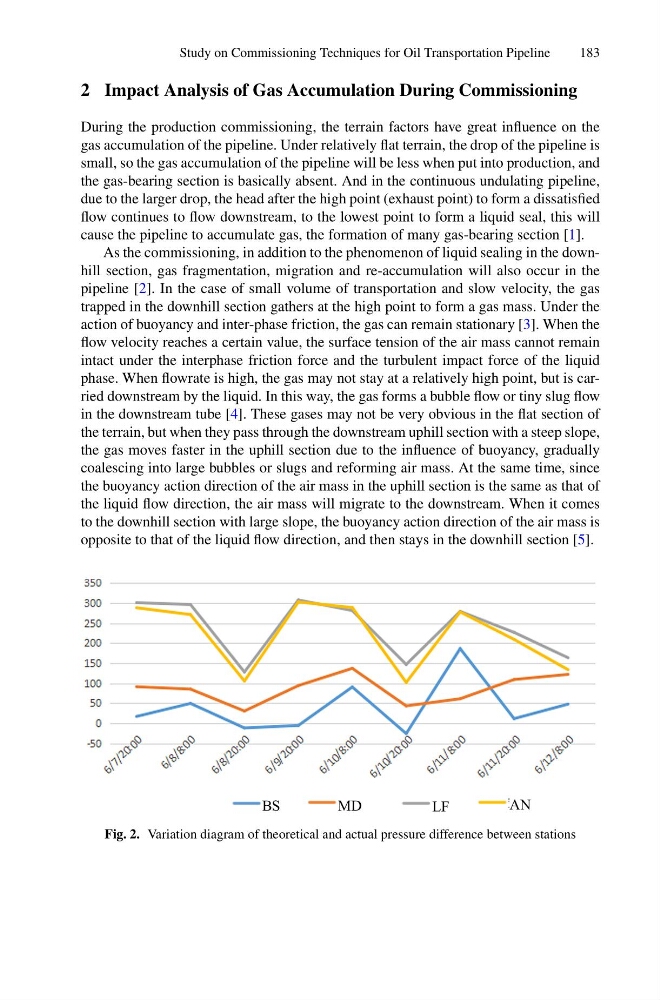
Fig. 2. Variation diagram of theoretical and actual pressure difference between stations
183
2 Impact Analysis of Gas Accumulation During Commissioning
During the production commissioning, the terrain factors have great influence on the
gas accumulation of the pipeline. Under relatively flat terrain, the drop of the pipeline is
small, so the gas accumulation of the pipeline will be less when put into production, and
the gas-bearing section is basically absent. And in the continuous undulating pipeline,
due to the larger drop, the head after the high point (exhaust point) to form a dissatisfied
flow continues to flow downstream, to the lowest point to form a liquid seal, this will
cause the pipeline to accumulate gas, the formation of many gas-bearing section [1].
As the commissioning, in addition to the phenomenon of liquid sealing in the downhill section, gas fragmentation, migration and re-accumulation will also occur in the
pipeline [2]. In the case of small volume of transportation and slow velocity, the gas
trapped in the downhill section gathers at the high point to form a gas mass. Under the
action of buoyancy and inter-phase friction, the gas can remain stationary [3]. When the
flow velocity reaches a certain value, the surface tension of the air mass cannot remain
intact under the interphase friction force and the turbulent impact force of the liquid
phase. When flowrate is high, the gas may not stay at a relatively high point, but is carried downstream by the liquid. In this way, the gas forms a bubble flow or tiny slug flow
in the downstream tube [4]. These gases may not be very obvious in the flat section of
the terrain, but when they pass through the downstream uphill section with a steep slope,
the gas moves faster in the uphill section due to the influence of buoyancy, gradually
coalescing into large bubbles or slugs and reforming air mass. At the same time, since
the buoyancy action direction of the air mass in the uphill section is the same as that of
the liquid flow direction, the air mass will migrate to the downstream. When it comes
to the downhill section with large slope, the buoyancy action direction of the air mass is
opposite to that of the liquid flow direction, and then stays in the downhill section [5].
BS
MD
LF
AN
Fig. 2. Variation diagram of theoretical and actual pressure difference between stations