

versatile alternative for copolymerizing water-soluble and water-insoluble monomers in aqueous solutions [86–90]. By this technique, hydrophobic monomers
solubilized in a micellar solution are copolymerized with hydrophilic monomers
by free-radical mechanism. Because of the locally high concentration of hydrophobic monomers within the surfactant micelles, copolymer chains containing blocks of
hydrophobes are obtained providing stronger hydrophobic interactions as compared
to the random copolymers formed by solution or bulk polymerizations [91]. The
length of hydrophobic blocks and the number of blocks per copolymer chains can
easily be adjusted by the concentrations of surfactant and hydrophobic monomer.
Candau et al. showed significant effects of the number and length of hydrophobic
blocks on the zero-shear viscosity of semi-dilute solutions of hydrophobically
modified polyacrylamides [86–90, 92–94]. However, physically or hybrid, i.e.,
chemically and physically, cross-linked analogs of these polymers in their
as-prepared or swollen states in water as well as their mechanical and viscoelastic
properties draw attention only in the past years [95–100].
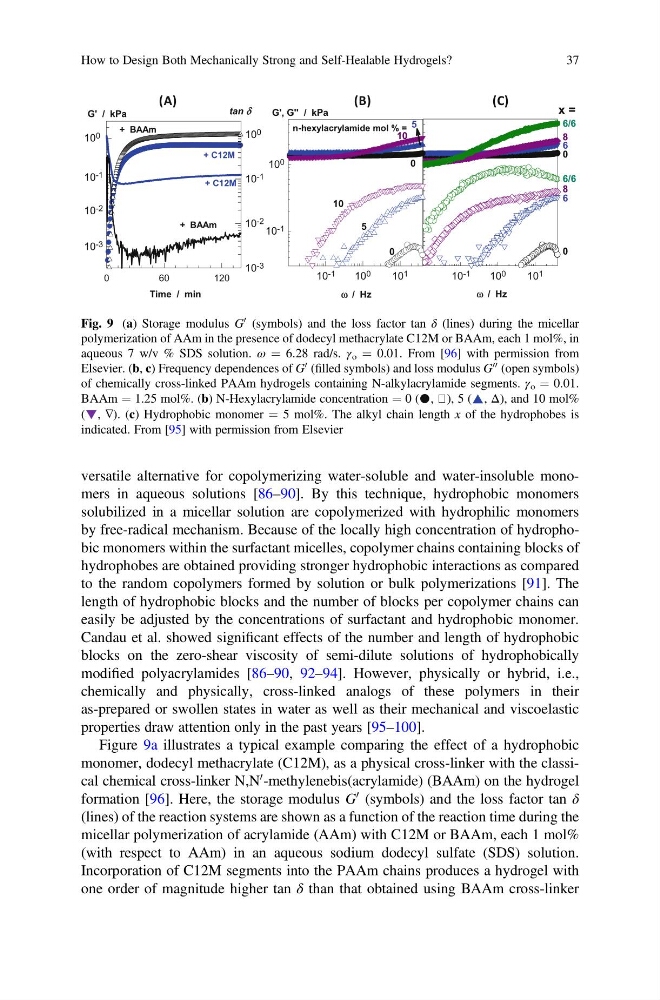
Figure 9a illustrates a typical example comparing the effect of a hydrophobic
monomer, dodecyl methacrylate (C12M), as a physical cross-linker with the classical chemical cross-linker N,N
0 -methylenebis(acrylamide) (BAAm) on the hydrogel
formation [96]. Here, the storage modulus G
0 (symbols) and the loss factor tan δ
(lines) of the reaction systems are shown as a function of the reaction time during the
micellar polymerization of acrylamide (AAm) with C12M or BAAm, each 1 mol%
(with respect to AAm) in an aqueous sodium dodecyl sulfate (SDS) solution.
Incorporation of C12M segments into the PAAm chains produces a hydrogel with
one order of magnitude higher tan δ than that obtained using BAAm cross-linker
ω / Hz
ω / Hz
G', G'' / kPa
0
5
10
0
10
6
8
0
0
6/6
n-hexylacrylamide mol % = 5
x =
Time / min
0
60
120
G' / kPa
10 0
10 -1
10 -1
10 0
10 1
10 -1
10 0
10 1
10 -1
10 -2
10 -1
10 -3
10 0
10 0
10 -2
10 -3
tan δ
+ C12M
+ BAAm
+ BAAm
6
8
6/6
+ C12M
(A)
(B)
(C)
Fig. 9 (a) Storage modulus G
0 (symbols) and the loss factor tan δ (lines) during the micellar
polymerization of AAm in the presence of dodecyl methacrylate C12M or BAAm, each 1 mol%, in
aqueous 7 w/v % SDS solution. ω ¼ 6.28 rad/s. γ o ¼ 0.01. From [96] with permission from
Elsevier. (b, c) Frequency dependences of G
0 (filled symbols) and loss modulus G
00 (open symbols)
of chemically cross-linked PAAm hydrogels containing N-alkylacrylamide segments. γ o ¼ 0.01.
BAAm ¼ 1.25 mol%. (b) N-Hexylacrylamide concentration ¼ 0 (, ◯), 5 (, Δ), and 10 mol%
(, ∇). (c) Hydrophobic monomer ¼ 5 mol%. The alkyl chain length x of the hydrophobes is
indicated. From [95] with permission from Elsevier
How to Design Both Mechanically Strong and Self-Healable Hydrogels?
37
solubilized in a micellar solution are copolymerized with hydrophilic monomers
by free-radical mechanism. Because of the locally high concentration of hydrophobic monomers within the surfactant micelles, copolymer chains containing blocks of
hydrophobes are obtained providing stronger hydrophobic interactions as compared
to the random copolymers formed by solution or bulk polymerizations [91]. The
length of hydrophobic blocks and the number of blocks per copolymer chains can
easily be adjusted by the concentrations of surfactant and hydrophobic monomer.
Candau et al. showed significant effects of the number and length of hydrophobic
blocks on the zero-shear viscosity of semi-dilute solutions of hydrophobically
modified polyacrylamides [86–90, 92–94]. However, physically or hybrid, i.e.,
chemically and physically, cross-linked analogs of these polymers in their
as-prepared or swollen states in water as well as their mechanical and viscoelastic
properties draw attention only in the past years [95–100].
Figure 9a illustrates a typical example comparing the effect of a hydrophobic
monomer, dodecyl methacrylate (C12M), as a physical cross-linker with the classical chemical cross-linker N,N
0 -methylenebis(acrylamide) (BAAm) on the hydrogel
formation [96]. Here, the storage modulus G
0 (symbols) and the loss factor tan δ
(lines) of the reaction systems are shown as a function of the reaction time during the
micellar polymerization of acrylamide (AAm) with C12M or BAAm, each 1 mol%
(with respect to AAm) in an aqueous sodium dodecyl sulfate (SDS) solution.
Incorporation of C12M segments into the PAAm chains produces a hydrogel with
one order of magnitude higher tan δ than that obtained using BAAm cross-linker
ω / Hz
ω / Hz
G', G'' / kPa
0
5
10
0
10
6
8
0
0
6/6
n-hexylacrylamide mol % = 5
x =
Time / min
0
60
120
G' / kPa
10 0
10 -1
10 -1
10 0
10 1
10 -1
10 0
10 1
10 -1
10 -2
10 -1
10 -3
10 0
10 0
10 -2
10 -3
tan δ
+ C12M
+ BAAm
+ BAAm
6
8
6/6
+ C12M
(A)
(B)
(C)
Fig. 9 (a) Storage modulus G
0 (symbols) and the loss factor tan δ (lines) during the micellar
polymerization of AAm in the presence of dodecyl methacrylate C12M or BAAm, each 1 mol%, in
aqueous 7 w/v % SDS solution. ω ¼ 6.28 rad/s. γ o ¼ 0.01. From [96] with permission from
Elsevier. (b, c) Frequency dependences of G
0 (filled symbols) and loss modulus G
00 (open symbols)
of chemically cross-linked PAAm hydrogels containing N-alkylacrylamide segments. γ o ¼ 0.01.
BAAm ¼ 1.25 mol%. (b) N-Hexylacrylamide concentration ¼ 0 (, ◯), 5 (, Δ), and 10 mol%
(, ∇). (c) Hydrophobic monomer ¼ 5 mol%. The alkyl chain length x of the hydrophobes is
indicated. From [95] with permission from Elsevier
How to Design Both Mechanically Strong and Self-Healable Hydrogels?
37