

stimuli-responsive cross-linking motif to yield self-healing materials. Usually the
boronic ester bonds are obtained at pH higher than the pKa of diol, which is usually
greater than 8, which may limit certain application in biological systems. However,
through the modification of boronic acid by addition of electron-withdrawing or
-donating groups, the esterification equilibrium can be achieved across a range of pH
values (~4–10) [36]. To date, a huge amount of research has been devoted in this
area, both with natural and synthetic polymers, as outlined in the section below.
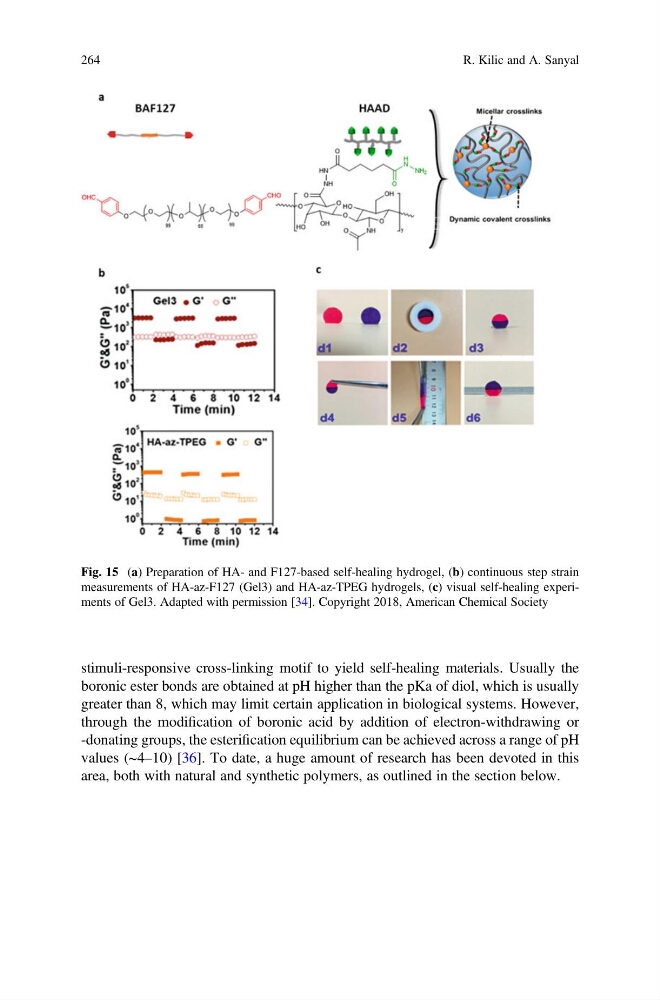
Fig. 15 (a) Preparation of HA- and F127-based self-healing hydrogel, (b) continuous step strain
measurements of HA-az-F127 (Gel3) and HA-az-TPEG hydrogels, (c) visual self-healing experiments of Gel3. Adapted with permission [34]. Copyright 2018, American Chemical Society
264
R. Kilic and A. Sanyal
boronic ester bonds are obtained at pH higher than the pKa of diol, which is usually
greater than 8, which may limit certain application in biological systems. However,
through the modification of boronic acid by addition of electron-withdrawing or
-donating groups, the esterification equilibrium can be achieved across a range of pH
values (~4–10) [36]. To date, a huge amount of research has been devoted in this
area, both with natural and synthetic polymers, as outlined in the section below.
Fig. 15 (a) Preparation of HA- and F127-based self-healing hydrogel, (b) continuous step strain
measurements of HA-az-F127 (Gel3) and HA-az-TPEG hydrogels, (c) visual self-healing experiments of Gel3. Adapted with permission [34]. Copyright 2018, American Chemical Society
264
R. Kilic and A. Sanyal