

exhibited similar tensile stress curve as the original sample (fracture strain as
10,650% and stress 247 kPa) (Fig. 11b). As a result, combination of dynamic
covalent with physical interactions generated a tough hydrogel with extremely
high stretchability, high toughness, and good self-healing ability.
Apart from using polymeric cross-linkers, small molecules have also been
employed as functional cross-linkers. For example, in 2018, Liu et al. reported a
slice-resistant, self-healing hydrogel by cross-linking calix[4]pyrrole-derivative
bearing hydrazide (CPTH) groups with PEG-DA via acylhydrazone bond formation
at neutral pH in H 2 O/EtOH mixture [29]. Self-healing was demonstrated by visual
experiments where two hydrogels were prepared and dyed with rhodamine B and
methylene blue, respectively. Each gel was cut into two halves and put in contact for
24 h under moist atmosphere at room temperature. Healed gels resisted stretching by
a tweezer. Quantitative self-healing assessment was further investigated by tensile
strength test to demonstrate that healed hydrogel showed similar tensile strength and
recovered to 93% and 100% of the initial value after 24 h and 48 h, respectively.
Singh and coworkers reported PEG-based self-healing hydrogels formed by
cross-linking an eight-arm PEG polymer containing glyoxylic aldehyde termini
with an eight-arm PEG hydrazine polymer in aqueous media at 37
C (Fig. 12a)
[30]. Controlled release of covalently attached chemotherapeutic agent (DOX) from
gel matrix was achieved for more than 40 days in a pH-responsive manner. Selfhealing property was examined by macroscopic experiments where two pieces of
hydrogels (one piece containing DOX) are joined together after incubating in contact
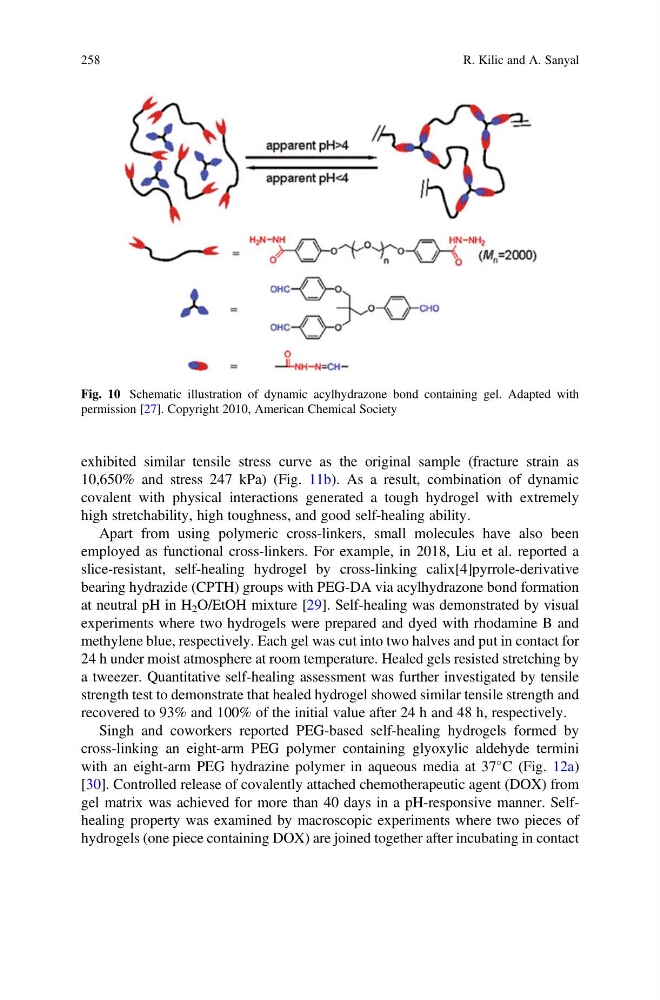
Fig. 10 Schematic illustration of dynamic acylhydrazone bond containing gel. Adapted with
permission [27]. Copyright 2010, American Chemical Society
258
R. Kilic and A. Sanyal
10,650% and stress 247 kPa) (Fig. 11b). As a result, combination of dynamic
covalent with physical interactions generated a tough hydrogel with extremely
high stretchability, high toughness, and good self-healing ability.
Apart from using polymeric cross-linkers, small molecules have also been
employed as functional cross-linkers. For example, in 2018, Liu et al. reported a
slice-resistant, self-healing hydrogel by cross-linking calix[4]pyrrole-derivative
bearing hydrazide (CPTH) groups with PEG-DA via acylhydrazone bond formation
at neutral pH in H 2 O/EtOH mixture [29]. Self-healing was demonstrated by visual
experiments where two hydrogels were prepared and dyed with rhodamine B and
methylene blue, respectively. Each gel was cut into two halves and put in contact for
24 h under moist atmosphere at room temperature. Healed gels resisted stretching by
a tweezer. Quantitative self-healing assessment was further investigated by tensile
strength test to demonstrate that healed hydrogel showed similar tensile strength and
recovered to 93% and 100% of the initial value after 24 h and 48 h, respectively.
Singh and coworkers reported PEG-based self-healing hydrogels formed by
cross-linking an eight-arm PEG polymer containing glyoxylic aldehyde termini
with an eight-arm PEG hydrazine polymer in aqueous media at 37
C (Fig. 12a)
[30]. Controlled release of covalently attached chemotherapeutic agent (DOX) from
gel matrix was achieved for more than 40 days in a pH-responsive manner. Selfhealing property was examined by macroscopic experiments where two pieces of
hydrogels (one piece containing DOX) are joined together after incubating in contact
Fig. 10 Schematic illustration of dynamic acylhydrazone bond containing gel. Adapted with
permission [27]. Copyright 2010, American Chemical Society
258
R. Kilic and A. Sanyal