

252
H. Yashima et al.
46.4MeV He
10μm Ti ×
10μm Cu × 3
3
·····
8 sets
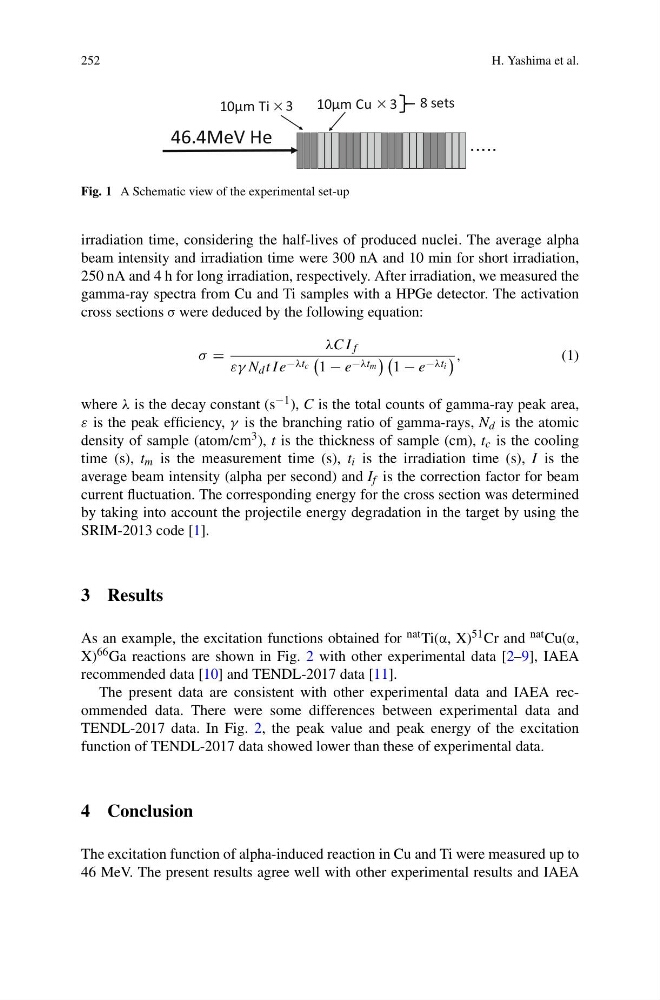
Fig. 1 A Schematic view of the experimental set-up
irradiation time, considering the half-lives of produced nuclei. The average alpha
beam intensity and irradiation time were 300 nA and 10 min for short irradiation,
250 nA and 4 h for long irradiation, respectively. After irradiation, we measured the
gamma-ray spectra from Cu and Ti samples with a HPGe detector. The activation
cross sections σ were deduced by the following equation:
σ =
λCI f
εγ N d tI e −λt c
1 − e −λt m
1 − e −λt i
,
(1)
where λ is the decay constant (s −1 ), C is the total counts of gamma-ray peak area,
ε is the peak efficiency, γ is the branching ratio of gamma-rays, N d is the atomic
density of sample (atom/cm 3 ), t is the thickness of sample (cm), t c is the cooling
time (s), t m is the measurement time (s), t i is the irradiation time (s), I is the
average beam intensity (alpha per second) and I f is the correction factor for beam
current fluctuation. The corresponding energy for the cross section was determined
by taking into account the projectile energy degradation in the target by using the
SRIM-2013 code [1].
3 Results
As an example, the excitation functions obtained for nat Ti(α, X) 51 Cr and nat Cu(α,
X) 66 Ga reactions are shown in Fig. 2 with other experimental data [2–9], IAEA
recommended data [10] and TENDL-2017 data [11].
The present data are consistent with other experimental data and IAEA recommended data. There were some differences between experimental data and
TENDL-2017 data. In Fig. 2, the peak value and peak energy of the excitation
function of TENDL-2017 data showed lower than these of experimental data.
4 Conclusion
The excitation function of alpha-induced reaction in Cu and Ti were measured up to
46 MeV. The present results agree well with other experimental results and IAEA
H. Yashima et al.
46.4MeV He
10μm Ti ×
10μm Cu × 3
3
·····
8 sets
Fig. 1 A Schematic view of the experimental set-up
irradiation time, considering the half-lives of produced nuclei. The average alpha
beam intensity and irradiation time were 300 nA and 10 min for short irradiation,
250 nA and 4 h for long irradiation, respectively. After irradiation, we measured the
gamma-ray spectra from Cu and Ti samples with a HPGe detector. The activation
cross sections σ were deduced by the following equation:
σ =
λCI f
εγ N d tI e −λt c
1 − e −λt m
1 − e −λt i
,
(1)
where λ is the decay constant (s −1 ), C is the total counts of gamma-ray peak area,
ε is the peak efficiency, γ is the branching ratio of gamma-rays, N d is the atomic
density of sample (atom/cm 3 ), t is the thickness of sample (cm), t c is the cooling
time (s), t m is the measurement time (s), t i is the irradiation time (s), I is the
average beam intensity (alpha per second) and I f is the correction factor for beam
current fluctuation. The corresponding energy for the cross section was determined
by taking into account the projectile energy degradation in the target by using the
SRIM-2013 code [1].
3 Results
As an example, the excitation functions obtained for nat Ti(α, X) 51 Cr and nat Cu(α,
X) 66 Ga reactions are shown in Fig. 2 with other experimental data [2–9], IAEA
recommended data [10] and TENDL-2017 data [11].
The present data are consistent with other experimental data and IAEA recommended data. There were some differences between experimental data and
TENDL-2017 data. In Fig. 2, the peak value and peak energy of the excitation
function of TENDL-2017 data showed lower than these of experimental data.
4 Conclusion
The excitation function of alpha-induced reaction in Cu and Ti were measured up to
46 MeV. The present results agree well with other experimental results and IAEA