

110
Y. Alhassid
0
γ
0.05
0.15
0.25
β
0
γ
0.05
0.15
0.25
β
π/3
π/6
prolate
oblate
spherical
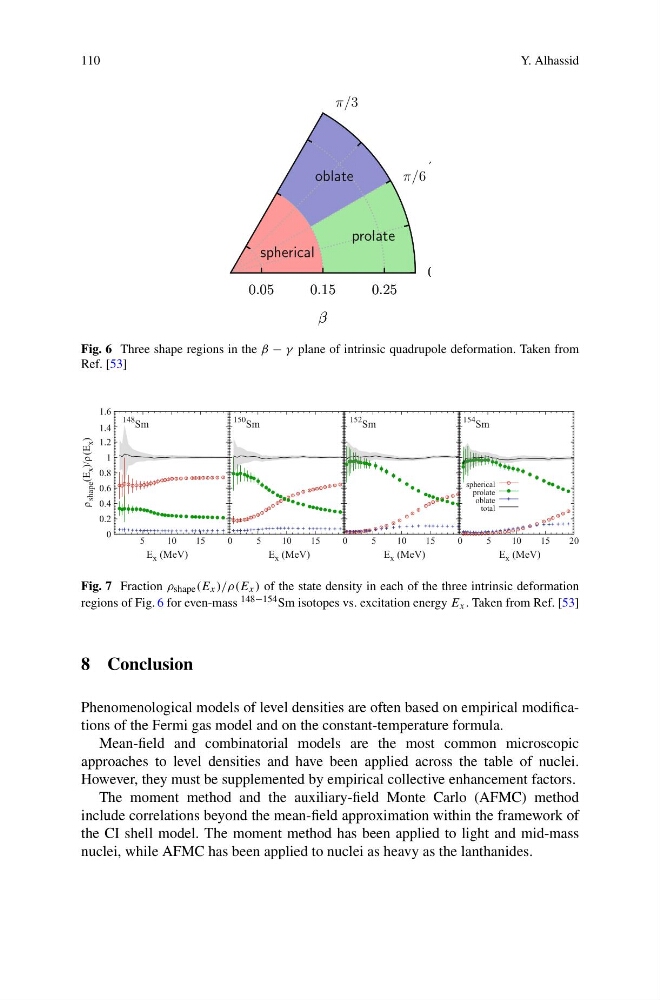
Fig. 6 Three shape regions in the β − γ plane of intrinsic quadrupole deformation. Taken from
Ref. [53]
0
0.2
0.4
0.6
0.8
1
1.2
1.4
1.6
5
10
15
148 Sm
150 Sm
152
Sm
154
Sm
ρ
shape (E
x )/ρ (E
x )
E x (MeV)
E x (MeV)
E x (MeV)
E x (MeV)
0
5
10
15
0
5
10
15
0
5
10
15
20
spherical
prolate
oblate
total
Fig. 7 Fraction ρ shape (E x )/ρ(E x ) of the state density in each of the three intrinsic deformation
regions of Fig. 6 for even-mass 148−154 Sm isotopes vs. excitation energy E x . Taken from Ref. [53]
8 Conclusion
Phenomenological models of level densities are often based on empirical modifications of the Fermi gas model and on the constant-temperature formula.
Mean-field and combinatorial models are the most common microscopic
approaches to level densities and have been applied across the table of nuclei.
However, they must be supplemented by empirical collective enhancement factors.
The moment method and the auxiliary-field Monte Carlo (AFMC) method
include correlations beyond the mean-field approximation within the framework of
the CI shell model. The moment method has been applied to light and mid-mass
nuclei, while AFMC has been applied to nuclei as heavy as the lanthanides.
Y. Alhassid
0
γ
0.05
0.15
0.25
β
0
γ
0.05
0.15
0.25
β
π/3
π/6
prolate
oblate
spherical
Fig. 6 Three shape regions in the β − γ plane of intrinsic quadrupole deformation. Taken from
Ref. [53]
0
0.2
0.4
0.6
0.8
1
1.2
1.4
1.6
5
10
15
148 Sm
150 Sm
152
Sm
154
Sm
ρ
shape (E
x )/ρ (E
x )
E x (MeV)
E x (MeV)
E x (MeV)
E x (MeV)
0
5
10
15
0
5
10
15
0
5
10
15
20
spherical
prolate
oblate
total
Fig. 7 Fraction ρ shape (E x )/ρ(E x ) of the state density in each of the three intrinsic deformation
regions of Fig. 6 for even-mass 148−154 Sm isotopes vs. excitation energy E x . Taken from Ref. [53]
8 Conclusion
Phenomenological models of level densities are often based on empirical modifications of the Fermi gas model and on the constant-temperature formula.
Mean-field and combinatorial models are the most common microscopic
approaches to level densities and have been applied across the table of nuclei.
However, they must be supplemented by empirical collective enhancement factors.
The moment method and the auxiliary-field Monte Carlo (AFMC) method
include correlations beyond the mean-field approximation within the framework of
the CI shell model. The moment method has been applied to light and mid-mass
nuclei, while AFMC has been applied to nuclei as heavy as the lanthanides.