

12 Property Function to Compute the Dustiness of Powders
431
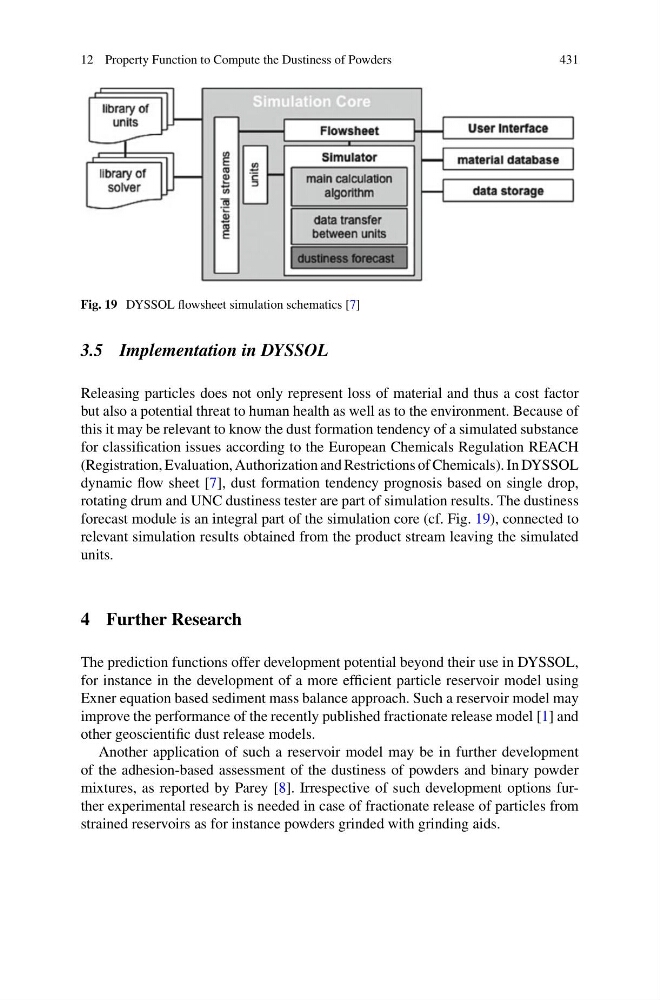
Fig. 19 DYSSOL flowsheet simulation schematics [7]
3.5 Implementation in DYSSOL
Releasing particles does not only represent loss of material and thus a cost factor
but also a potential threat to human health as well as to the environment. Because of
this it may be relevant to know the dust formation tendency of a simulated substance
for classification issues according to the European Chemicals Regulation REACH
(Registration, Evaluation, Authorization and Restrictions of Chemicals). In DYSSOL
dynamic flow sheet [7], dust formation tendency prognosis based on single drop,
rotating drum and UNC dustiness tester are part of simulation results. The dustiness
forecast module is an integral part of the simulation core (cf. Fig. 19), connected to
relevant simulation results obtained from the product stream leaving the simulated
units.
4 Further Research
The prediction functions offer development potential beyond their use in DYSSOL,
for instance in the development of a more efficient particle reservoir model using
Exner equation based sediment mass balance approach. Such a reservoir model may
improve the performance of the recently published fractionate release model [1] and
other geoscientific dust release models.
Another application of such a reservoir model may be in further development
of the adhesion-based assessment of the dustiness of powders and binary powder
mixtures, as reported by Parey [8]. Irrespective of such development options further experimental research is needed in case of fractionate release of particles from
strained reservoirs as for instance powders grinded with grinding aids.
431
Fig. 19 DYSSOL flowsheet simulation schematics [7]
3.5 Implementation in DYSSOL
Releasing particles does not only represent loss of material and thus a cost factor
but also a potential threat to human health as well as to the environment. Because of
this it may be relevant to know the dust formation tendency of a simulated substance
for classification issues according to the European Chemicals Regulation REACH
(Registration, Evaluation, Authorization and Restrictions of Chemicals). In DYSSOL
dynamic flow sheet [7], dust formation tendency prognosis based on single drop,
rotating drum and UNC dustiness tester are part of simulation results. The dustiness
forecast module is an integral part of the simulation core (cf. Fig. 19), connected to
relevant simulation results obtained from the product stream leaving the simulated
units.
4 Further Research
The prediction functions offer development potential beyond their use in DYSSOL,
for instance in the development of a more efficient particle reservoir model using
Exner equation based sediment mass balance approach. Such a reservoir model may
improve the performance of the recently published fractionate release model [1] and
other geoscientific dust release models.
Another application of such a reservoir model may be in further development
of the adhesion-based assessment of the dustiness of powders and binary powder
mixtures, as reported by Parey [8]. Irrespective of such development options further experimental research is needed in case of fractionate release of particles from
strained reservoirs as for instance powders grinded with grinding aids.