

in the QM system a large number of solvent molecules and to take into account its
dynamics have been able to unravel the complexity inherent to this apparently
simple and synthetically relevant reaction.
7 Conclusions
In the abstract, we suggested a parallel between a good meal and a good computation. Let us return to this comparison. A good meal is strongly dependent on the
circumstances during which the meal is eaten. Likewise, the quality of a calculation
is defined by its aims: question to be answered, size of the chemical system to be
treated, nature of the media, and physical conditions in which the chemical systems
is set. The link between the calculations and the question to be asked is an essential
question. This is well illustrated in the recent study and retraction of an experimental
and computational study of a cryptand-encapsulated Co–O–Co unit [113]. This
chapter was retracted because of a reassignment of the nature of the complex
which was no longer an oxo but a hydroxy complex. However, as stated “The
authors note that the magnetism study, X-ray absorption data, and the theoretical/
computational studies stand on their own merit.” In particular, the calculations were
not aimed at probing the existence of the complex but at indicating electronic
properties associated with a proposed formula. Thus, at no point could the calculations indicate that the oxo form was not present. In contrast, quantum calculations
were useful for structural reassignment when specifically set for this purpose as
illustrated by two selected examples [114, 115]. The overall global success in the
calculations to reproduce structural features has resulted in the use of theory to
determine structures not easily amenable to experimental methods [116, 117].
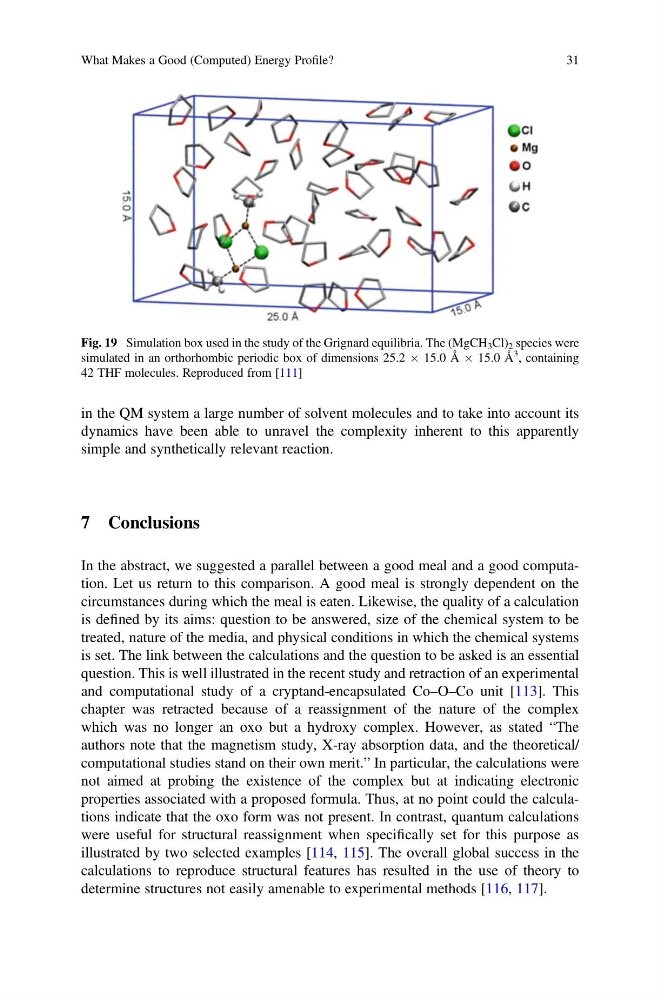
Fig. 19 Simulation box used in the study of the Grignard equilibria. The (MgCH 3 Cl) 2 species were
simulated in an orthorhombic periodic box of dimensions 25.2 Â 15.0 Å Â 15.0 Å
3
, containing
42 THF molecules. Reproduced from [111]
What Makes a Good (Computed) Energy Profile?
31
dynamics have been able to unravel the complexity inherent to this apparently
simple and synthetically relevant reaction.
7 Conclusions
In the abstract, we suggested a parallel between a good meal and a good computation. Let us return to this comparison. A good meal is strongly dependent on the
circumstances during which the meal is eaten. Likewise, the quality of a calculation
is defined by its aims: question to be answered, size of the chemical system to be
treated, nature of the media, and physical conditions in which the chemical systems
is set. The link between the calculations and the question to be asked is an essential
question. This is well illustrated in the recent study and retraction of an experimental
and computational study of a cryptand-encapsulated Co–O–Co unit [113]. This
chapter was retracted because of a reassignment of the nature of the complex
which was no longer an oxo but a hydroxy complex. However, as stated “The
authors note that the magnetism study, X-ray absorption data, and the theoretical/
computational studies stand on their own merit.” In particular, the calculations were
not aimed at probing the existence of the complex but at indicating electronic
properties associated with a proposed formula. Thus, at no point could the calculations indicate that the oxo form was not present. In contrast, quantum calculations
were useful for structural reassignment when specifically set for this purpose as
illustrated by two selected examples [114, 115]. The overall global success in the
calculations to reproduce structural features has resulted in the use of theory to
determine structures not easily amenable to experimental methods [116, 117].
Fig. 19 Simulation box used in the study of the Grignard equilibria. The (MgCH 3 Cl) 2 species were
simulated in an orthorhombic periodic box of dimensions 25.2 Â 15.0 Å Â 15.0 Å
3
, containing
42 THF molecules. Reproduced from [111]
What Makes a Good (Computed) Energy Profile?
31