

exploring the conformational space in a systematic way and avoiding, as far as
possible, high level quantum mechanical calculations for all the possible rotamers.
One approach, used by some of us, combines a large exploration of the conformational space using force-field based molecular dynamics (MD) simulations with
high-level quantum mechanical calculations on a selected number of structures
(Fig. 10) [60].
Initially classical MD simulations are performed, after incorporating the force
field parameters for the metals using Seminario’s method [61] and the MCPB.py
program [62]. In this way a total of 10,000 structures are generated. These structures
are partitioned into k clusters in which each structure belongs to the cluster with the
nearest mean serving as a prototype of the cluster (k-means clustering method). In
this way these structures are clustered and the most representative structure for each
of the clusters is subsequently optimized at the quantum mechanical (DFT) level.
This strategy was applied to the conformational analysis of species 1_A1_H, formed
by coordination of aminoalkene 2n to the β-diketiminato cobalt(II) alkyl complex
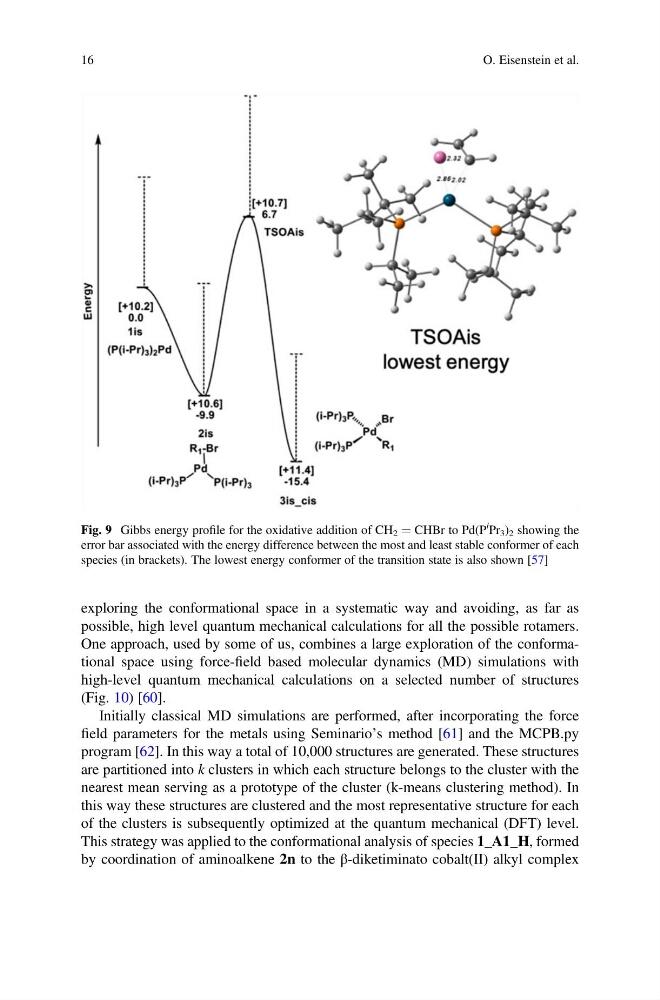
Fig. 9 Gibbs energy profile for the oxidative addition of CH 2 ¼ CHBr to Pd(P
i
Pr 3 ) 2 showing the
error bar associated with the energy difference between the most and least stable conformer of each
species (in brackets). The lowest energy conformer of the transition state is also shown [57]
16
O. Eisenstein et al.
possible, high level quantum mechanical calculations for all the possible rotamers.
One approach, used by some of us, combines a large exploration of the conformational space using force-field based molecular dynamics (MD) simulations with
high-level quantum mechanical calculations on a selected number of structures
(Fig. 10) [60].
Initially classical MD simulations are performed, after incorporating the force
field parameters for the metals using Seminario’s method [61] and the MCPB.py
program [62]. In this way a total of 10,000 structures are generated. These structures
are partitioned into k clusters in which each structure belongs to the cluster with the
nearest mean serving as a prototype of the cluster (k-means clustering method). In
this way these structures are clustered and the most representative structure for each
of the clusters is subsequently optimized at the quantum mechanical (DFT) level.
This strategy was applied to the conformational analysis of species 1_A1_H, formed
by coordination of aminoalkene 2n to the β-diketiminato cobalt(II) alkyl complex
Fig. 9 Gibbs energy profile for the oxidative addition of CH 2 ¼ CHBr to Pd(P
i
Pr 3 ) 2 showing the
error bar associated with the energy difference between the most and least stable conformer of each
species (in brackets). The lowest energy conformer of the transition state is also shown [57]
16
O. Eisenstein et al.