

6 Summary
In summary, the overall steps followed to develop and exploit a DFT-based
microkinetic simulator are:
1. Identify the reaction mechanisms and propose a reaction scheme.
2. Calculate the DFT energies (Gibbs energies of minima and transition states).
3. Use a kinetic simulator to:
(a) Fine-tune the DFT values with a set of experimental data and verify the
implemented model with another data set
(b) Use the implemented DFT-based microkinetic simulator to:
• Get a deeper insight on the contribution of each mechanism and suggest a
test for experimental verification of the proposed model
• Optimize the reaction conditions within specified ranges
To recapitulate, Fig. 17 shows an example of the modeling stages followed to
develop a reliable and predictive catalytic microkinetic model applying this incremental tight modeling protocol (see Ref. [14] for a detailed derivation of the DFT
model). Figure 17a represents the mechanisms that we expect to be dominant or
essential: the main catalytic cycle. Figure 17b, c includes secondary mechanisms that
contribute to explain further details of experimental observations. Thus, in the last
modeling stage (Fig. 17c), we can safely use only three points (large symbols shown
in Exp1) to refine the many parameters involved because the system, by starting
from the dominant mechanisms, has already been settled within the correct local
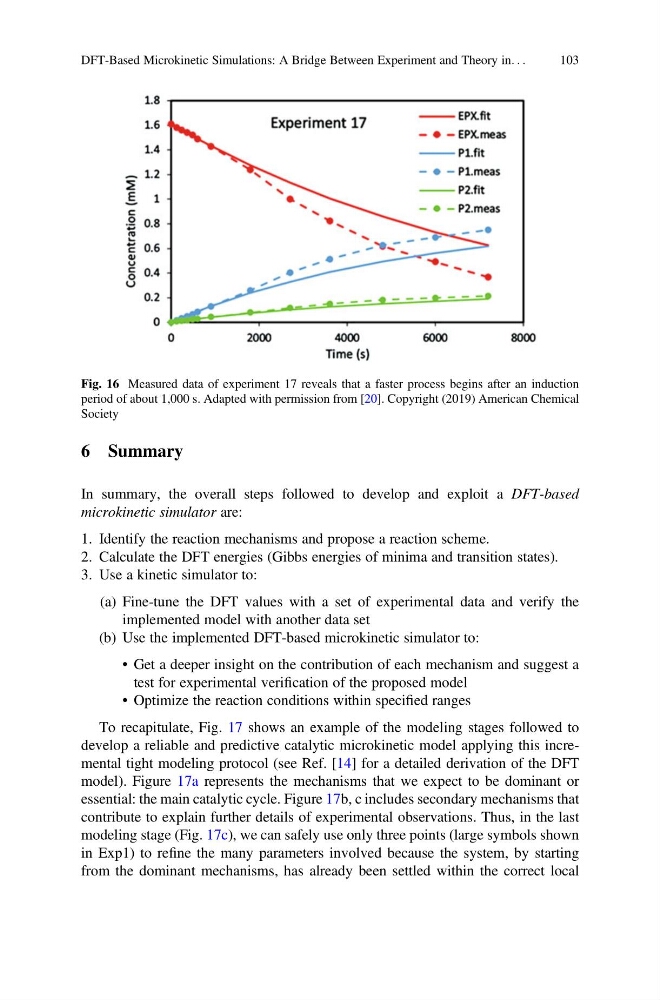
Fig. 16 Measured data of experiment 17 reveals that a faster process begins after an induction
period of about 1,000 s. Adapted with permission from [20]. Copyright (2019) American Chemical
Society
DFT-Based Microkinetic Simulations: A Bridge Between Experiment and Theory in. . .
103
In summary, the overall steps followed to develop and exploit a DFT-based
microkinetic simulator are:
1. Identify the reaction mechanisms and propose a reaction scheme.
2. Calculate the DFT energies (Gibbs energies of minima and transition states).
3. Use a kinetic simulator to:
(a) Fine-tune the DFT values with a set of experimental data and verify the
implemented model with another data set
(b) Use the implemented DFT-based microkinetic simulator to:
• Get a deeper insight on the contribution of each mechanism and suggest a
test for experimental verification of the proposed model
• Optimize the reaction conditions within specified ranges
To recapitulate, Fig. 17 shows an example of the modeling stages followed to
develop a reliable and predictive catalytic microkinetic model applying this incremental tight modeling protocol (see Ref. [14] for a detailed derivation of the DFT
model). Figure 17a represents the mechanisms that we expect to be dominant or
essential: the main catalytic cycle. Figure 17b, c includes secondary mechanisms that
contribute to explain further details of experimental observations. Thus, in the last
modeling stage (Fig. 17c), we can safely use only three points (large symbols shown
in Exp1) to refine the many parameters involved because the system, by starting
from the dominant mechanisms, has already been settled within the correct local
Fig. 16 Measured data of experiment 17 reveals that a faster process begins after an induction
period of about 1,000 s. Adapted with permission from [20]. Copyright (2019) American Chemical
Society
DFT-Based Microkinetic Simulations: A Bridge Between Experiment and Theory in. . .
103