

92
4 Interfacial Gaseous States
Water
Water
Gaseous layer
Water
Water
Gaseous layer
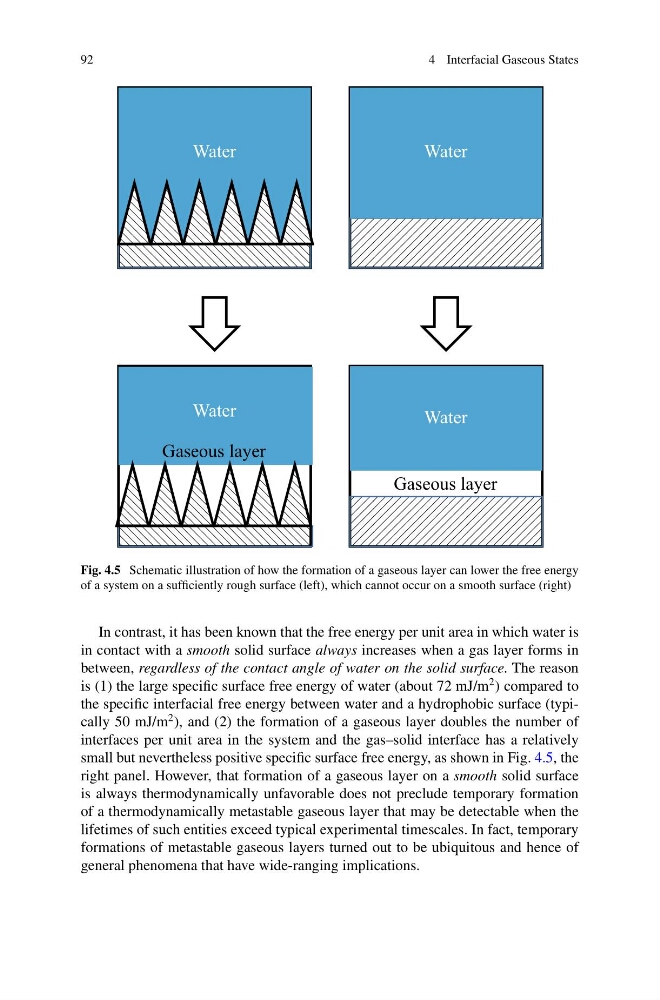
Fig. 4.5 Schematic illustration of how the formation of a gaseous layer can lower the free energy
of a system on a sufficiently rough surface (left), which cannot occur on a smooth surface (right)
In contrast, it has been known that the free energy per unit area in which water is
in contact with a smooth solid surface always increases when a gas layer forms in
between, regardless of the contact angle of water on the solid surface. The reason
is (1) the large specific surface free energy of water (about 72 mJ/m
2 ) compared to
the specific interfacial free energy between water and a hydrophobic surface (typically 50 mJ/m
2 ), and (2) the formation of a gaseous layer doubles the number of
interfaces per unit area in the system and the gas–solid interface has a relatively
small but nevertheless positive specific surface free energy, as shown in Fig. 4.5, the
right panel. However, that formation of a gaseous layer on a smooth solid surface
is always thermodynamically unfavorable does not preclude temporary formation
of a thermodynamically metastable gaseous layer that may be detectable when the
lifetimes of such entities exceed typical experimental timescales. In fact, temporary
formations of metastable gaseous layers turned out to be ubiquitous and hence of
general phenomena that have wide-ranging implications.
4 Interfacial Gaseous States
Water
Water
Gaseous layer
Water
Water
Gaseous layer
Fig. 4.5 Schematic illustration of how the formation of a gaseous layer can lower the free energy
of a system on a sufficiently rough surface (left), which cannot occur on a smooth surface (right)
In contrast, it has been known that the free energy per unit area in which water is
in contact with a smooth solid surface always increases when a gas layer forms in
between, regardless of the contact angle of water on the solid surface. The reason
is (1) the large specific surface free energy of water (about 72 mJ/m
2 ) compared to
the specific interfacial free energy between water and a hydrophobic surface (typically 50 mJ/m
2 ), and (2) the formation of a gaseous layer doubles the number of
interfaces per unit area in the system and the gas–solid interface has a relatively
small but nevertheless positive specific surface free energy, as shown in Fig. 4.5, the
right panel. However, that formation of a gaseous layer on a smooth solid surface
is always thermodynamically unfavorable does not preclude temporary formation
of a thermodynamically metastable gaseous layer that may be detectable when the
lifetimes of such entities exceed typical experimental timescales. In fact, temporary
formations of metastable gaseous layers turned out to be ubiquitous and hence of
general phenomena that have wide-ranging implications.