

60
A. K. Choudhary and R. Jain
heat input or irregular stirring of the workpiece. This defect can be avoided by careful
selection of a set of input parameters.
Oxide Entrapment At a higher temperature during the FSW process the eutectic
temperature (550 °C) of aluminum alloy can exceed, this may cause localized melting
within the workpiece resulting in this defect. In addition to that oxidation of the newly
sheared planes and high-temperature exposure of flowing metal to air would lead to
the formation of oxides at inner volume called oxide entrapment [86].
The thermal and mechanical properties of the welded specimen should be
observed. The welding temperature and welding speed should be governed properly to avoid any changes in parameter and defect generation. The combination of
tool rotation and tool traverse speed is responsible for the peak temperature generated
during FSW. This can reduce the defects in the weld.
2.5 Mechanical Property
2.5.1 Tensile Property and Hardness Variation
After the FSW the welded material generally shows a decrease in the tensile properties due to the reduction in dislocation density during the recrystallization process
resulting in lower stress to distort the material [87].
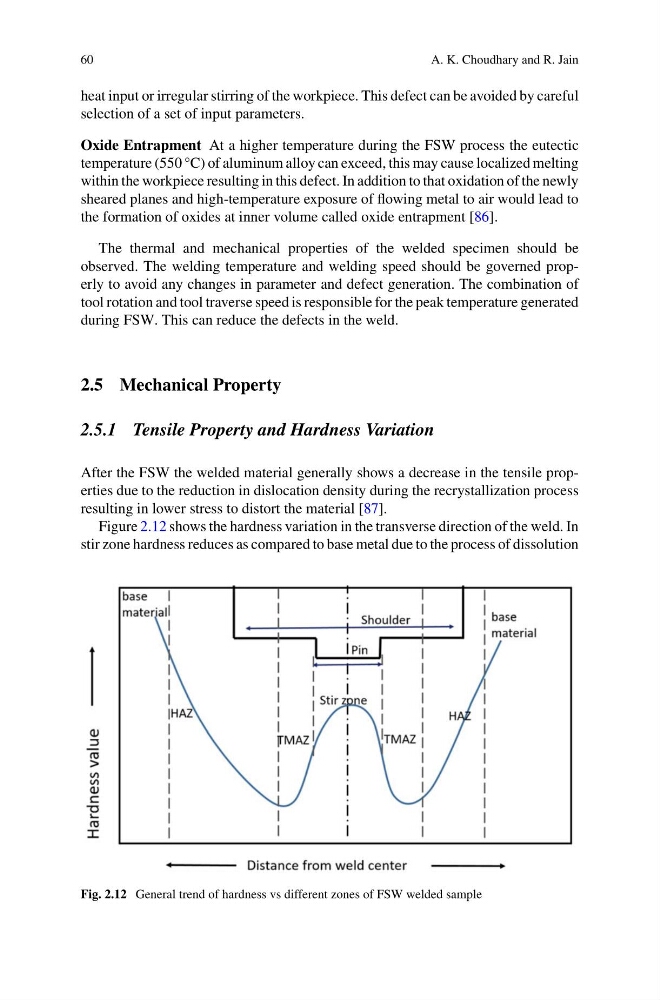
Figure 2.12 shows the hardness variation in the transverse direction of the weld. In
stir zone hardness reduces as compared to base metal due to the process of dissolution
Fig. 2.12 General trend of hardness vs different zones of FSW welded sample
A. K. Choudhary and R. Jain
heat input or irregular stirring of the workpiece. This defect can be avoided by careful
selection of a set of input parameters.
Oxide Entrapment At a higher temperature during the FSW process the eutectic
temperature (550 °C) of aluminum alloy can exceed, this may cause localized melting
within the workpiece resulting in this defect. In addition to that oxidation of the newly
sheared planes and high-temperature exposure of flowing metal to air would lead to
the formation of oxides at inner volume called oxide entrapment [86].
The thermal and mechanical properties of the welded specimen should be
observed. The welding temperature and welding speed should be governed properly to avoid any changes in parameter and defect generation. The combination of
tool rotation and tool traverse speed is responsible for the peak temperature generated
during FSW. This can reduce the defects in the weld.
2.5 Mechanical Property
2.5.1 Tensile Property and Hardness Variation
After the FSW the welded material generally shows a decrease in the tensile properties due to the reduction in dislocation density during the recrystallization process
resulting in lower stress to distort the material [87].
Figure 2.12 shows the hardness variation in the transverse direction of the weld. In
stir zone hardness reduces as compared to base metal due to the process of dissolution
Fig. 2.12 General trend of hardness vs different zones of FSW welded sample