

410
S. Papaefthymiou
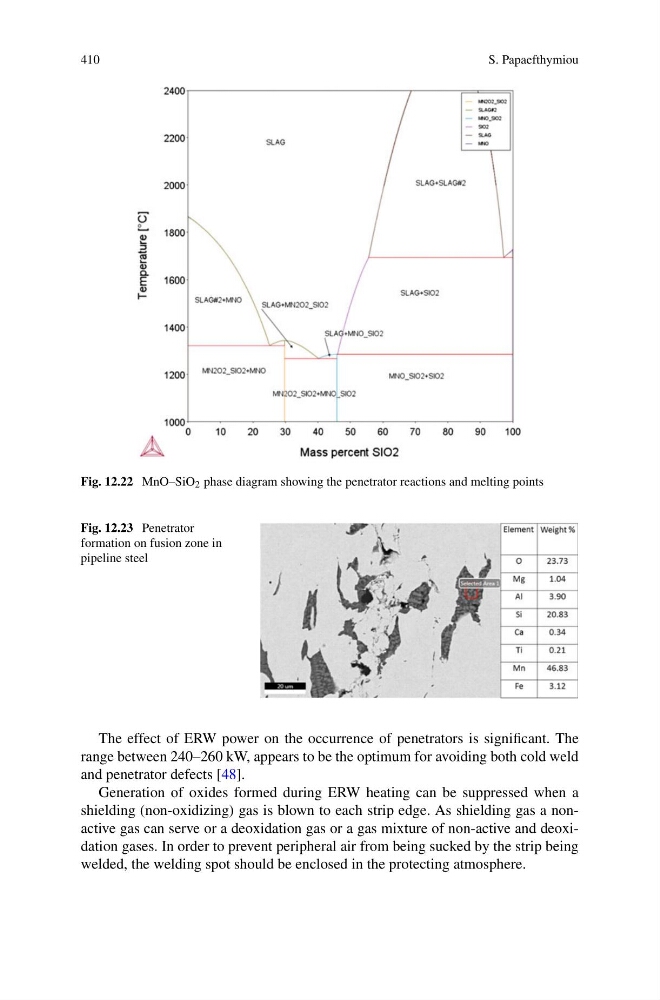
Fig. 12.22 MnO–SiO 2 phase diagram showing the penetrator reactions and melting points
Fig. 12.23 Penetrator
formation on fusion zone in
pipeline steel
The effect of ERW power on the occurrence of penetrators is significant. The
range between 240–260 kW, appears to be the optimum for avoiding both cold weld
and penetrator defects [48].
Generation of oxides formed during ERW heating can be suppressed when a
shielding (non-oxidizing) gas is blown to each strip edge. As shielding gas a nonactive gas can serve or a deoxidation gas or a gas mixture of non-active and deoxidation gases. In order to prevent peripheral air from being sucked by the strip being
welded, the welding spot should be enclosed in the protecting atmosphere.
S. Papaefthymiou
Fig. 12.22 MnO–SiO 2 phase diagram showing the penetrator reactions and melting points
Fig. 12.23 Penetrator
formation on fusion zone in
pipeline steel
The effect of ERW power on the occurrence of penetrators is significant. The
range between 240–260 kW, appears to be the optimum for avoiding both cold weld
and penetrator defects [48].
Generation of oxides formed during ERW heating can be suppressed when a
shielding (non-oxidizing) gas is blown to each strip edge. As shielding gas a nonactive gas can serve or a deoxidation gas or a gas mixture of non-active and deoxidation gases. In order to prevent peripheral air from being sucked by the strip being
welded, the welding spot should be enclosed in the protecting atmosphere.