

350
Y. Shi et al.
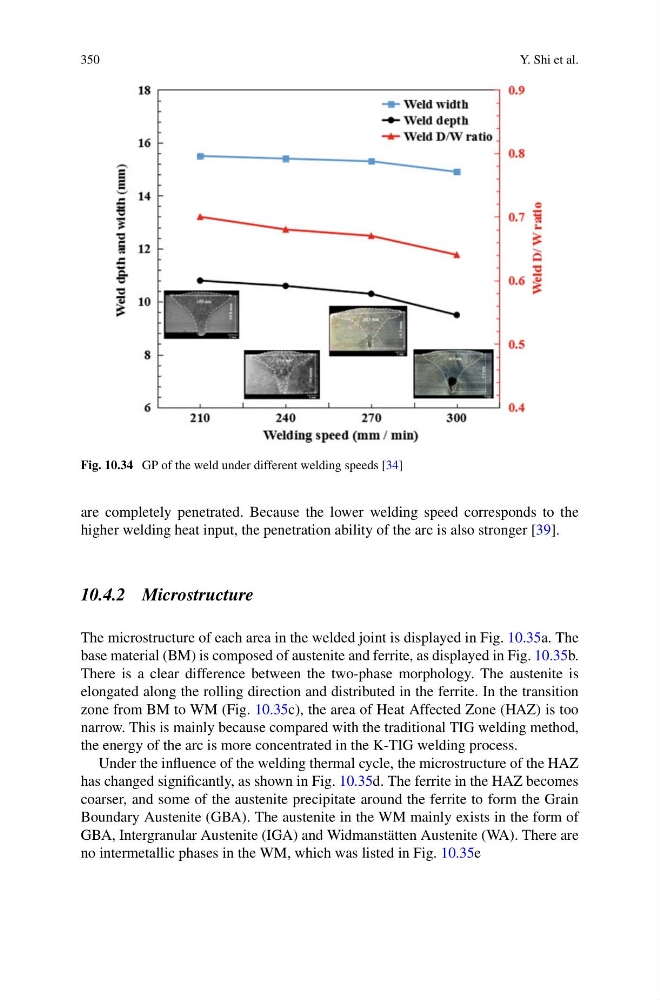
Fig. 10.34 GP of the weld under different welding speeds [34]
are completely penetrated. Because the lower welding speed corresponds to the
higher welding heat input, the penetration ability of the arc is also stronger [39].
10.4.2 Microstructure
The microstructure of each area in the welded joint is displayed in Fig. 10.35a. The
base material (BM) is composed of austenite and ferrite, as displayed in Fig. 10.35b.
There is a clear difference between the two-phase morphology. The austenite is
elongated along the rolling direction and distributed in the ferrite. In the transition
zone from BM to WM (Fig. 10.35c), the area of Heat Affected Zone (HAZ) is too
narrow. This is mainly because compared with the traditional TIG welding method,
the energy of the arc is more concentrated in the K-TIG welding process.
Under the influence of the welding thermal cycle, the microstructure of the HAZ
has changed significantly, as shown in Fig. 10.35d. The ferrite in the HAZ becomes
coarser, and some of the austenite precipitate around the ferrite to form the Grain
Boundary Austenite (GBA). The austenite in the WM mainly exists in the form of
GBA, Intergranular Austenite (IGA) and Widmanstätten Austenite (WA). There are
no intermetallic phases in the WM, which was listed in Fig. 10.35e
Y. Shi et al.
Fig. 10.34 GP of the weld under different welding speeds [34]
are completely penetrated. Because the lower welding speed corresponds to the
higher welding heat input, the penetration ability of the arc is also stronger [39].
10.4.2 Microstructure
The microstructure of each area in the welded joint is displayed in Fig. 10.35a. The
base material (BM) is composed of austenite and ferrite, as displayed in Fig. 10.35b.
There is a clear difference between the two-phase morphology. The austenite is
elongated along the rolling direction and distributed in the ferrite. In the transition
zone from BM to WM (Fig. 10.35c), the area of Heat Affected Zone (HAZ) is too
narrow. This is mainly because compared with the traditional TIG welding method,
the energy of the arc is more concentrated in the K-TIG welding process.
Under the influence of the welding thermal cycle, the microstructure of the HAZ
has changed significantly, as shown in Fig. 10.35d. The ferrite in the HAZ becomes
coarser, and some of the austenite precipitate around the ferrite to form the Grain
Boundary Austenite (GBA). The austenite in the WM mainly exists in the form of
GBA, Intergranular Austenite (IGA) and Widmanstätten Austenite (WA). There are
no intermetallic phases in the WM, which was listed in Fig. 10.35e