

7 Tubular Structures: Welding Difficulty and Potential …
235
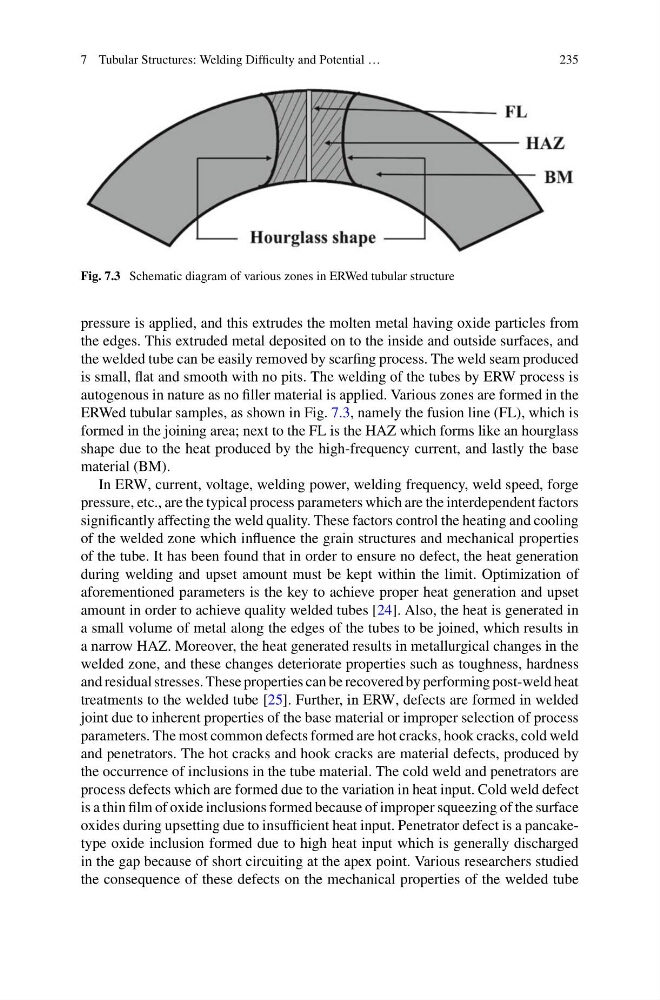
Fig. 7.3 Schematic diagram of various zones in ERWed tubular structure
pressure is applied, and this extrudes the molten metal having oxide particles from
the edges. This extruded metal deposited on to the inside and outside surfaces, and
the welded tube can be easily removed by scarfing process. The weld seam produced
is small, flat and smooth with no pits. The welding of the tubes by ERW process is
autogenous in nature as no filler material is applied. Various zones are formed in the
ERWed tubular samples, as shown in Fig. 7.3, namely the fusion line (FL), which is
formed in the joining area; next to the FL is the HAZ which forms like an hourglass
shape due to the heat produced by the high-frequency current, and lastly the base
material (BM).
In ERW, current, voltage, welding power, welding frequency, weld speed, forge
pressure, etc., are the typical process parameters which are the interdependent factors
significantly affecting the weld quality. These factors control the heating and cooling
of the welded zone which influence the grain structures and mechanical properties
of the tube. It has been found that in order to ensure no defect, the heat generation
during welding and upset amount must be kept within the limit. Optimization of
aforementioned parameters is the key to achieve proper heat generation and upset
amount in order to achieve quality welded tubes [24]. Also, the heat is generated in
a small volume of metal along the edges of the tubes to be joined, which results in
a narrow HAZ. Moreover, the heat generated results in metallurgical changes in the
welded zone, and these changes deteriorate properties such as toughness, hardness
and residual stresses. These properties can be recovered by performing post-weld heat
treatments to the welded tube [25]. Further, in ERW, defects are formed in welded
joint due to inherent properties of the base material or improper selection of process
parameters. The most common defects formed are hot cracks, hook cracks, cold weld
and penetrators. The hot cracks and hook cracks are material defects, produced by
the occurrence of inclusions in the tube material. The cold weld and penetrators are
process defects which are formed due to the variation in heat input. Cold weld defect
is a thin film of oxide inclusions formed because of improper squeezing of the surface
oxides during upsetting due to insufficient heat input. Penetrator defect is a pancaketype oxide inclusion formed due to high heat input which is generally discharged
in the gap because of short circuiting at the apex point. Various researchers studied
the consequence of these defects on the mechanical properties of the welded tube
235
Fig. 7.3 Schematic diagram of various zones in ERWed tubular structure
pressure is applied, and this extrudes the molten metal having oxide particles from
the edges. This extruded metal deposited on to the inside and outside surfaces, and
the welded tube can be easily removed by scarfing process. The weld seam produced
is small, flat and smooth with no pits. The welding of the tubes by ERW process is
autogenous in nature as no filler material is applied. Various zones are formed in the
ERWed tubular samples, as shown in Fig. 7.3, namely the fusion line (FL), which is
formed in the joining area; next to the FL is the HAZ which forms like an hourglass
shape due to the heat produced by the high-frequency current, and lastly the base
material (BM).
In ERW, current, voltage, welding power, welding frequency, weld speed, forge
pressure, etc., are the typical process parameters which are the interdependent factors
significantly affecting the weld quality. These factors control the heating and cooling
of the welded zone which influence the grain structures and mechanical properties
of the tube. It has been found that in order to ensure no defect, the heat generation
during welding and upset amount must be kept within the limit. Optimization of
aforementioned parameters is the key to achieve proper heat generation and upset
amount in order to achieve quality welded tubes [24]. Also, the heat is generated in
a small volume of metal along the edges of the tubes to be joined, which results in
a narrow HAZ. Moreover, the heat generated results in metallurgical changes in the
welded zone, and these changes deteriorate properties such as toughness, hardness
and residual stresses. These properties can be recovered by performing post-weld heat
treatments to the welded tube [25]. Further, in ERW, defects are formed in welded
joint due to inherent properties of the base material or improper selection of process
parameters. The most common defects formed are hot cracks, hook cracks, cold weld
and penetrators. The hot cracks and hook cracks are material defects, produced by
the occurrence of inclusions in the tube material. The cold weld and penetrators are
process defects which are formed due to the variation in heat input. Cold weld defect
is a thin film of oxide inclusions formed because of improper squeezing of the surface
oxides during upsetting due to insufficient heat input. Penetrator defect is a pancaketype oxide inclusion formed due to high heat input which is generally discharged
in the gap because of short circuiting at the apex point. Various researchers studied
the consequence of these defects on the mechanical properties of the welded tube