

7 Tubular Structures: Welding Difficulty and Potential …
231
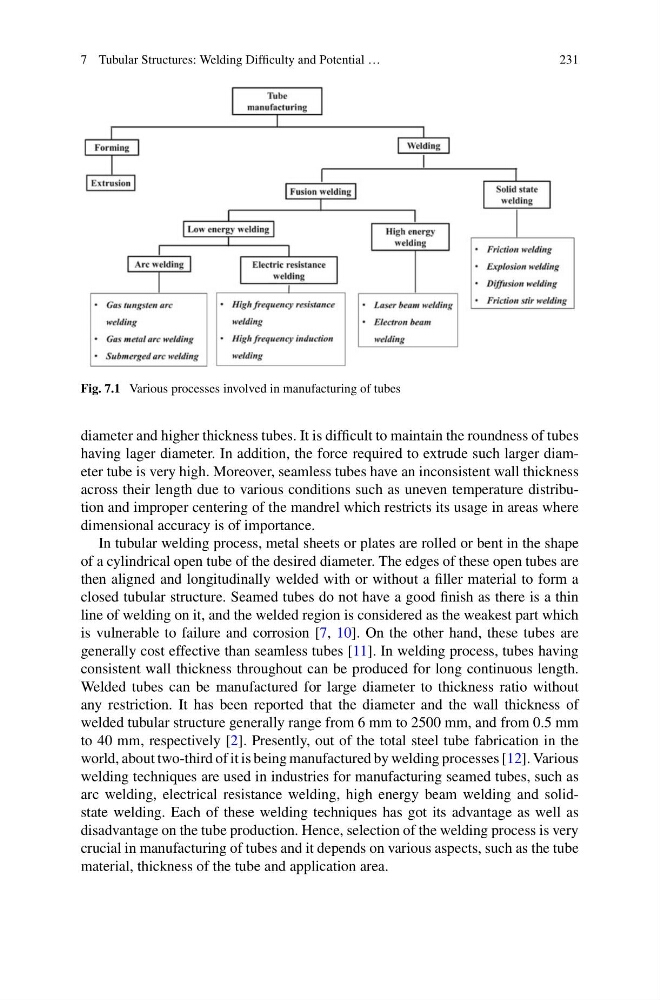
Fig. 7.1 Various processes involved in manufacturing of tubes
diameter and higher thickness tubes. It is difficult to maintain the roundness of tubes
having lager diameter. In addition, the force required to extrude such larger diameter tube is very high. Moreover, seamless tubes have an inconsistent wall thickness
across their length due to various conditions such as uneven temperature distribution and improper centering of the mandrel which restricts its usage in areas where
dimensional accuracy is of importance.
In tubular welding process, metal sheets or plates are rolled or bent in the shape
of a cylindrical open tube of the desired diameter. The edges of these open tubes are
then aligned and longitudinally welded with or without a filler material to form a
closed tubular structure. Seamed tubes do not have a good finish as there is a thin
line of welding on it, and the welded region is considered as the weakest part which
is vulnerable to failure and corrosion [7, 10]. On the other hand, these tubes are
generally cost effective than seamless tubes [11]. In welding process, tubes having
consistent wall thickness throughout can be produced for long continuous length.
Welded tubes can be manufactured for large diameter to thickness ratio without
any restriction. It has been reported that the diameter and the wall thickness of
welded tubular structure generally range from 6 mm to 2500 mm, and from 0.5 mm
to 40 mm, respectively [2]. Presently, out of the total steel tube fabrication in the
world, about two-third of it is being manufactured by welding processes [12]. Various
welding techniques are used in industries for manufacturing seamed tubes, such as
arc welding, electrical resistance welding, high energy beam welding and solidstate welding. Each of these welding techniques has got its advantage as well as
disadvantage on the tube production. Hence, selection of the welding process is very
crucial in manufacturing of tubes and it depends on various aspects, such as the tube
material, thickness of the tube and application area.
231
Fig. 7.1 Various processes involved in manufacturing of tubes
diameter and higher thickness tubes. It is difficult to maintain the roundness of tubes
having lager diameter. In addition, the force required to extrude such larger diameter tube is very high. Moreover, seamless tubes have an inconsistent wall thickness
across their length due to various conditions such as uneven temperature distribution and improper centering of the mandrel which restricts its usage in areas where
dimensional accuracy is of importance.
In tubular welding process, metal sheets or plates are rolled or bent in the shape
of a cylindrical open tube of the desired diameter. The edges of these open tubes are
then aligned and longitudinally welded with or without a filler material to form a
closed tubular structure. Seamed tubes do not have a good finish as there is a thin
line of welding on it, and the welded region is considered as the weakest part which
is vulnerable to failure and corrosion [7, 10]. On the other hand, these tubes are
generally cost effective than seamless tubes [11]. In welding process, tubes having
consistent wall thickness throughout can be produced for long continuous length.
Welded tubes can be manufactured for large diameter to thickness ratio without
any restriction. It has been reported that the diameter and the wall thickness of
welded tubular structure generally range from 6 mm to 2500 mm, and from 0.5 mm
to 40 mm, respectively [2]. Presently, out of the total steel tube fabrication in the
world, about two-third of it is being manufactured by welding processes [12]. Various
welding techniques are used in industries for manufacturing seamed tubes, such as
arc welding, electrical resistance welding, high energy beam welding and solidstate welding. Each of these welding techniques has got its advantage as well as
disadvantage on the tube production. Hence, selection of the welding process is very
crucial in manufacturing of tubes and it depends on various aspects, such as the tube
material, thickness of the tube and application area.