

4 An Application from a Defect—A Friction …
141
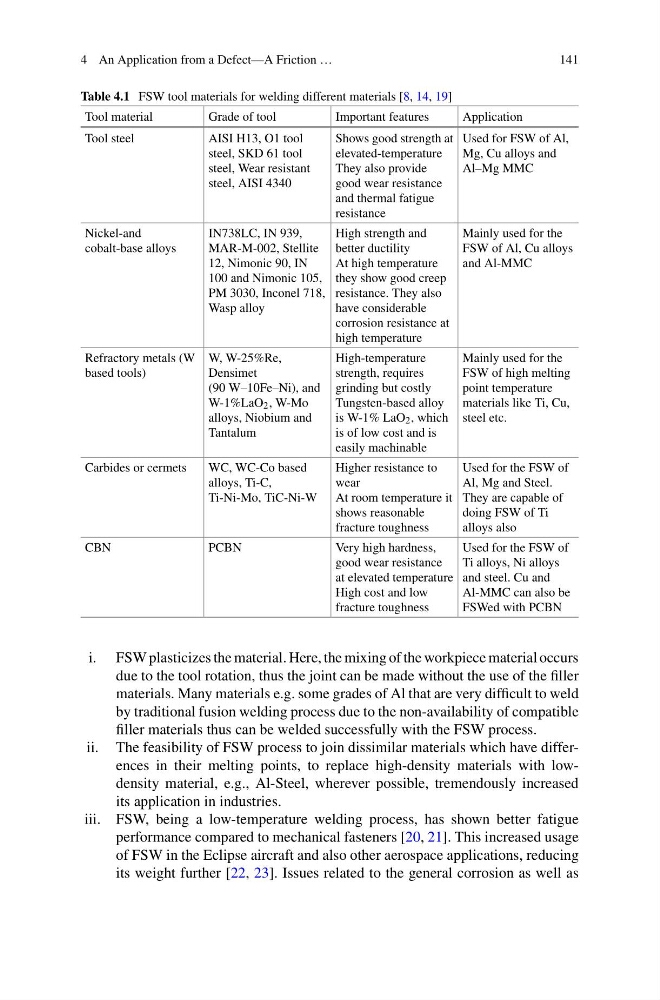
Table 4.1 FSW tool materials for welding different materials [8, 14, 19]
Tool material
Grade of tool
Important features
Application
Tool steel
AISI H13, O1 tool
steel, SKD 61 tool
steel, Wear resistant
steel, AISI 4340
Shows good strength at
elevated-temperature
They also provide
good wear resistance
and thermal fatigue
resistance
Used for FSW of Al,
Mg, Cu alloys and
Al–Mg MMC
Nickel-and
cobalt-base alloys
IN738LC, IN 939,
MAR-M-002, Stellite
12, Nimonic 90, IN
100 and Nimonic 105,
PM 3030, Inconel 718,
Wasp alloy
High strength and
better ductility
At high temperature
they show good creep
resistance. They also
have considerable
corrosion resistance at
high temperature
Mainly used for the
FSW of Al, Cu alloys
and Al-MMC
Refractory metals (W
based tools)
W, W-25%Re,
Densimet
(90 W–10Fe–Ni), and
W-1%LaO 2 , W-Mo
alloys, Niobium and
Tantalum
High-temperature
strength, requires
grinding but costly
Tungsten-based alloy
is W-1% LaO 2 , which
is of low cost and is
easily machinable
Mainly used for the
FSW of high melting
point temperature
materials like Ti, Cu,
steel etc.
Carbides or cermets
WC, WC-Co based
alloys, Ti-C,
Ti-Ni-Mo, TiC-Ni-W
Higher resistance to
wear
At room temperature it
shows reasonable
fracture toughness
Used for the FSW of
Al, Mg and Steel.
They are capable of
doing FSW of Ti
alloys also
CBN
PCBN
Very high hardness,
good wear resistance
at elevated temperature
High cost and low
fracture toughness
Used for the FSW of
Ti alloys, Ni alloys
and steel. Cu and
Al-MMC can also be
FSWed with PCBN
i. FSW plasticizes the material. Here, the mixing of the workpiece material occurs
due to the tool rotation, thus the joint can be made without the use of the filler
materials. Many materials e.g. some grades of Al that are very difficult to weld
by traditional fusion welding process due to the non-availability of compatible
filler materials thus can be welded successfully with the FSW process.
ii. The feasibility of FSW process to join dissimilar materials which have differences in their melting points, to replace high-density materials with lowdensity material, e.g., Al-Steel, wherever possible, tremendously increased
its application in industries.
iii. FSW, being a low-temperature welding process, has shown better fatigue
performance compared to mechanical fasteners [20, 21]. This increased usage
of FSW in the Eclipse aircraft and also other aerospace applications, reducing
its weight further [22, 23]. Issues related to the general corrosion as well as
141
Table 4.1 FSW tool materials for welding different materials [8, 14, 19]
Tool material
Grade of tool
Important features
Application
Tool steel
AISI H13, O1 tool
steel, SKD 61 tool
steel, Wear resistant
steel, AISI 4340
Shows good strength at
elevated-temperature
They also provide
good wear resistance
and thermal fatigue
resistance
Used for FSW of Al,
Mg, Cu alloys and
Al–Mg MMC
Nickel-and
cobalt-base alloys
IN738LC, IN 939,
MAR-M-002, Stellite
12, Nimonic 90, IN
100 and Nimonic 105,
PM 3030, Inconel 718,
Wasp alloy
High strength and
better ductility
At high temperature
they show good creep
resistance. They also
have considerable
corrosion resistance at
high temperature
Mainly used for the
FSW of Al, Cu alloys
and Al-MMC
Refractory metals (W
based tools)
W, W-25%Re,
Densimet
(90 W–10Fe–Ni), and
W-1%LaO 2 , W-Mo
alloys, Niobium and
Tantalum
High-temperature
strength, requires
grinding but costly
Tungsten-based alloy
is W-1% LaO 2 , which
is of low cost and is
easily machinable
Mainly used for the
FSW of high melting
point temperature
materials like Ti, Cu,
steel etc.
Carbides or cermets
WC, WC-Co based
alloys, Ti-C,
Ti-Ni-Mo, TiC-Ni-W
Higher resistance to
wear
At room temperature it
shows reasonable
fracture toughness
Used for the FSW of
Al, Mg and Steel.
They are capable of
doing FSW of Ti
alloys also
CBN
PCBN
Very high hardness,
good wear resistance
at elevated temperature
High cost and low
fracture toughness
Used for the FSW of
Ti alloys, Ni alloys
and steel. Cu and
Al-MMC can also be
FSWed with PCBN
i. FSW plasticizes the material. Here, the mixing of the workpiece material occurs
due to the tool rotation, thus the joint can be made without the use of the filler
materials. Many materials e.g. some grades of Al that are very difficult to weld
by traditional fusion welding process due to the non-availability of compatible
filler materials thus can be welded successfully with the FSW process.
ii. The feasibility of FSW process to join dissimilar materials which have differences in their melting points, to replace high-density materials with lowdensity material, e.g., Al-Steel, wherever possible, tremendously increased
its application in industries.
iii. FSW, being a low-temperature welding process, has shown better fatigue
performance compared to mechanical fasteners [20, 21]. This increased usage
of FSW in the Eclipse aircraft and also other aerospace applications, reducing
its weight further [22, 23]. Issues related to the general corrosion as well as