

elastic collisions involving the ions, atoms, and molecules of the hydrogenic species.
The relevant cross-sections (including momentum and charge transfer) can be found
from both semi-classical and fully quantal calculations (e.g. see [58, 59]).
Both the ionization and recombination rates are necessary for the evaluation of
the plasma recycling processes. However, the ionization of neutrals, which is
accompanied by neutral gas excitation and following radiation, results in plasma
energy dissipation. Thus, as it was noted in Chap. 1, to maintain plasma recycling,
the recycling region must be supplied with power.
To assess the energy dissipation caused by plasma recycling, it is convenient to
introduce the hydrogen “ionization cost” [60], E
H
ion , which corresponds to plasma
energy dissipation per an ionization event:
E
H
ion ¼
X
n
H n
½ ÀE n K
ion
ð Þ
n!cont n e þ
X
k
rad
ð Þ
n!k
!
(
)
H
½ n e K
H
ion
À
Á À1 ,
ð2:26Þ
where the population of excited states is taken from the CRM. It is obvious that E
H
ion
depends on the electron temperature and density and is significantly altered by the
radiation trapping effects. As an example, the dependence of E
H
ion on T e for different
electron densities is shown in Fig. 2.6 for the cases of transparent plasma and
suppressed spontaneous decay from the levels n ! 2 to the ground state
(Fig. 2.6b), which corresponds to the complete opacity conditions for Lyman lines
radiation.
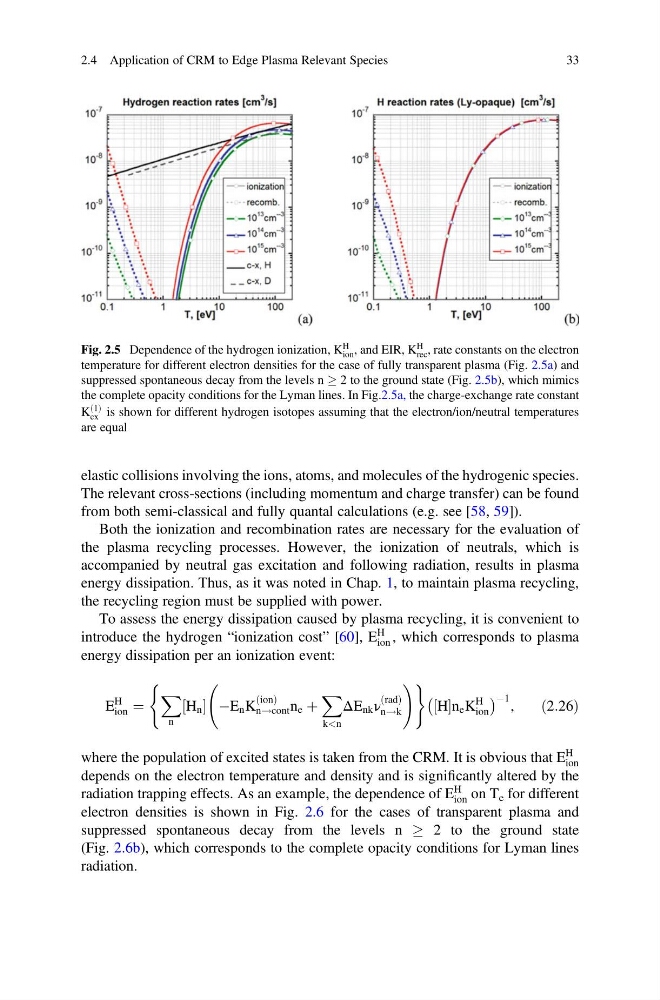
Fig. 2.5 Dependence of the hydrogen ionization, K
H
ion , and EIR, K
H
rec , rate constants on the electron
temperature for different electron densities for the case of fully transparent plasma (Fig. 2.5a) and
suppressed spontaneous decay from the levels n ! 2 to the ground state (Fig. 2.5b), which mimics
the complete opacity conditions for the Lyman lines. In Fig.2.5a, the charge-exchange rate constant
K
1
ð Þ
cx is shown for different hydrogen isotopes assuming that the electron/ion/neutral temperatures
are equal
2.4 Application of CRM to Edge Plasma Relevant Species
33
The relevant cross-sections (including momentum and charge transfer) can be found
from both semi-classical and fully quantal calculations (e.g. see [58, 59]).
Both the ionization and recombination rates are necessary for the evaluation of
the plasma recycling processes. However, the ionization of neutrals, which is
accompanied by neutral gas excitation and following radiation, results in plasma
energy dissipation. Thus, as it was noted in Chap. 1, to maintain plasma recycling,
the recycling region must be supplied with power.
To assess the energy dissipation caused by plasma recycling, it is convenient to
introduce the hydrogen “ionization cost” [60], E
H
ion , which corresponds to plasma
energy dissipation per an ionization event:
E
H
ion ¼
X
n
H n
½ ÀE n K
ion
ð Þ
n!cont n e þ
X
k
rad
ð Þ
n!k
!
(
)
H
½ n e K
H
ion
À
Á À1 ,
ð2:26Þ
where the population of excited states is taken from the CRM. It is obvious that E
H
ion
depends on the electron temperature and density and is significantly altered by the
radiation trapping effects. As an example, the dependence of E
H
ion on T e for different
electron densities is shown in Fig. 2.6 for the cases of transparent plasma and
suppressed spontaneous decay from the levels n ! 2 to the ground state
(Fig. 2.6b), which corresponds to the complete opacity conditions for Lyman lines
radiation.
Fig. 2.5 Dependence of the hydrogen ionization, K
H
ion , and EIR, K
H
rec , rate constants on the electron
temperature for different electron densities for the case of fully transparent plasma (Fig. 2.5a) and
suppressed spontaneous decay from the levels n ! 2 to the ground state (Fig. 2.5b), which mimics
the complete opacity conditions for the Lyman lines. In Fig.2.5a, the charge-exchange rate constant
K
1
ð Þ
cx is shown for different hydrogen isotopes assuming that the electron/ion/neutral temperatures
are equal
2.4 Application of CRM to Edge Plasma Relevant Species
33