

these bottom-up approaches. Local government also plays an important role in many
cases, as shown by case material from both West and East (OECD, 2010; Harrison
and Kostka, 2012).
Similarly, at the national level, substantial progress was made in some countries,
with governments implementing green industrial policies and the private sector
making big investments in renewable energy and other low-carbon technologies.
Such progress made at the national level, however, risks running out of steam in
the countries expected to lead the green transformation: most of Western Europe
and North America is politically paralysed and financially constrained. The rising
powers have become the default movers and shakers in the green transformation,
in both the negative and positive sense. While responsible for the continuing growth
of carbon emissions, they are also the biggest investors in mitigation. Seen globally,
China is No. 1 investor in renewable energy and India has recorded high recent
growth rates in 2011 (BNEF, 2012).
To elaborate on the national level, the two Western countries with the biggest
progress are Denmark (wind energy) and Germany (solar and wind energy). In the
German case, renewable energy accounts for 24 per cent of electricity (2013 level)
and 206,000 jobs were created in wind and solar power (2012 level), but investment
is slowing down (Luetkenhorst and Pegels, 2014). While most of the investment
comes from the private sector, public subsidies are essential in this early stage of
the low-carbon transformation. This public support has come under attack with
arguments that, in times of austerity, the public sector cannot prioritize investments
in energy infrastructure and consumers cannot afford increases in energy bills needed
to pay for these subsidies. Arguments that fostering new green industries helps to
promote growth, jobs and public revenue are drowned out by opposing forces in
much of Europe and the US.
In contrast, China continues to storm ahead with big investments in renewable
energy (BNEF, 2013).
3 Its government is not encumbered by national or foreign
debt; it has the ability to act fast. A good example of its ‘entrepreneurial state’ (see
Mazzucato, this book) is the support for the solar energy industry. When European
demand for Chinese photovoltaic panels declined in 2009, the Chinese government
launched a programme to speed up the deployment of such panels within the
country (Fischer, 2012) in order to ensure that the build-up of this new industry
could continue.
176 Hubert Schmitz
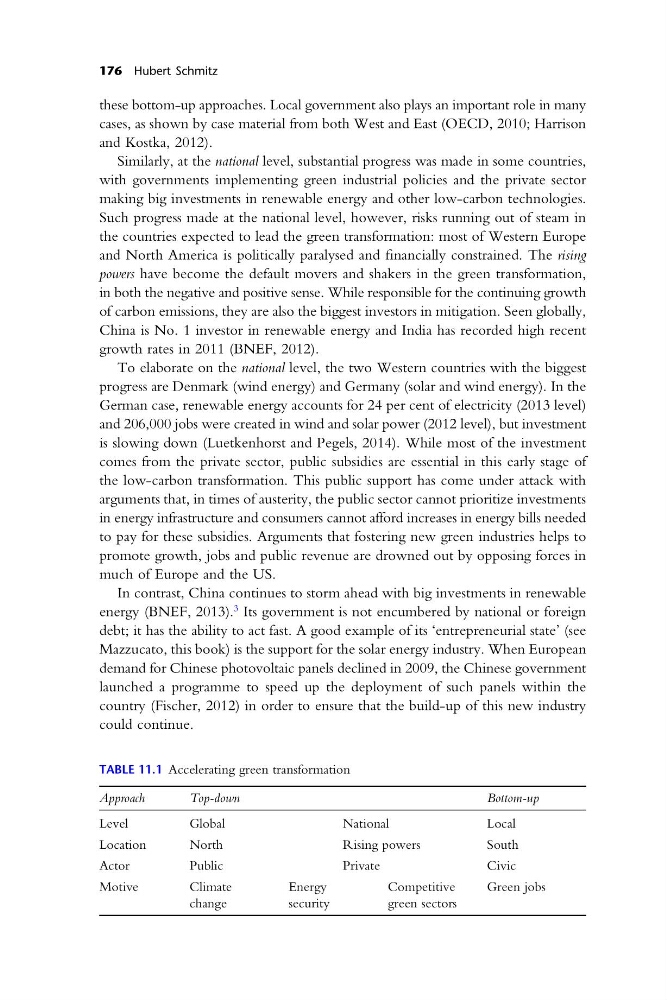
TABLE 11.1 Accelerating green transformation
Approach
Top-down
Bottom-up
Level
Global
National
Local
Location
North
Rising powers
South
Actor
Public
Private
Civic
Motive
Climate
Energy
Competitive
Green jobs
change
security
green sectors
cases, as shown by case material from both West and East (OECD, 2010; Harrison
and Kostka, 2012).
Similarly, at the national level, substantial progress was made in some countries,
with governments implementing green industrial policies and the private sector
making big investments in renewable energy and other low-carbon technologies.
Such progress made at the national level, however, risks running out of steam in
the countries expected to lead the green transformation: most of Western Europe
and North America is politically paralysed and financially constrained. The rising
powers have become the default movers and shakers in the green transformation,
in both the negative and positive sense. While responsible for the continuing growth
of carbon emissions, they are also the biggest investors in mitigation. Seen globally,
China is No. 1 investor in renewable energy and India has recorded high recent
growth rates in 2011 (BNEF, 2012).
To elaborate on the national level, the two Western countries with the biggest
progress are Denmark (wind energy) and Germany (solar and wind energy). In the
German case, renewable energy accounts for 24 per cent of electricity (2013 level)
and 206,000 jobs were created in wind and solar power (2012 level), but investment
is slowing down (Luetkenhorst and Pegels, 2014). While most of the investment
comes from the private sector, public subsidies are essential in this early stage of
the low-carbon transformation. This public support has come under attack with
arguments that, in times of austerity, the public sector cannot prioritize investments
in energy infrastructure and consumers cannot afford increases in energy bills needed
to pay for these subsidies. Arguments that fostering new green industries helps to
promote growth, jobs and public revenue are drowned out by opposing forces in
much of Europe and the US.
In contrast, China continues to storm ahead with big investments in renewable
energy (BNEF, 2013).
3 Its government is not encumbered by national or foreign
debt; it has the ability to act fast. A good example of its ‘entrepreneurial state’ (see
Mazzucato, this book) is the support for the solar energy industry. When European
demand for Chinese photovoltaic panels declined in 2009, the Chinese government
launched a programme to speed up the deployment of such panels within the
country (Fischer, 2012) in order to ensure that the build-up of this new industry
could continue.
176 Hubert Schmitz
TABLE 11.1 Accelerating green transformation
Approach
Top-down
Bottom-up
Level
Global
National
Local
Location
North
Rising powers
South
Actor
Public
Private
Civic
Motive
Climate
Energy
Competitive
Green jobs
change
security
green sectors