

1.6 Elements of Occupational Toxicology
15
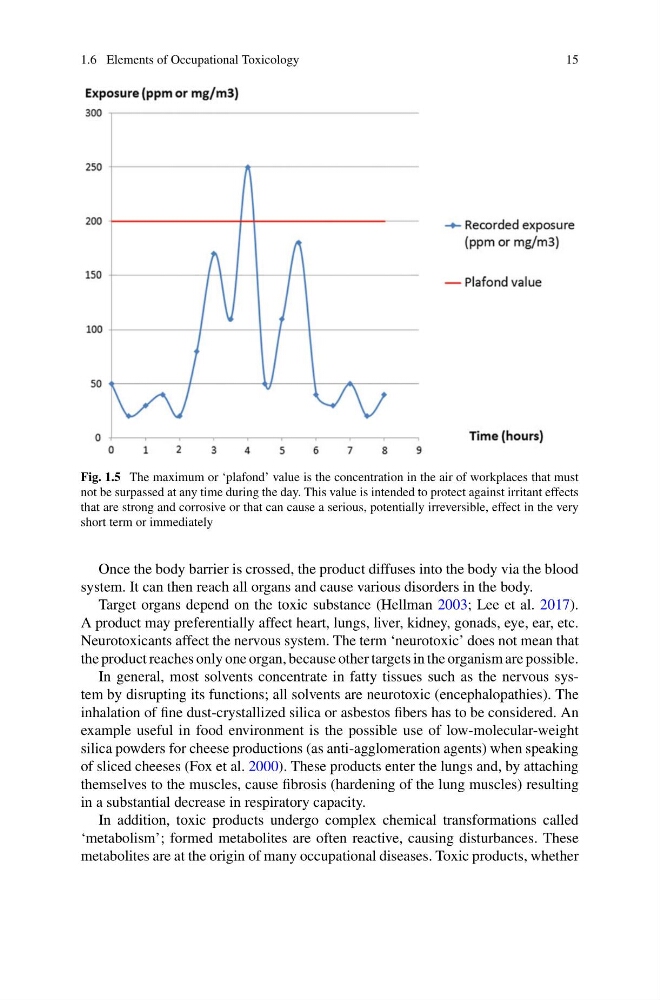
Fig. 1.5 The maximum or ‘plafond’ value is the concentration in the air of workplaces that must
not be surpassed at any time during the day. This value is intended to protect against irritant effects
that are strong and corrosive or that can cause a serious, potentially irreversible, effect in the very
short term or immediately
Once the body barrier is crossed, the product diffuses into the body via the blood
system. It can then reach all organs and cause various disorders in the body.
Target organs depend on the toxic substance (Hellman 2003; Lee et al. 2017).
A product may preferentially affect heart, lungs, liver, kidney, gonads, eye, ear, etc.
Neurotoxicants affect the nervous system. The term ‘neurotoxic’ does not mean that
the product reaches only one organ, because other targets in the organism are possible.
In general, most solvents concentrate in fatty tissues such as the nervous system by disrupting its functions; all solvents are neurotoxic (encephalopathies). The
inhalation of fine dust-crystallized silica or asbestos fibers has to be considered. An
example useful in food environment is the possible use of low-molecular-weight
silica powders for cheese productions (as anti-agglomeration agents) when speaking
of sliced cheeses (Fox et al. 2000). These products enter the lungs and, by attaching
themselves to the muscles, cause fibrosis (hardening of the lung muscles) resulting
in a substantial decrease in respiratory capacity.
In addition, toxic products undergo complex chemical transformations called
‘metabolism’; formed metabolites are often reactive, causing disturbances. These
metabolites are at the origin of many occupational diseases. Toxic products, whether
15
Fig. 1.5 The maximum or ‘plafond’ value is the concentration in the air of workplaces that must
not be surpassed at any time during the day. This value is intended to protect against irritant effects
that are strong and corrosive or that can cause a serious, potentially irreversible, effect in the very
short term or immediately
Once the body barrier is crossed, the product diffuses into the body via the blood
system. It can then reach all organs and cause various disorders in the body.
Target organs depend on the toxic substance (Hellman 2003; Lee et al. 2017).
A product may preferentially affect heart, lungs, liver, kidney, gonads, eye, ear, etc.
Neurotoxicants affect the nervous system. The term ‘neurotoxic’ does not mean that
the product reaches only one organ, because other targets in the organism are possible.
In general, most solvents concentrate in fatty tissues such as the nervous system by disrupting its functions; all solvents are neurotoxic (encephalopathies). The
inhalation of fine dust-crystallized silica or asbestos fibers has to be considered. An
example useful in food environment is the possible use of low-molecular-weight
silica powders for cheese productions (as anti-agglomeration agents) when speaking
of sliced cheeses (Fox et al. 2000). These products enter the lungs and, by attaching
themselves to the muscles, cause fibrosis (hardening of the lung muscles) resulting
in a substantial decrease in respiratory capacity.
In addition, toxic products undergo complex chemical transformations called
‘metabolism’; formed metabolites are often reactive, causing disturbances. These
metabolites are at the origin of many occupational diseases. Toxic products, whether