

1.6 Elements of Occupational Toxicology
13
0
50
100
150
200
250
0
1
2
3
4
5
6
7
8
9
Exposure (ppm or mg/m3)
Average exposure value
Exposure-8 hours
Time (hours)
Exposure (ppm or mg/m3)
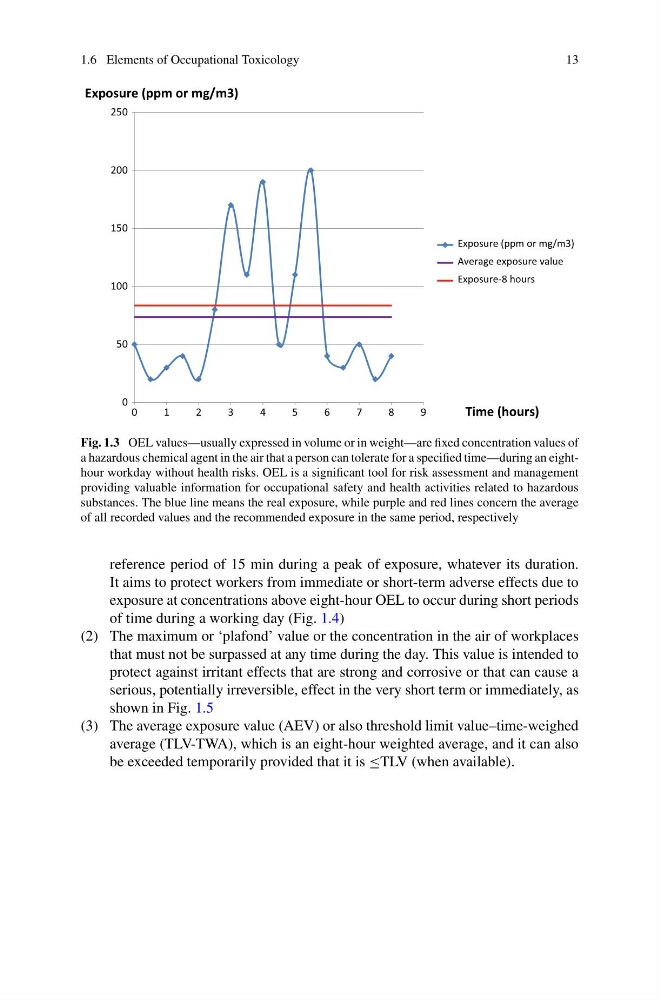
Fig. 1.3 OEL values—usually expressed in volume or in weight—are fixed concentration values of
a hazardous chemical agent in the air that a person can tolerate for a specified time—during an eighthour workday without health risks. OEL is a significant tool for risk assessment and management
providing valuable information for occupational safety and health activities related to hazardous
substances. The blue line means the real exposure, while purple and red lines concern the average
of all recorded values and the recommended exposure in the same period, respectively
reference period of 15 min during a peak of exposure, whatever its duration.
It aims to protect workers from immediate or short-term adverse effects due to
exposure at concentrations above eight-hour OEL to occur during short periods
of time during a working day (Fig. 1.4)
(2) The maximum or ‘plafond’ value or the concentration in the air of workplaces
that must not be surpassed at any time during the day. This value is intended to
protect against irritant effects that are strong and corrosive or that can cause a
serious, potentially irreversible, effect in the very short term or immediately, as
shown in Fig. 1.5
(3) The average exposure value (AEV) or also threshold limit value–time-weighed
average (TLV-TWA), which is an eight-hour weighted average, and it can also
be exceeded temporarily provided that it is ≤TLV (when available).
13
0
50
100
150
200
250
0
1
2
3
4
5
6
7
8
9
Exposure (ppm or mg/m3)
Average exposure value
Exposure-8 hours
Time (hours)
Exposure (ppm or mg/m3)
Fig. 1.3 OEL values—usually expressed in volume or in weight—are fixed concentration values of
a hazardous chemical agent in the air that a person can tolerate for a specified time—during an eighthour workday without health risks. OEL is a significant tool for risk assessment and management
providing valuable information for occupational safety and health activities related to hazardous
substances. The blue line means the real exposure, while purple and red lines concern the average
of all recorded values and the recommended exposure in the same period, respectively
reference period of 15 min during a peak of exposure, whatever its duration.
It aims to protect workers from immediate or short-term adverse effects due to
exposure at concentrations above eight-hour OEL to occur during short periods
of time during a working day (Fig. 1.4)
(2) The maximum or ‘plafond’ value or the concentration in the air of workplaces
that must not be surpassed at any time during the day. This value is intended to
protect against irritant effects that are strong and corrosive or that can cause a
serious, potentially irreversible, effect in the very short term or immediately, as
shown in Fig. 1.5
(3) The average exposure value (AEV) or also threshold limit value–time-weighed
average (TLV-TWA), which is an eight-hour weighted average, and it can also
be exceeded temporarily provided that it is ≤TLV (when available).