

68
6 Catalogues and Constellations
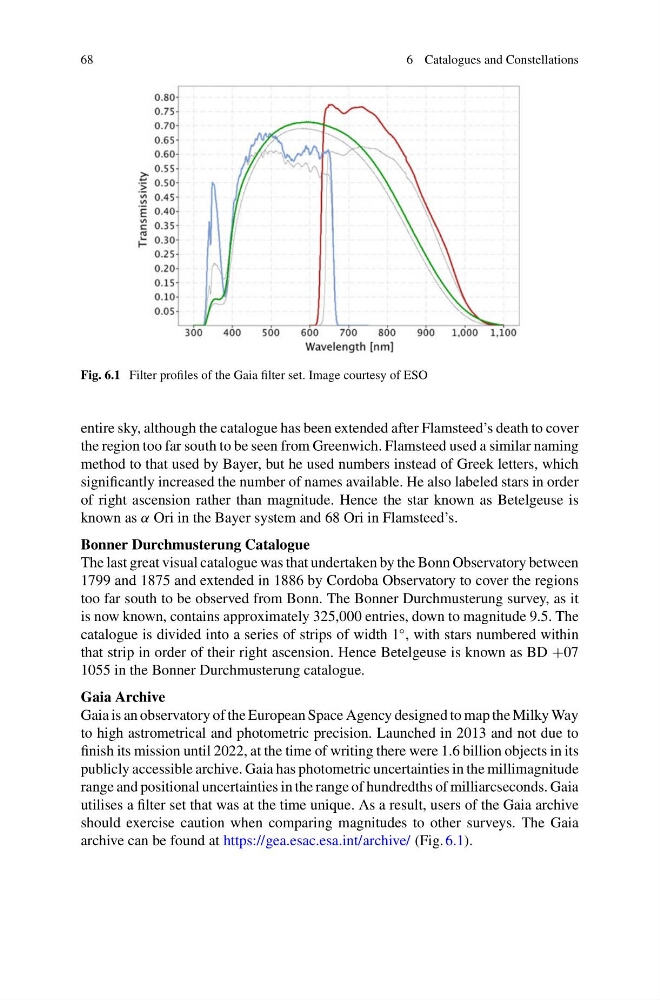
Fig. 6.1 Filter profiles of the Gaia filter set. Image courtesy of ESO
entire sky, although the catalogue has been extended after Flamsteed’s death to cover
the region too far south to be seen from Greenwich. Flamsteed used a similar naming
method to that used by Bayer, but he used numbers instead of Greek letters, which
significantly increased the number of names available. He also labeled stars in order
of right ascension rather than magnitude. Hence the star known as Betelgeuse is
known as α Ori in the Bayer system and 68 Ori in Flamsteed’s.
Bonner Durchmusterung Catalogue
The last great visual catalogue was that undertaken by the Bonn Observatory between
1799 and 1875 and extended in 1886 by Cordoba Observatory to cover the regions
too far south to be observed from Bonn. The Bonner Durchmusterung survey, as it
is now known, contains approximately 325,000 entries, down to magnitude 9.5. The
catalogue is divided into a series of strips of width 1
◦ , with stars numbered within
that strip in order of their right ascension. Hence Betelgeuse is known as BD +07
1055 in the Bonner Durchmusterung catalogue.
Gaia Archive
Gaia is an observatory of the European Space Agency designed to map the Milky Way
to high astrometrical and photometric precision. Launched in 2013 and not due to
finish its mission until 2022, at the time of writing there were 1.6 billion objects in its
publicly accessible archive. Gaia has photometric uncertainties in the millimagnitude
range and positional uncertainties in the range of hundredths of milliarcseconds. Gaia
utilises a filter set that was at the time unique. As a result, users of the Gaia archive
should exercise caution when comparing magnitudes to other surveys. The Gaia
archive can be found at https://gea.esac.esa.int/archive/ (Fig. 6.1).
6 Catalogues and Constellations
Fig. 6.1 Filter profiles of the Gaia filter set. Image courtesy of ESO
entire sky, although the catalogue has been extended after Flamsteed’s death to cover
the region too far south to be seen from Greenwich. Flamsteed used a similar naming
method to that used by Bayer, but he used numbers instead of Greek letters, which
significantly increased the number of names available. He also labeled stars in order
of right ascension rather than magnitude. Hence the star known as Betelgeuse is
known as α Ori in the Bayer system and 68 Ori in Flamsteed’s.
Bonner Durchmusterung Catalogue
The last great visual catalogue was that undertaken by the Bonn Observatory between
1799 and 1875 and extended in 1886 by Cordoba Observatory to cover the regions
too far south to be observed from Bonn. The Bonner Durchmusterung survey, as it
is now known, contains approximately 325,000 entries, down to magnitude 9.5. The
catalogue is divided into a series of strips of width 1
◦ , with stars numbered within
that strip in order of their right ascension. Hence Betelgeuse is known as BD +07
1055 in the Bonner Durchmusterung catalogue.
Gaia Archive
Gaia is an observatory of the European Space Agency designed to map the Milky Way
to high astrometrical and photometric precision. Launched in 2013 and not due to
finish its mission until 2022, at the time of writing there were 1.6 billion objects in its
publicly accessible archive. Gaia has photometric uncertainties in the millimagnitude
range and positional uncertainties in the range of hundredths of milliarcseconds. Gaia
utilises a filter set that was at the time unique. As a result, users of the Gaia archive
should exercise caution when comparing magnitudes to other surveys. The Gaia
archive can be found at https://gea.esac.esa.int/archive/ (Fig. 6.1).