

214
15 Radio Astronomy
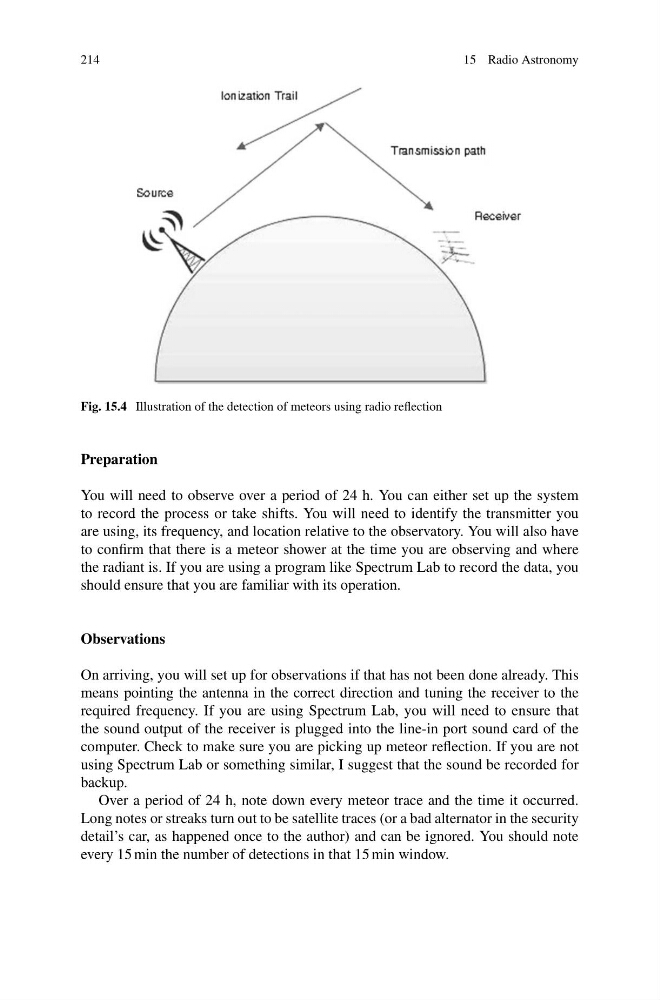
Fig. 15.4 Illustration of the detection of meteors using radio reflection
Preparation
You will need to observe over a period of 24 h. You can either set up the system
to record the process or take shifts. You will need to identify the transmitter you
are using, its frequency, and location relative to the observatory. You will also have
to confirm that there is a meteor shower at the time you are observing and where
the radiant is. If you are using a program like Spectrum Lab to record the data, you
should ensure that you are familiar with its operation.
Observations
On arriving, you will set up for observations if that has not been done already. This
means pointing the antenna in the correct direction and tuning the receiver to the
required frequency. If you are using Spectrum Lab, you will need to ensure that
the sound output of the receiver is plugged into the line-in port sound card of the
computer. Check to make sure you are picking up meteor reflection. If you are not
using Spectrum Lab or something similar, I suggest that the sound be recorded for
backup.
Over a period of 24 h, note down every meteor trace and the time it occurred.
Long notes or streaks turn out to be satellite traces (or a bad alternator in the security
detail’s car, as happened once to the author) and can be ignored. You should note
every 15 min the number of detections in that 15 min window.
15 Radio Astronomy
Fig. 15.4 Illustration of the detection of meteors using radio reflection
Preparation
You will need to observe over a period of 24 h. You can either set up the system
to record the process or take shifts. You will need to identify the transmitter you
are using, its frequency, and location relative to the observatory. You will also have
to confirm that there is a meteor shower at the time you are observing and where
the radiant is. If you are using a program like Spectrum Lab to record the data, you
should ensure that you are familiar with its operation.
Observations
On arriving, you will set up for observations if that has not been done already. This
means pointing the antenna in the correct direction and tuning the receiver to the
required frequency. If you are using Spectrum Lab, you will need to ensure that
the sound output of the receiver is plugged into the line-in port sound card of the
computer. Check to make sure you are picking up meteor reflection. If you are not
using Spectrum Lab or something similar, I suggest that the sound be recorded for
backup.
Over a period of 24 h, note down every meteor trace and the time it occurred.
Long notes or streaks turn out to be satellite traces (or a bad alternator in the security
detail’s car, as happened once to the author) and can be ignored. You should note
every 15 min the number of detections in that 15 min window.