

196
13 Solar Astronomy
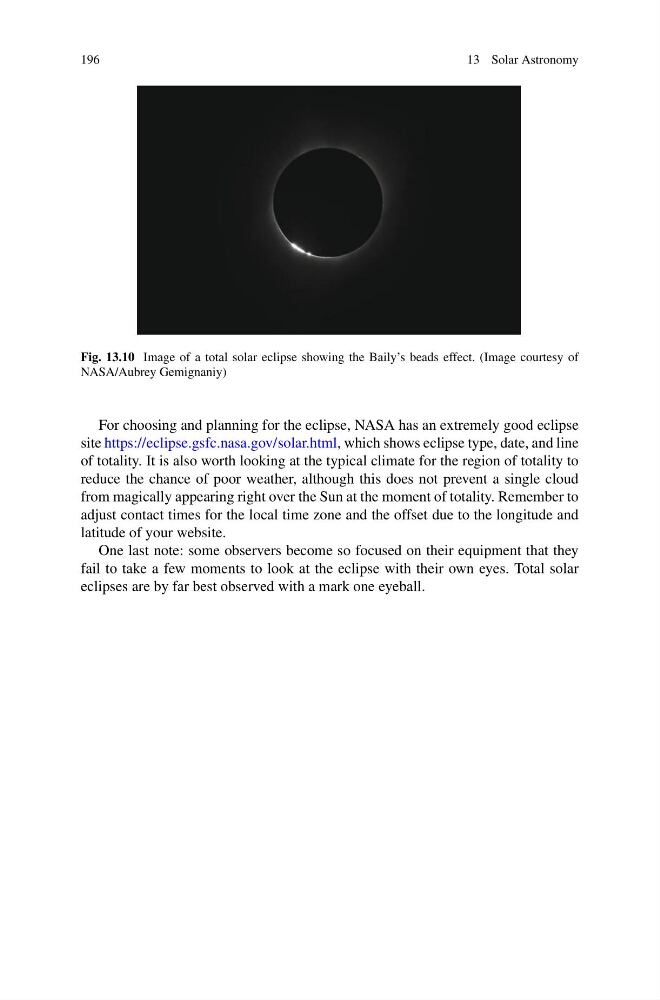
Fig. 13.10 Image of a total solar eclipse showing the Baily’s beads effect. (Image courtesy of
NASA/Aubrey Gemignaniy)
For choosing and planning for the eclipse, NASA has an extremely good eclipse
site https://eclipse.gsfc.nasa.gov/solar.html, which shows eclipse type, date, and line
of totality. It is also worth looking at the typical climate for the region of totality to
reduce the chance of poor weather, although this does not prevent a single cloud
from magically appearing right over the Sun at the moment of totality. Remember to
adjust contact times for the local time zone and the offset due to the longitude and
latitude of your website.
One last note: some observers become so focused on their equipment that they
fail to take a few moments to look at the eclipse with their own eyes. Total solar
eclipses are by far best observed with a mark one eyeball.
13 Solar Astronomy
Fig. 13.10 Image of a total solar eclipse showing the Baily’s beads effect. (Image courtesy of
NASA/Aubrey Gemignaniy)
For choosing and planning for the eclipse, NASA has an extremely good eclipse
site https://eclipse.gsfc.nasa.gov/solar.html, which shows eclipse type, date, and line
of totality. It is also worth looking at the typical climate for the region of totality to
reduce the chance of poor weather, although this does not prevent a single cloud
from magically appearing right over the Sun at the moment of totality. Remember to
adjust contact times for the local time zone and the offset due to the longitude and
latitude of your website.
One last note: some observers become so focused on their equipment that they
fail to take a few moments to look at the eclipse with their own eyes. Total solar
eclipses are by far best observed with a mark one eyeball.