

12.8 Postmeasurement Uncertainty Reduction and Light Curve Folding
179
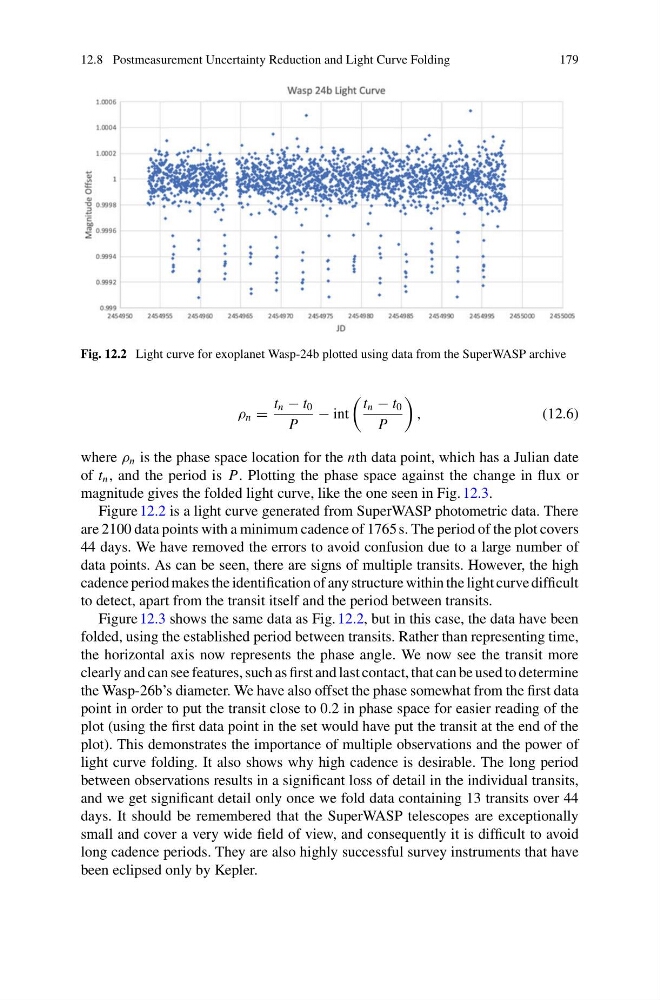
Fig. 12.2 Light curve for exoplanet Wasp-24b plotted using data from the SuperWASP archive
ρ n =
t n − t 0
P
− int
t n − t 0
P
,
(12.6)
where ρ n is the phase space location for the nth data point, which has a Julian date
of t n , and the period is P. Plotting the phase space against the change in flux or
magnitude gives the folded light curve, like the one seen in Fig. 12.3.
Figure 12.2 is a light curve generated from SuperWASP photometric data. There
are 2100 data points with a minimum cadence of 1765 s. The period of the plot covers
44 days. We have removed the errors to avoid confusion due to a large number of
data points. As can be seen, there are signs of multiple transits. However, the high
cadence period makes the identification of any structure within the light curve difficult
to detect, apart from the transit itself and the period between transits.
Figure 12.3 shows the same data as Fig. 12.2, but in this case, the data have been
folded, using the established period between transits. Rather than representing time,
the horizontal axis now represents the phase angle. We now see the transit more
clearly and can see features, such as first and last contact, that can be used to determine
the Wasp-26b’s diameter. We have also offset the phase somewhat from the first data
point in order to put the transit close to 0.2 in phase space for easier reading of the
plot (using the first data point in the set would have put the transit at the end of the
plot). This demonstrates the importance of multiple observations and the power of
light curve folding. It also shows why high cadence is desirable. The long period
between observations results in a significant loss of detail in the individual transits,
and we get significant detail only once we fold data containing 13 transits over 44
days. It should be remembered that the SuperWASP telescopes are exceptionally
small and cover a very wide field of view, and consequently it is difficult to avoid
long cadence periods. They are also highly successful survey instruments that have
been eclipsed only by Kepler.
179
Fig. 12.2 Light curve for exoplanet Wasp-24b plotted using data from the SuperWASP archive
ρ n =
t n − t 0
P
− int
t n − t 0
P
,
(12.6)
where ρ n is the phase space location for the nth data point, which has a Julian date
of t n , and the period is P. Plotting the phase space against the change in flux or
magnitude gives the folded light curve, like the one seen in Fig. 12.3.
Figure 12.2 is a light curve generated from SuperWASP photometric data. There
are 2100 data points with a minimum cadence of 1765 s. The period of the plot covers
44 days. We have removed the errors to avoid confusion due to a large number of
data points. As can be seen, there are signs of multiple transits. However, the high
cadence period makes the identification of any structure within the light curve difficult
to detect, apart from the transit itself and the period between transits.
Figure 12.3 shows the same data as Fig. 12.2, but in this case, the data have been
folded, using the established period between transits. Rather than representing time,
the horizontal axis now represents the phase angle. We now see the transit more
clearly and can see features, such as first and last contact, that can be used to determine
the Wasp-26b’s diameter. We have also offset the phase somewhat from the first data
point in order to put the transit close to 0.2 in phase space for easier reading of the
plot (using the first data point in the set would have put the transit at the end of the
plot). This demonstrates the importance of multiple observations and the power of
light curve folding. It also shows why high cadence is desirable. The long period
between observations results in a significant loss of detail in the individual transits,
and we get significant detail only once we fold data containing 13 transits over 44
days. It should be remembered that the SuperWASP telescopes are exceptionally
small and cover a very wide field of view, and consequently it is difficult to avoid
long cadence periods. They are also highly successful survey instruments that have
been eclipsed only by Kepler.