

8.3 In-Dome Pre-observation Preparation
107
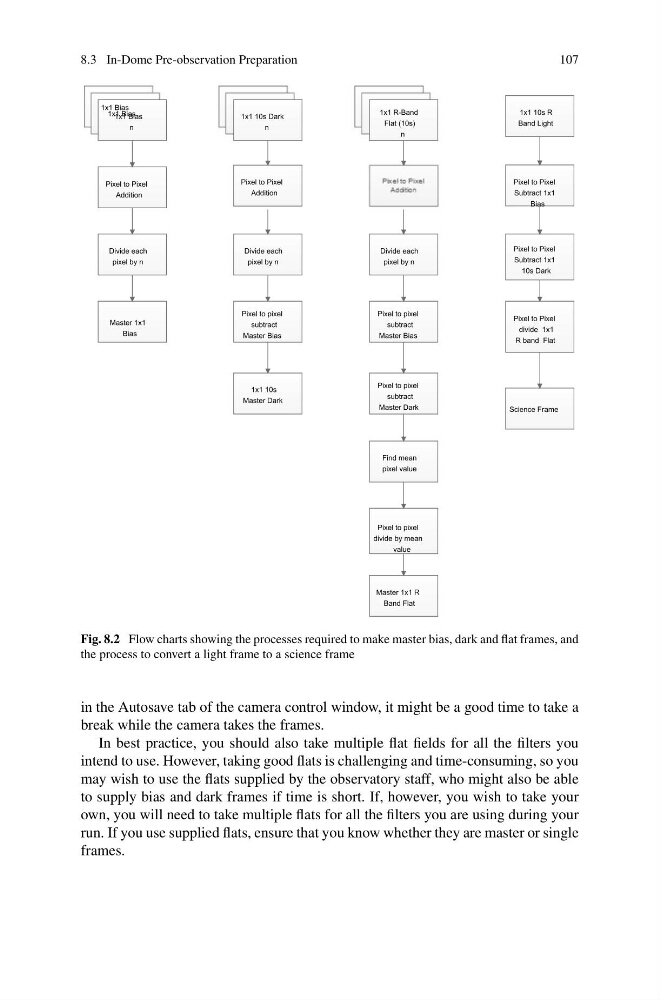
Fig. 8.2 Flow charts showing the processes required to make master bias, dark and flat frames, and
the process to convert a light frame to a science frame
in the Autosave tab of the camera control window, it might be a good time to take a
break while the camera takes the frames.
In best practice, you should also take multiple flat fields for all the filters you
intend to use. However, taking good flats is challenging and time-consuming, so you
may wish to use the flats supplied by the observatory staff, who might also be able
to supply bias and dark frames if time is short. If, however, you wish to take your
own, you will need to take multiple flats for all the filters you are using during your
run. If you use supplied flats, ensure that you know whether they are master or single
frames.
107
Fig. 8.2 Flow charts showing the processes required to make master bias, dark and flat frames, and
the process to convert a light frame to a science frame
in the Autosave tab of the camera control window, it might be a good time to take a
break while the camera takes the frames.
In best practice, you should also take multiple flat fields for all the filters you
intend to use. However, taking good flats is challenging and time-consuming, so you
may wish to use the flats supplied by the observatory staff, who might also be able
to supply bias and dark frames if time is short. If, however, you wish to take your
own, you will need to take multiple flats for all the filters you are using during your
run. If you use supplied flats, ensure that you know whether they are master or single
frames.